The collapse of a large-scale lighting structure during a mass event not only causes shock but also raises critical questions about the engineering of temporary installations. This article proposes a technical 3D reconstruction of the incident, analyzing dynamic loads and failure points to determine the most likely causes of the collapse.
Structural analysis and stress simulation 🔧
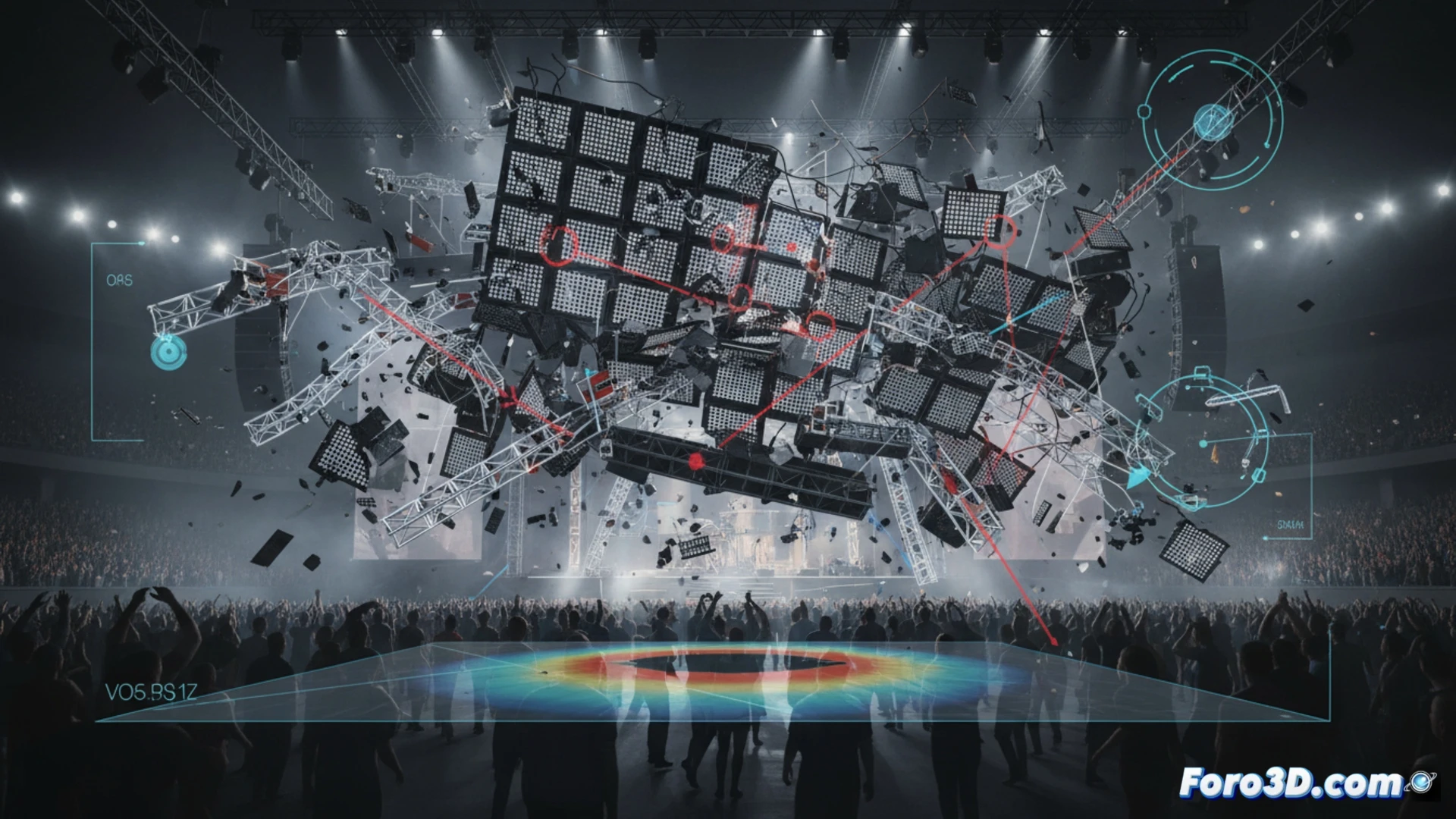
3D modeling allows the collapse sequence to be broken down into key phases. First, material fatigue in the main anchors is evaluated, where finite element simulations reveal anomalous stress concentrations. Then, environmental variables such as lateral wind gusts are incorporated, generating overturning moments not considered in the initial design. The animation shows how progressive deformation of the metal substructure leads to localized buckling, followed by a catastrophic chain failure. The visual result allows identifying the ground zero of the failure and projecting fragment trajectories to validate the existing safety perimeter.
Lessons for protocols in mass events 📋
The virtual reconstruction shows that the relationship between the wind-exposed surface area and the counterweight mass was insufficient. By simulating extreme load scenarios, it is demonstrated that reinforcement at weld points and a real-time tilt monitoring system would have prevented the incident. This analysis reinforces the need to update assembly regulations for temporary structures, integrating fatigue sensors and stricter operating limits based on weather conditions.
How can the 3D reconstruction of the collapse of a giant lighting screen help identify structural failure points and prevent future catastrophes in mass events?
(PS: Simulating catastrophes is fun until the computer crashes and you are the catastrophe.)