The retreat of glaciers is not only an indicator of climate change, but an active geological threat. The traces these ice bodies leave behind, known as glacial track, are the key to anticipating disasters. Thanks to 3D technology, we can document these scars on the earth with millimeter precision, transforming field geology into predictive simulations to safeguard lives and territories.
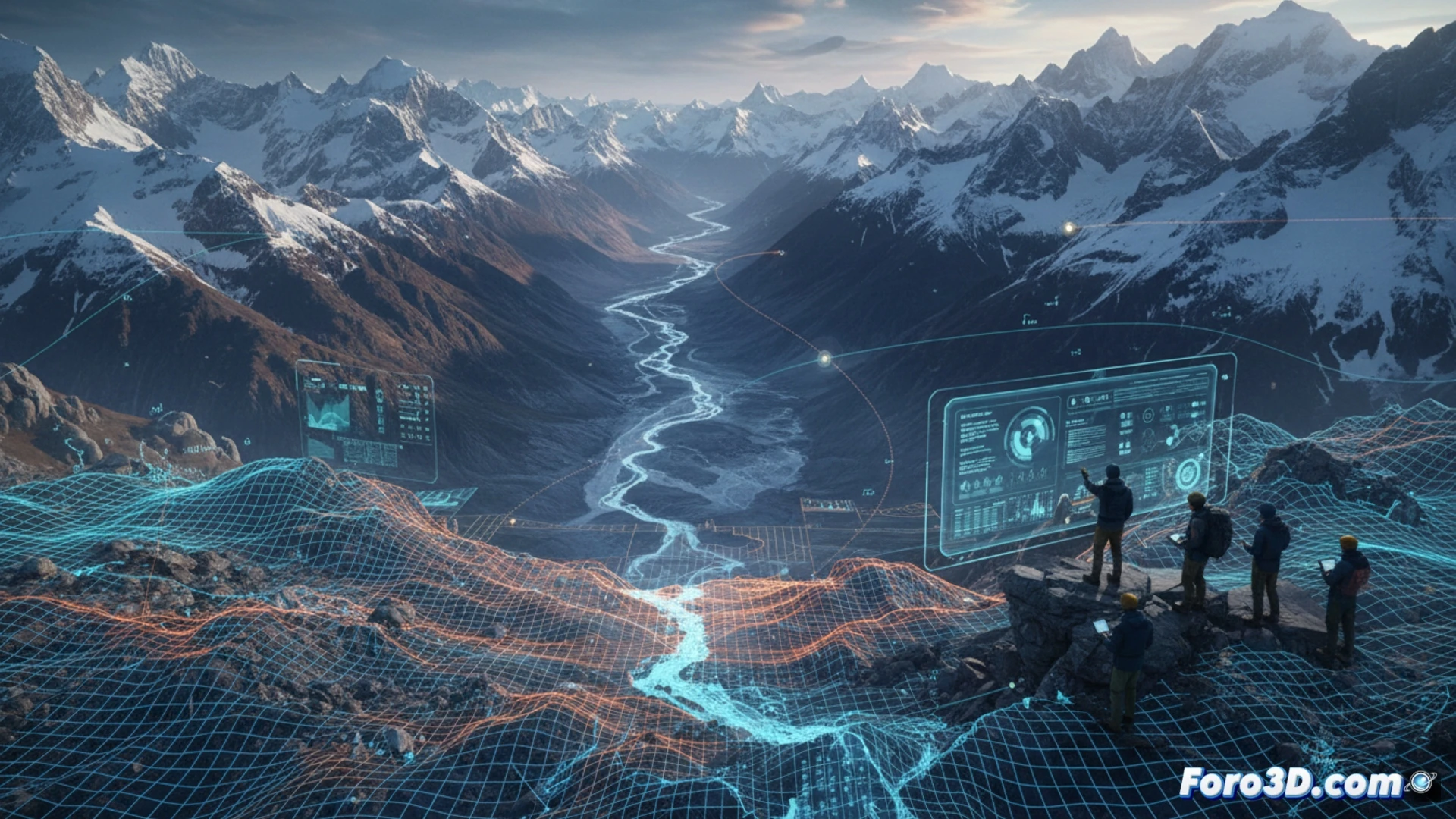
Photogrammetry and LiDAR in Glacial Risk Mapping 🏔️
The documentation of the glacial track is carried out through the combined use of aerial photogrammetry with drones and terrestrial LiDAR scanning. This methodology allows generating high-resolution digital elevation models (DEMs) that reveal unstable moraines, hidden crevasses under the ice, and proglacial lakes in formation. By comparing these models over time, engineers can calculate exact volumes of ice lost and model fluid dynamics to predict sudden meltwater floods (jökulhlaups). 3D simulation of these scenarios allows authorities to draw evacuation maps and design containment barriers with real data, not estimates.
Simulating the Past to Protect the Future 🔮
The true value of the 3D glacial track lies in its ability to narrate the future. By digitally recreating the glacier's historical advance and retreat, we validate climate models and understand collapse patterns. This virtual retrospective prepares us for the inevitable: the acceleration of melting. It is not just about observing catastrophes, but about using the glacier's digital footprint as an early warning system, integrating simulation into territorial planning to prevent the ice track from becoming a community's grave.
Is it possible to predict the collapse of a glacier or the formation of catastrophic meltwater lakes by analyzing 3D models generated from satellite and drone data with artificial intelligence?
(PS: Simulating catastrophes is fun until the computer crashes and you are the catastrophe.)