The technique of Single Sole Tracking is a cornerstone of criminalistics for linking a suspect to a crime scene. However, traditional photographs and plaster casts lose critical details such as the depth of wear or material deformation. The transition to a digital forensic pipeline using photogrammetry or 3D scanning allows for the capture of unique and unrepeatable microgeometries, transforming a simple footprint into quantifiable and defensible evidence in court.
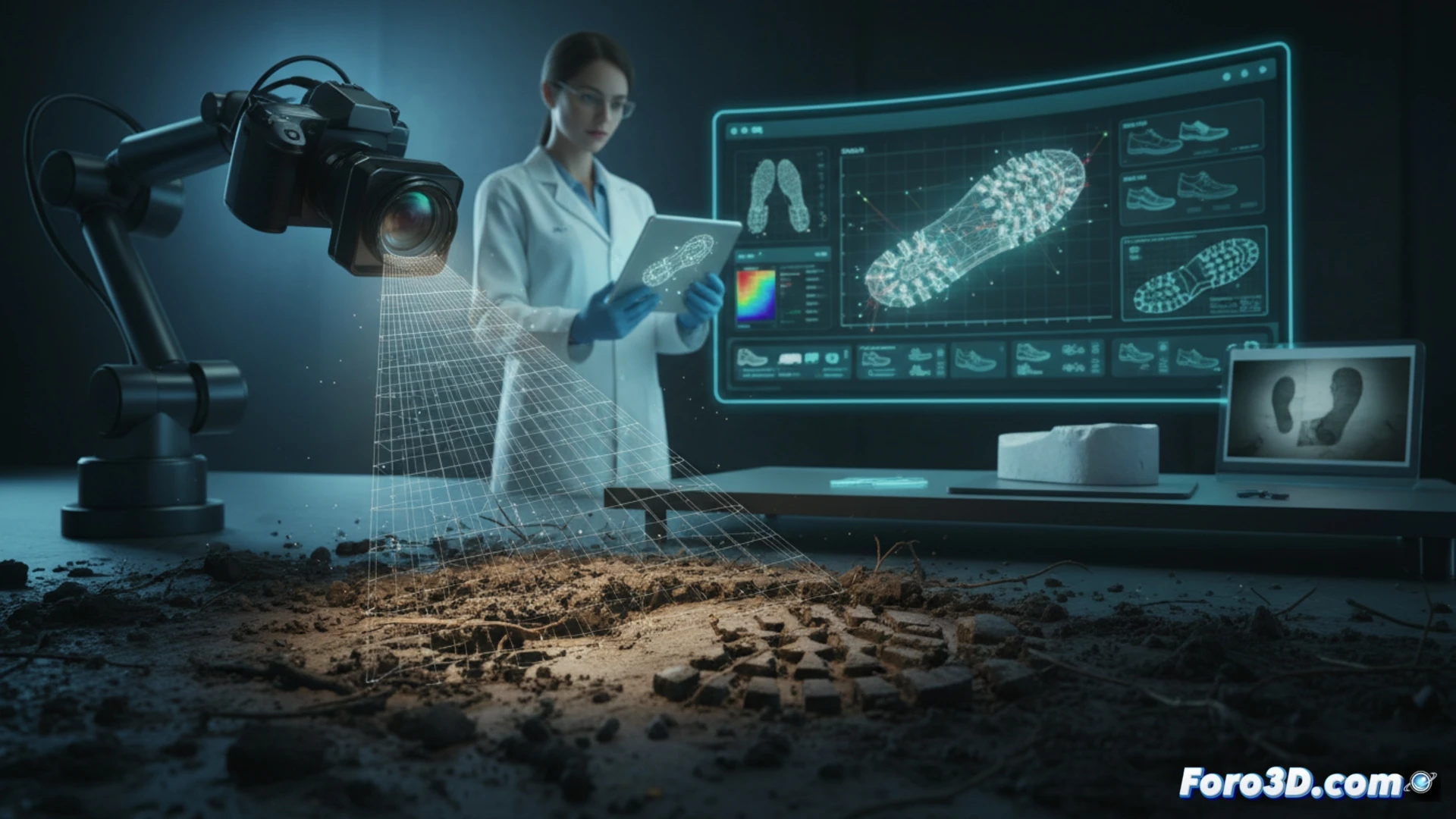
Workflow: Capture, Processing, and Comparative Analysis 🔍
The process begins at the scene with the capture of the footprint using a high-resolution camera or a structured light scanner. For photogrammetry, at least 40 convergent shots are required, along with a color scale and a reference ruler to calibrate the geometry. Modeling software (such as RealityCapture or Meshroom) generates a high-definition mesh that reveals grooves and cuts invisible to the human eye. Subsequently, comparison software (such as CloudCompare or GOM Inspect) is used to align the digital model of the suspect's sole with the scene footprint. Wear analysis, using chromatic deviation maps, allows for the identification of matches in abrasion patterns that act as a fingerprint for the footwear.
The Invisible Evidence: Wear and Microfractures as a Signature 🧬
Beyond the general shape of the sole, the true power of the forensic pipeline lies in the analysis of micro-imperfections. Each lodged stone, each cut from glass, or the deformation caused by the weight of walking creates a unique topography. Digitizing this wear allows the expert to present in court not just an image, but an interactive 3D model that the judge or jury can rotate and examine. This transforms the evidence from subjective to objective, demonstrating with precise metric data the probability that a specific sole left that print at the crime scene.
How can the digital chain of custody and the metrological integrity of a sole print captured via photogrammetry be guaranteed when scanning a crime scene with snow or mud, where material deformation is inevitable?
(PS: don't forget to calibrate the laser scanner before documenting the scene... or you might be modeling a ghost)