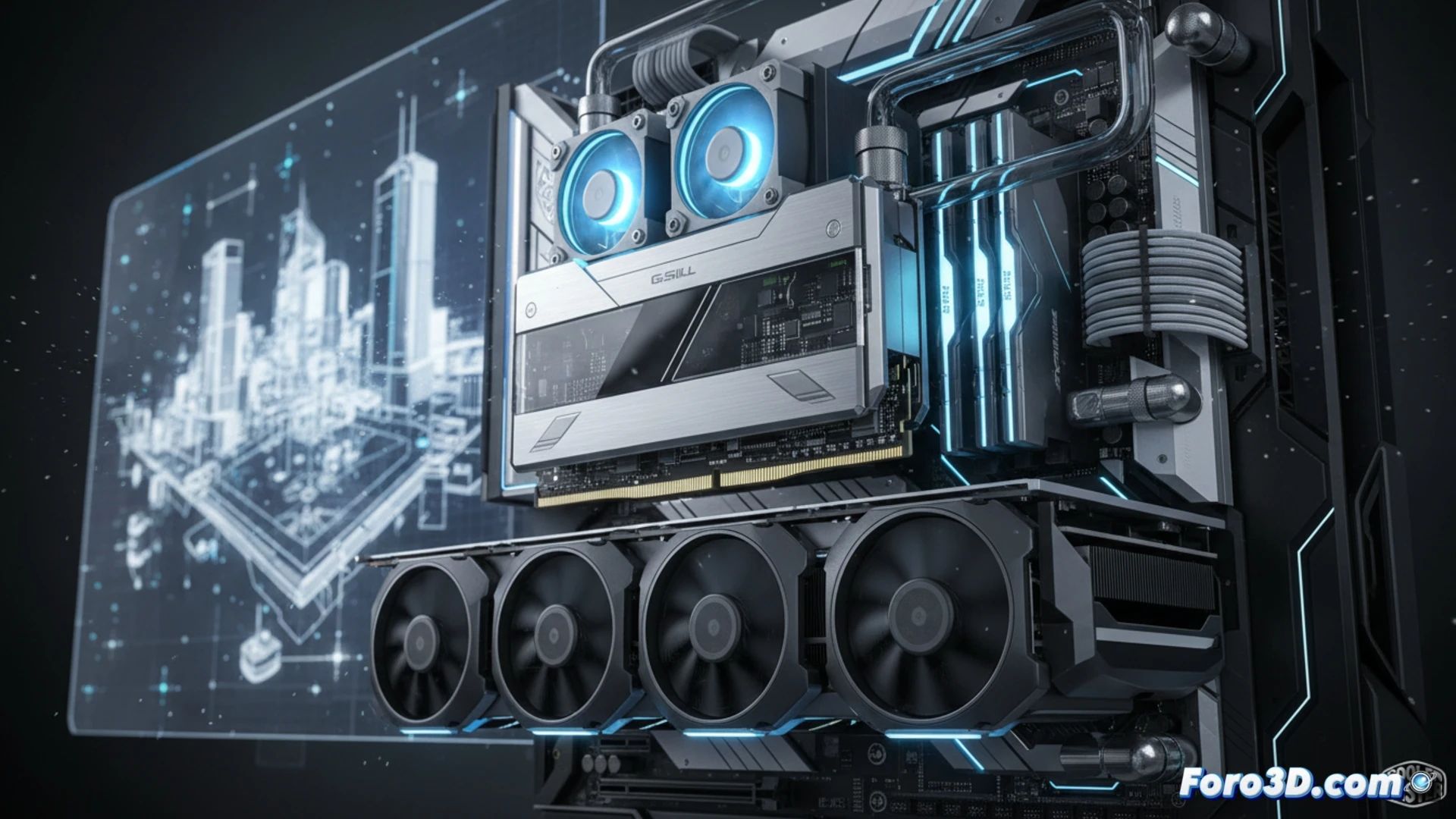
During Computex 2024, Cooler Master and G.Skill presented a prototype DDR5 RAM module that integrates a fan directly into the heatsink. The goal is to combat overheating generated by high operating frequencies, a critical issue in rendering and 3D simulation workstations. Although the solution is passive in connectivity (no additional cables required) and promises to be quiet, its individual commercialization has been hampered by the global memory chip shortage. For the 3D modeling professional, this presents a paradox: innovation exists, but access remains limited and costly.
Technical analysis: impact on sustained performance of 3D workstations 🔥
In intensive workloads such as GPU rendering or real-time dynamics simulation, DDR5 RAM can reach temperatures exceeding 85 degrees Celsius. When this occurs, the memory controller integrated into the processor reduces the clock speed to protect itself, a phenomenon known as thermal throttling. This translates into longer export times and stuttering in the preview of complex scenes. The solution presented by Cooler Master and G.Skill directly addresses this point by forcing air circulation over the memory chips, maintaining stable frequencies for hours of work. In comparison, traditional passive heatsinks (large aluminum blocks) are often insufficient in systems with poor airflow or in configurations with multiple modules placed very close together. However, the fact that it is not sold separately forces 3D creators to rely on pre-assembled kits or generic liquid cooling solutions, which increases the cost of building an optimized workstation.
Final reflection: innovation trapped by the supply chain ⛓️
The proposal for RAM with an integrated fan is technically sound and responds to a real need in the 3D niche: maintaining peak performance without thermal compromises. However, the global shortage of DDR5 RAM and the decision not to sell these modules individually create a significant entry barrier. For the independent professional or small animation studio, this means that performance improvement remains a luxury, not an accessible option. Technology advances, but availability for the general public, especially for those who depend on specialized hardware to work, remains the weakest link in the chain.
Given that overclocking DDR5 RAM generates temperatures that can exceed 60 degrees Celsius in 3D rendering workloads, how does integrating a fan into the memory module affect system stability during 8-hour uninterrupted export sessions of complex scenes?
(PS: There's never enough RAM, just like coffee on a Monday morning)