The resignation of Raúl Rabadán as scientific director of the CNIO leaves a void in the fight against cancer, just as the Spanish Agency for Food Safety warns about aluminum particles in two batches of chocolate cereal. Citizens face two fronts: delays in oncology research and an avoidable food risk.
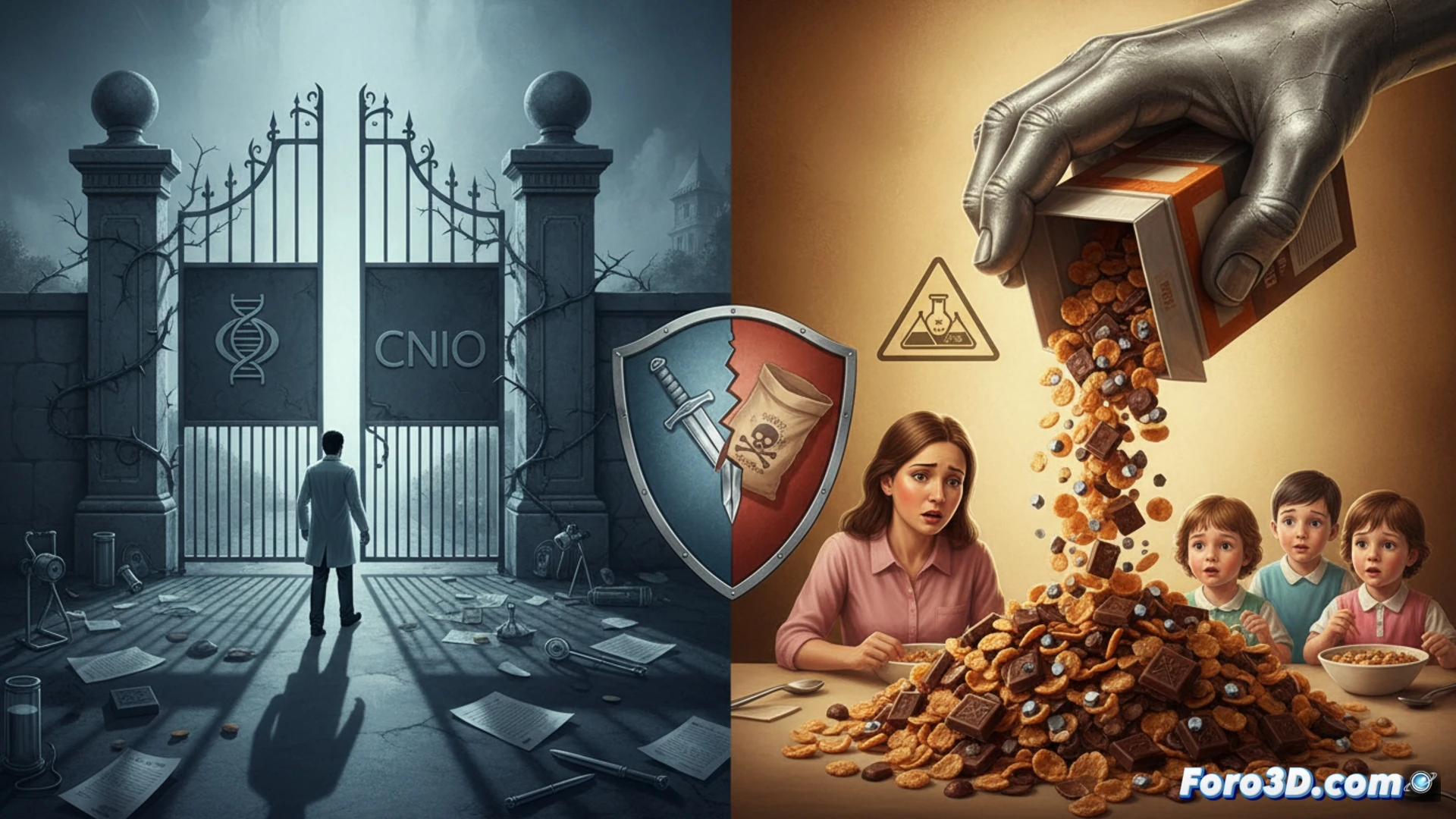
AI against cancer, slowed by lack of leadership 🧬
Rabadán's departure, an expert in computational genomics and artificial intelligence applied to cancer, slows the integration of machine learning into diagnostics and personalized treatments. Without a leader to coordinate bioinformatics teams and clinical trials, projects such as massive tumor sequencing or prediction of drug resistance lose momentum. The CNIO will need months to find a replacement and resume the roadmap.
Cereal with aluminum: the breakfast that gives you superpowers (toxic) 🥣
While scientists debate who will lead the CNIO, food safety reminds us that the real risk is in the breakfast bowl. The aluminum particles in chocolate cereal won't make you fly, but they could give you a direct trip to the hospital. At least, if cancer doesn't finish us off, the excess metal in the milk will. Good thing science is advancing, even if it's in fits and starts.