In the Netherlands, a 12-meter pedestrian bridge made with 3D-printed steel already crosses a canal. The structure, developed by a consortium of companies and universities, not only challenges physical limits but also marks a firm step toward automated construction. Its installation in Amsterdam demonstrates that robotics can create functional and durable infrastructure.
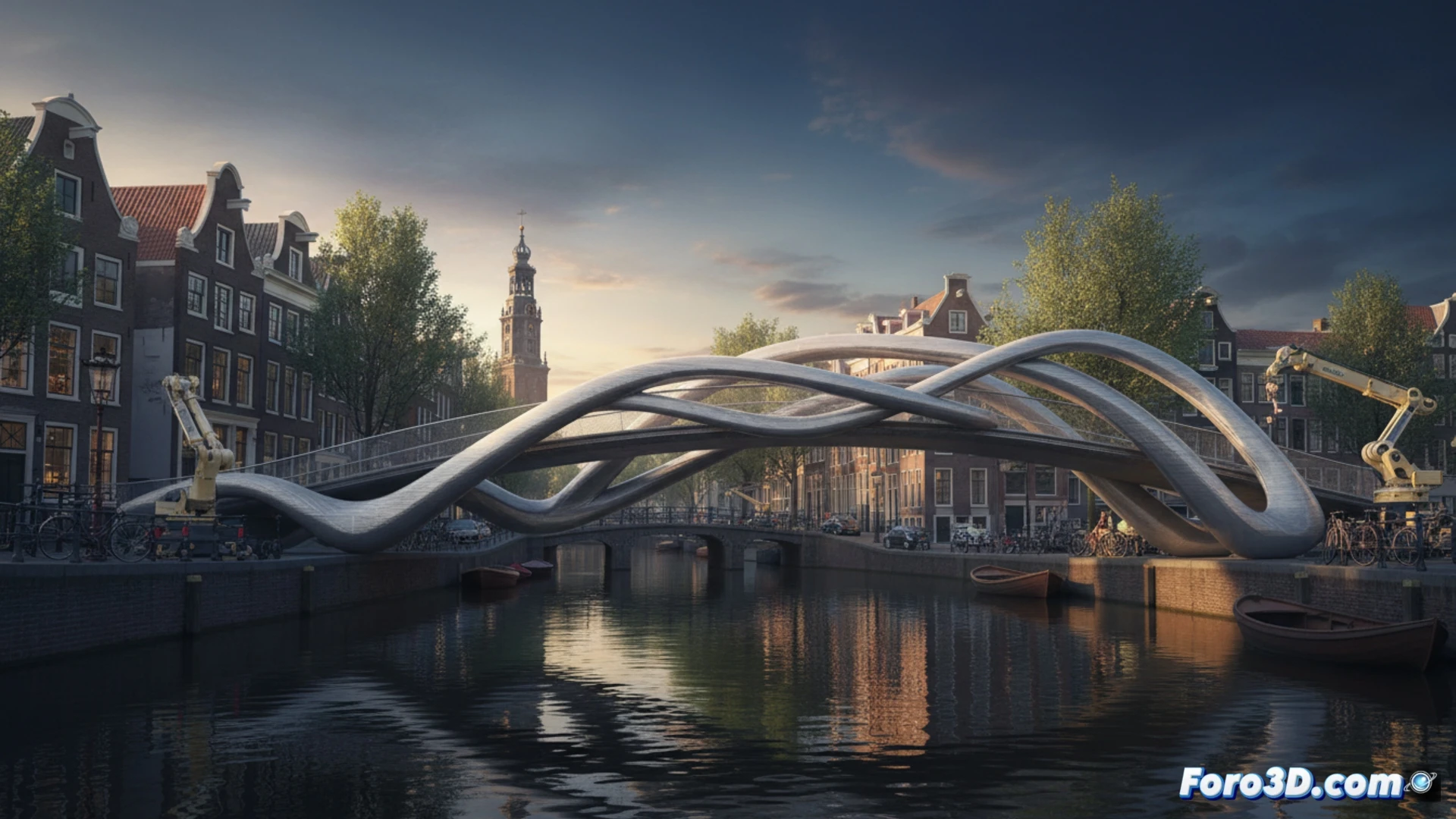
Welding robot and parametric design to withstand real loads 🤖
The bridge was created by a robotic arm that deposited layers of molten steel following a parametric model. The structure, designed by MX3D, integrates sensors that monitor deformations and traffic in real time. Its organic shape optimizes weight distribution, allowing it to support up to 40 tons without intermediate pillars. The printing process took six months and required constant adjustments to avoid internal stresses during metal cooling.
The bridge that prints its own maintenance (or so we hope) 😅
Now it just needs to learn to weld its own cracks and sweep fallen leaves. Meanwhile, engineers trust that the sensors will warn before the bridge decides to retire on its own. Of course, if one day it starts printing extra railings on a whim, the source code will need to be reviewed. For now, crossing the canal remains safer than arguing with a robot.