The recent peaceful protest against heavy traffic on the roads has been marred by acts of railway sabotage. This contradiction diverts attention from the central issue: the lack of sustainable alternatives to road transport. While governments preach the ecological transition, infrastructure continues to prioritize trucks over railways, generating pollution and risks to public health.
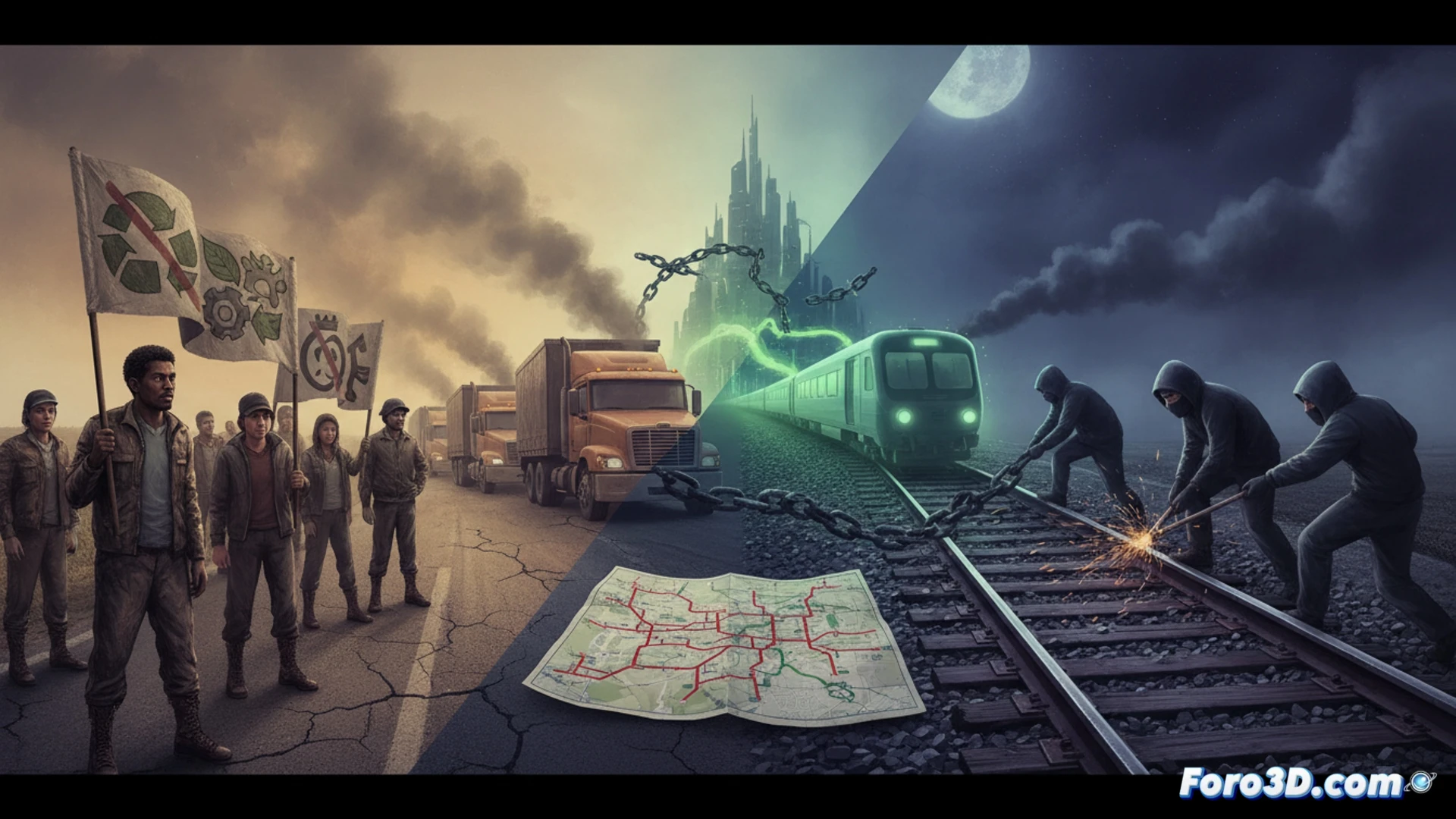
Railway technology: the forgotten solution for heavy logistics 🚆
Current railway technology offers viable solutions with high-capacity electric trains and regenerative braking systems that reduce energy consumption. Electrified railway corridors can transport up to four times more cargo than a highway, with CO2 emissions up to 75% lower. However, investment in these systems remains insufficient, with outdated tracks and a lack of connections to key logistics centers. Political priority remains on asphalt.
Ecological consistency: a train that never reaches its destination 🌍
And meanwhile, environmentalists climb trees to stop highways, but no one chains themselves to a locomotive to demand its expansion. It is more romantic to protest against a truck than to request a budget to electrify a dead-end track. The solution seems simple: invest in trains, reduce trucks, and breathe clean air. But of course, that doesn't sell t-shirts or generate headlines as epic as sabotaging a train.