The global probiotic market moves 114 billion dollars, but science is beginning to question its effectiveness in healthy people. Far from being a support, some studies indicate that these supplements can block the natural intestinal flora. The lack of regulation worsens the problem: many products have no proven benefits and are sold as a universal solution.
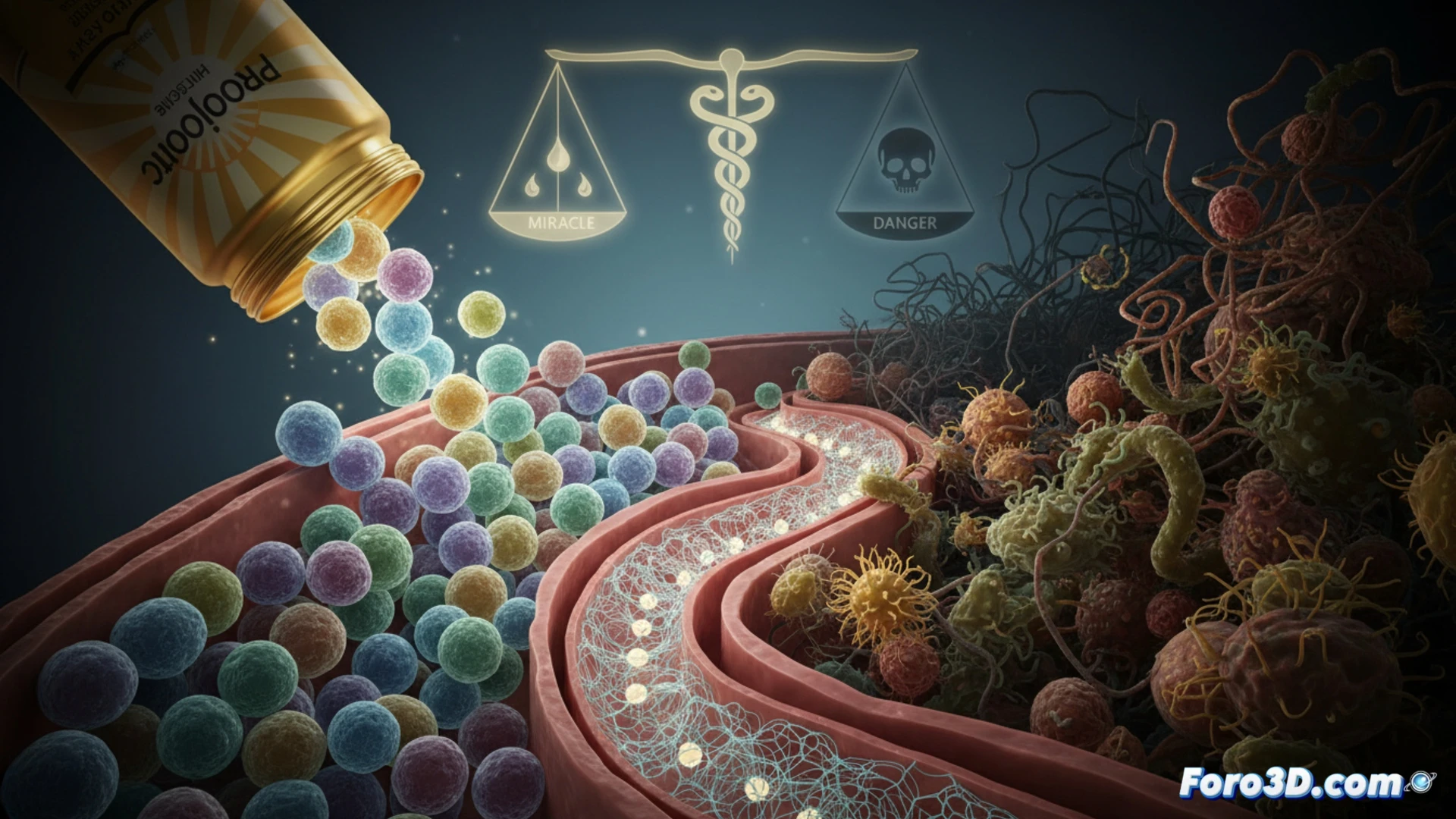
The technical side: strains, doses, and absent regulation 🧪
From biotechnology, the problem is clear: most probiotics contain specific strains that do not colonize the intestine stably. Without a prior analysis of the user's microbiota, ingesting these bacteria can alter the natural balance. Furthermore, since they are not classified as medications, the FDA and other agencies do not require rigorous clinical trials. The result is a product with variable doses and unpredictable effects.
Your flora hates you: the probiotic you bought on Amazon 🛒
It turns out that paying 50 euros for jars of freeze-dried bacteria can be like inviting strangers to a private party in your intestine. The native flora, which had been organized for years, gets displaced by these guests who don't even know the dress code. And the best part: since there is no control, perhaps the jar only contained rice powder with a pretty label.