The illegal modification of mopeds to increase their power is a practice that directly violates European type-approval regulations. It alters the original technical parameters, such as engine displacement or maximum speed, transforming a legal vehicle into a source of risk. This article analyzes the infraction from a digital compliance perspective, using 3D modeling tools to visualize prohibited modifications and the technical verification process.
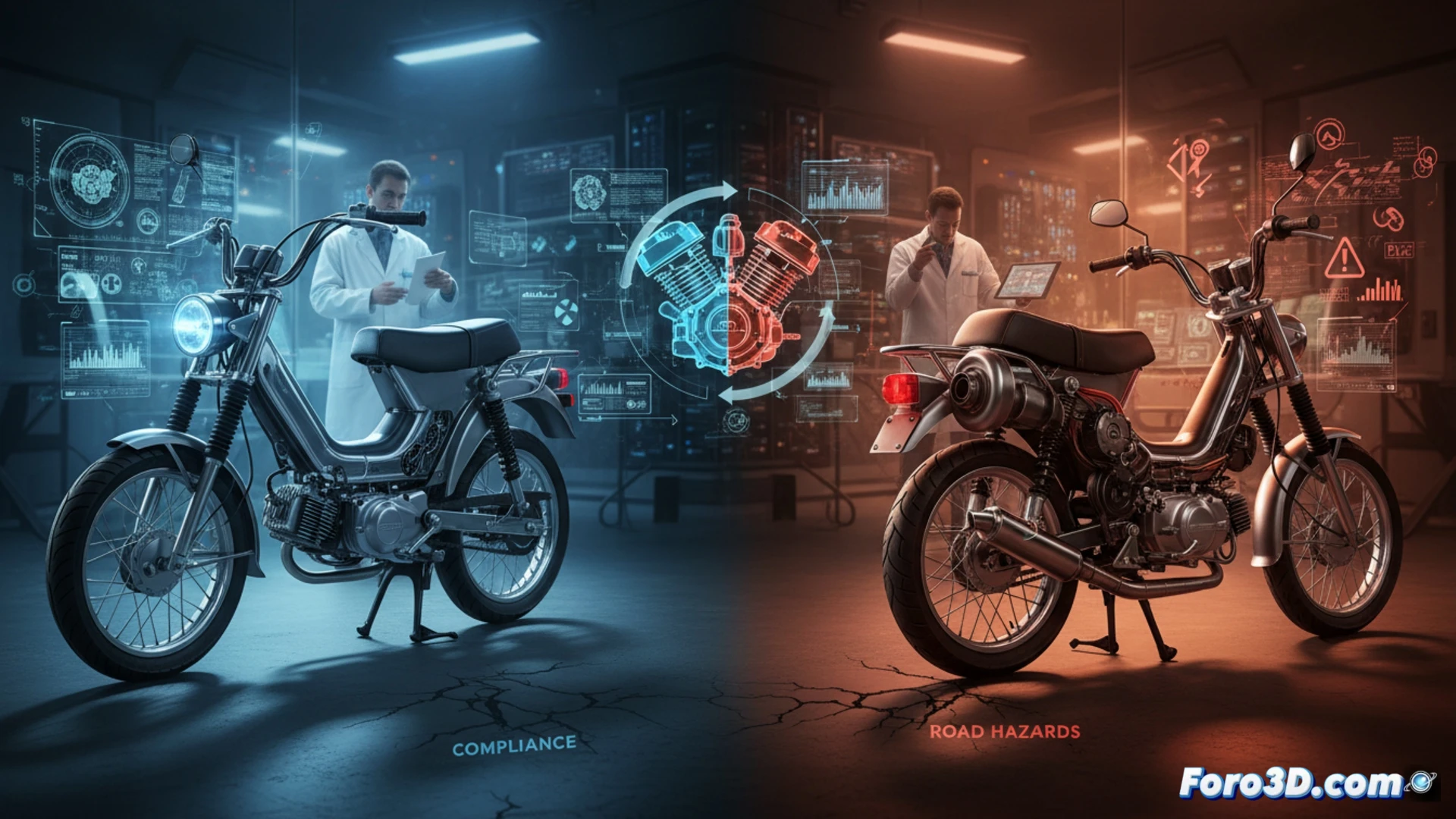
Technical Visualization of Non-Homologated Modifications 🛵
3D modeling allows us to break down a moped engine to expose the critical parts subject to manipulation. We can simulate the installation of a non-original variator kit or the modification of the ECU that raises the top speed above the legal 45 km/h. By rendering the chassis with these altered components, it becomes easier to understand how a small part disrupts the safety balance. Authorities use forensic 3D scans to compare the actual state of the vehicle with its approved technical data sheet, thus detecting illegal deviations that invalidate the insurance and registration certificate.
Compliance and Risk: Beyond the Fine ⚖️
From a digital compliance perspective, illegal power boosting is not just a traffic infraction; it is a failure in the user's chain of responsibility. Each undeclared modification turns the driver into a repeat offender of road safety regulations. 3D modeling of accident scenarios involving these altered vehicles demonstrates the exponential increase in braking distance and instability in curves. Visualizing this data in a technical report is crucial to deterring the practice and educating about the serious legal and physical consequences.
How can forensic analysis of the ECU in an illegally modified moped serve as expert evidence to determine the responsibility of the workshop and the owner in an administrative or criminal infraction?
(PS: verification systems are like print supports: if they fail, everything collapses)