Agricultural irrigation infrastructure, composed of PVC pipes, polyethylene, and drip systems, is disintegrating into microplastics that contaminate crops and aquifers. 3D modeling now allows these particles to be mapped with millimeter precision, creating dynamic visualizations of their migration through channels and fields. This technical article analyzes how these tools reveal blind spots in the global supply chain, exposing the geopolitical dependence on petroleum-derived polymers and their direct impact on the food security of importing nations.
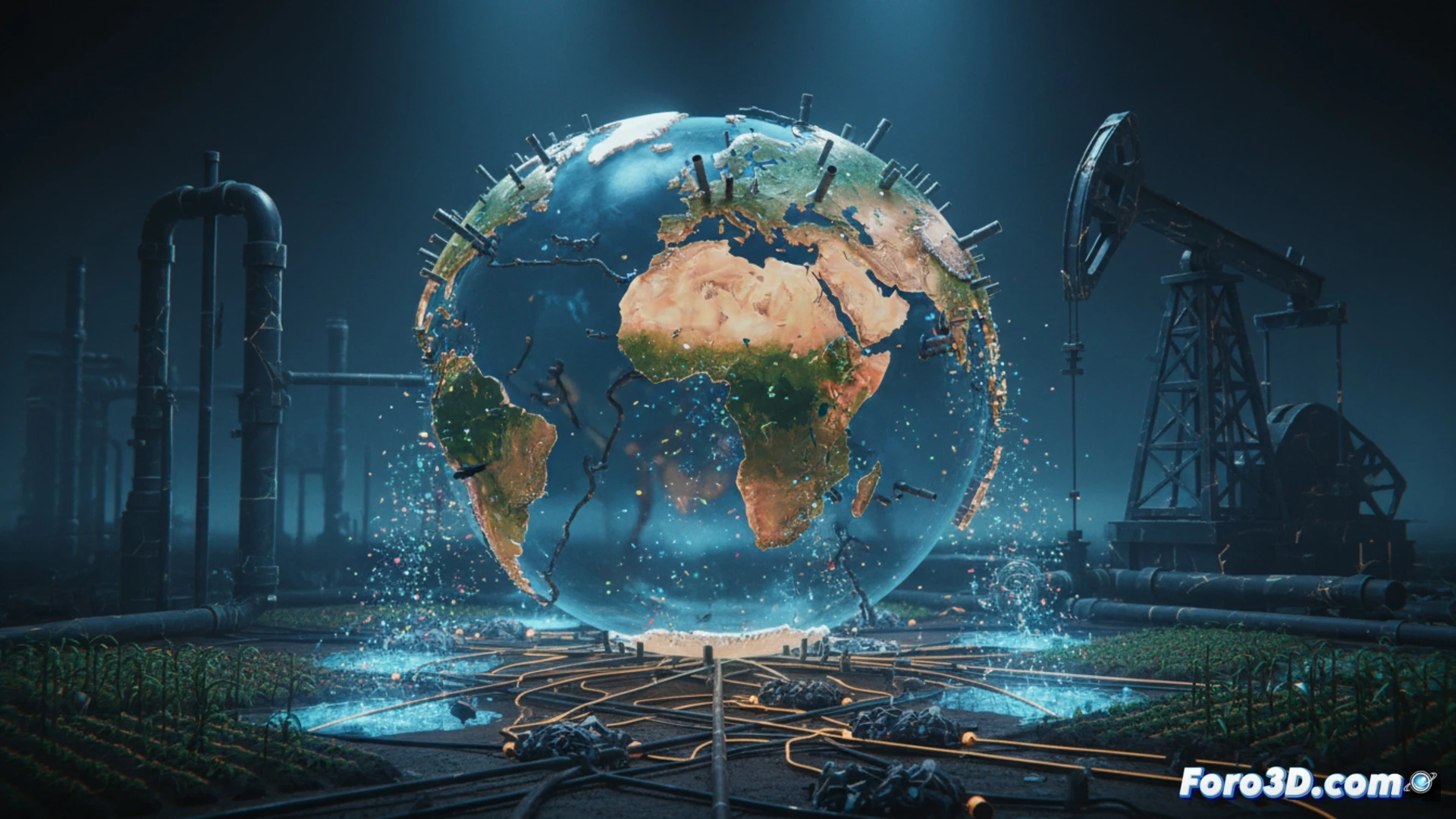
Three-Dimensional Modeling of Pollutant Flows in Irrigation Systems 🌍
The application of LiDAR scanning and underwater photogrammetry technologies allows for the generation of point clouds that identify the accumulation of plastic waste in filters, valves, and drip irrigation laterals. Machine learning algorithms classify this waste by density and size, projecting its trajectory through computational fluid dynamics (CFD) simulations. The result is a digital twin of the irrigation network that shows how agricultural plastic microfibers, from mulches and tapes, fragment and move towards cultivation areas. This mapping not only reveals the system's efficiency but exposes the exact route of contamination from the point of plastic manufacturing to the root of the food.
Hidden Dependence: When Irrigation Plastic Defines Food Sovereignty 🚨
The 3D viewer becomes a geopolitical tool by simulating supply disruption scenarios. If a plastic resin-producing country like China or the United States imposes restrictions, the model calculates the remaining lifespan of the pipes and the accelerated degradation rate that would result from using low-quality alternative materials. Countries in the Global South, dependent on plastic imports for irrigation, would see their contamination maps skyrocket, reducing the yield of strategic crops like rice or corn by 15% to 30% according to current projections. Mapping plastic is, therefore, mapping the vulnerability of our food chain.
Can the geopolitical dependence on plastic pipe suppliers for irrigation, such as the petrochemical giants of China and the Middle East, exacerbate the global food crisis by turning agricultural infrastructure into an invisible source of microplastics that contaminates the soil and water of strategic crops?
(PS: visualizing the global supply chain is like following a trail of breadcrumbs... in 3D)