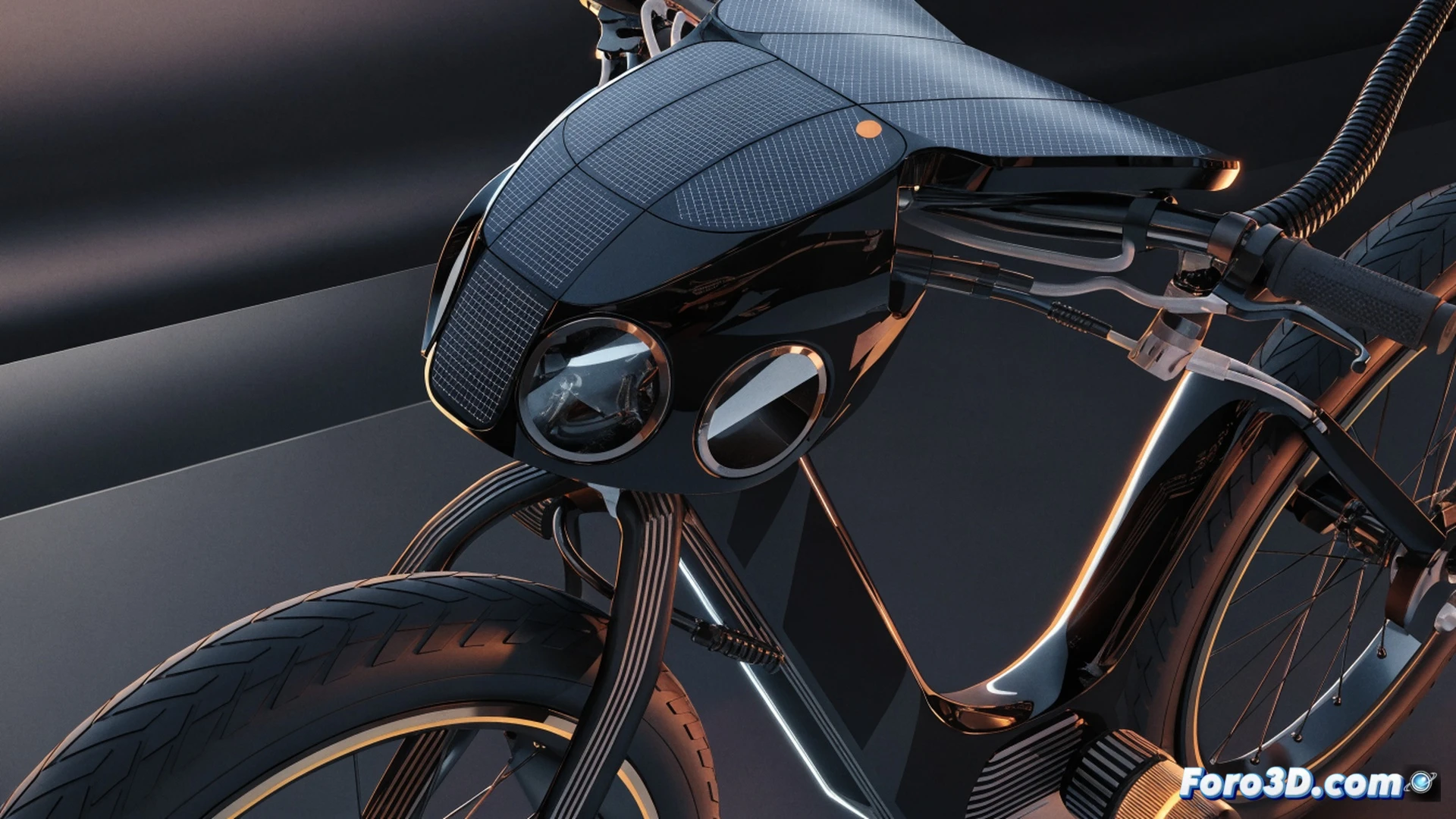
The Phosgo Go5 arrives on the market with a pre-sale price starting at $1,999, promising to be an electric bicycle with solar panels and an AI assistant. However, experts are already warning that its panels, being fixed and poorly oriented, barely generate useful charge in real-world conditions. The AI assistant, for its part, turns out to be a superfluous addition that raises the cost without practical benefit. For the average citizen, this represents a high risk of buying an expensive product with questionable features.
Fixed panels and digital assistant: obvious technical problems 🚲
The design of the solar panels on the Go5 is the weak point: being rigidly integrated into the frame, they cannot be tilted toward the sun, drastically reducing their efficiency. In preliminary tests, recharging is minimal on urban routes with shadows or changes in direction. The AI assistant, presented as an innovation, is limited to basic functions like navigation or route logging, data that any smartphone offers for free. Thus, the user pays a premium for technology that does not solve real autonomy problems.
The AI assistant nobody asked for, but you pay for it anyway 🤖
The Phosgo Go5 includes an AI assistant that, according to the brand, will help you plan routes. What they don't say is that your three-year-old phone already does that, and better. It's like buying a toaster with wifi to alert you when the toast is ready: useful if you live in 2010 and discovered the internet yesterday. For $1,999, you'd be better off buying a portable solar generator and a normal bike; at least the generator is useful for more than pedaling with dubious style.