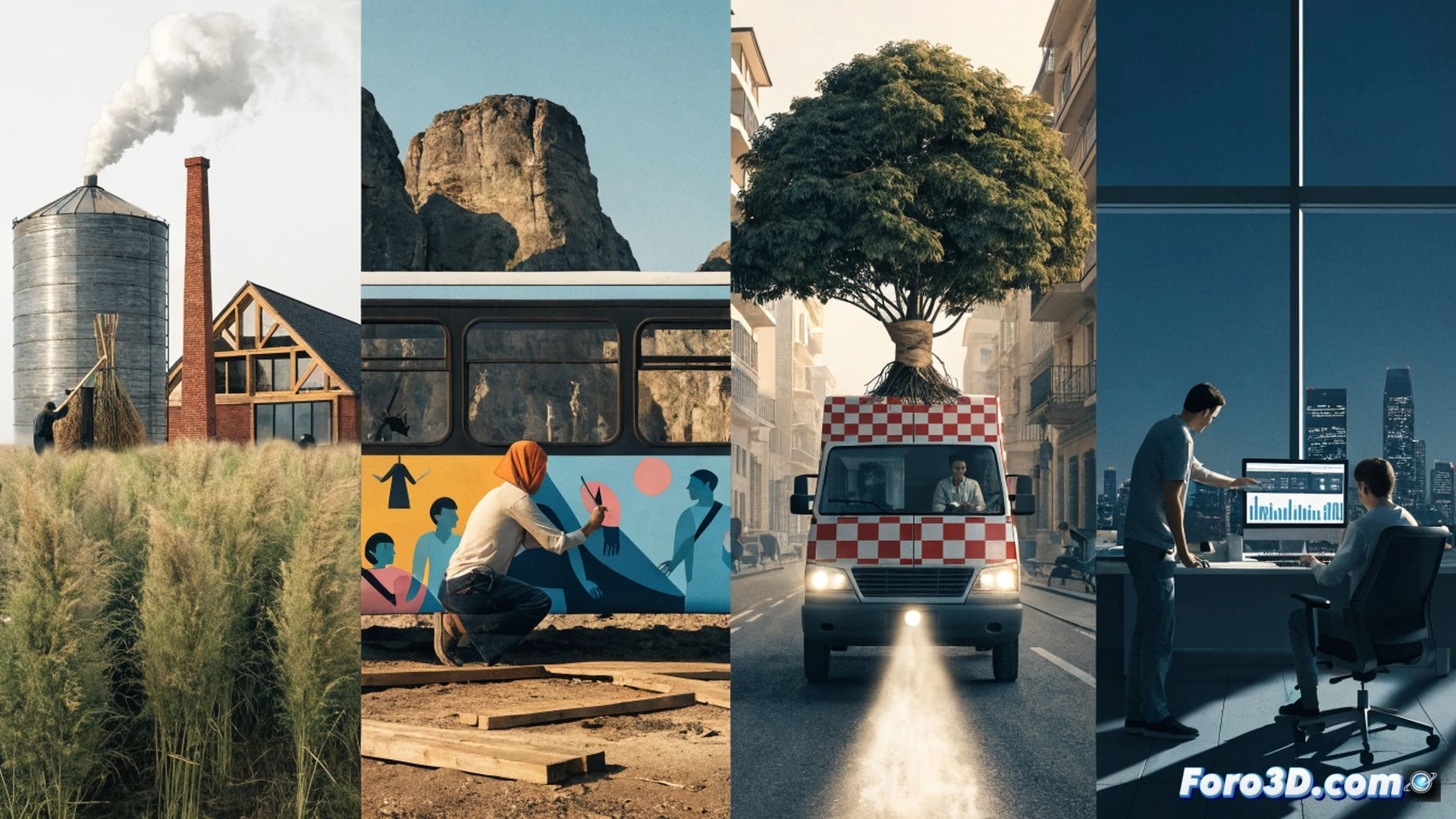
In a world where the climate crisis demands answers, diverse initiatives are emerging from different corners. In Europe, miscanthus, an Asian grass that reaches 4 meters and withstands droughts, is making its way into heating and construction, although its cultivation is still limited. Meanwhile, in Mali, an artist paints murals on buses to raise awareness about climate change, and in India, an ambulance rescues urban trees. In the US, former federal employees reopened a climate website. For citizens, this means more clean energy options and environmental protection.
Green technology: from giant grass to the reopened web 🌱
Miscanthus is not only drought-resistant, but its biomass offers a viable alternative to fossil fuels in domestic and industrial boilers. Its ability to capture carbon during growth makes it a technically promising resource, although its adoption in Europe remains low due to infrastructure costs. In parallel, the reopening of the climate website by former US employees aims to maintain access to government data, a key technical tool for researchers and activists. Both initiatives demonstrate that technology, when well applied, can be a driver of local change with global impact.
Murals, ambulances, and grasses: the planet savers' club 🌍
Because nothing says save the world like a painted bus in Mali, an ambulance taking trees to the hospital in India, or an Asian grass that grows up to 4 meters without asking permission. If we put together an artist, a gardener, and a former federal employee, it sounds like the start of a bad joke. But it turns out it's not: while some debate at international summits, others are already planting, painting, and reopening websites. So now you know, if you see a bus with a mural, don't get on: better plant a tree or ask for grass heating.