Thermal penetration is a critical phenomenon in material fatigue, where heat propagates from a source into the interior of a component, generating temperature gradients. These gradients cause differential expansion between the surface layers and the core, inducing internal stresses that, when repeated, degenerate into microcracks. In sectors such as aerospace or power generation, understanding this process is vital to ensure the structural integrity of parts subjected to extreme thermal cycles.
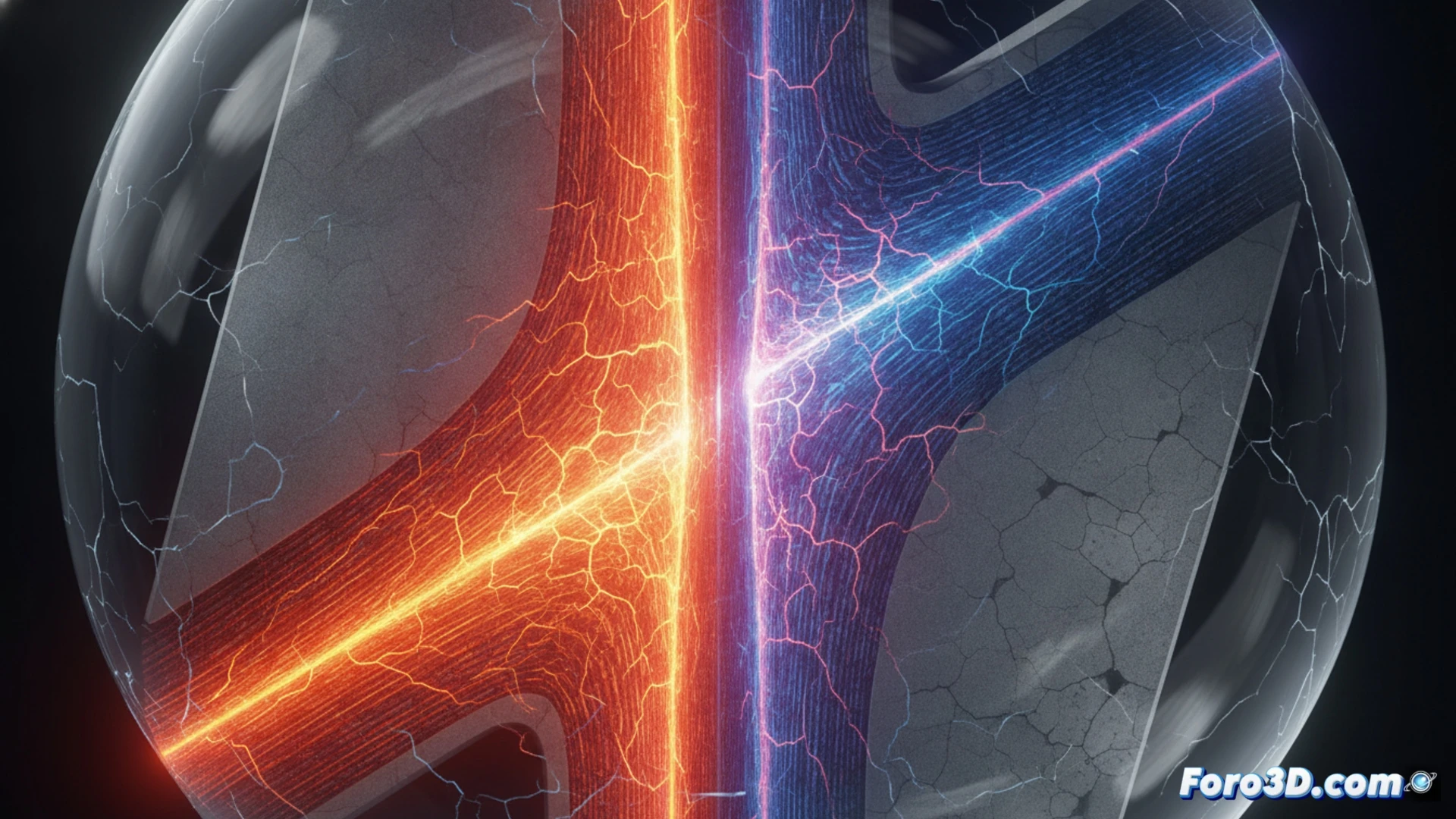
3D Simulation of Thermal Gradients and Residual Stresses 🔥
3D modeling allows precise visualization of how heat is distributed in complex geometries, such as turbine blades or high-power heat sinks. Using finite element analysis (FEM), thermal penetration is simulated in real time, identifying critical points where differential expansion reaches its peak. For example, in a gas turbine, the leading edge of the blade experiences rapid heating while the interior remains cold; this difference generates compressive and tensile stresses that, after thousands of cycles, initiate cracks. 3D simulation not only shows heat propagation but also quantifies residual stresses, allowing adjustments to materials or designs to mitigate failure.
Predicting Failure Before It Occurs ⚙️
The ability to anticipate failures is the greatest benefit of these simulations. By modeling thermal penetration in an electronic system heat sink, it is possible to predict where the first microcracks will appear after 10,000 on-off cycles. This transforms industrial design: instead of relying on costly destructive testing, engineers optimize thicknesses, coatings, or alloys in a virtual environment. Thus, 3D simulation becomes an indispensable tool for extending the lifespan of critical components and preventing catastrophic failures.
When simulating material fatigue, how is the evolution of thermal penetration accurately modeled during load cycles to avoid errors in predicting the component's service life?
(PS: Material fatigue is like yours after 10 hours of simulation.)