The intensive use of digital devices disrupts sleep, reduces concentration capacity, and generates emotional dependence. Spending hours in front of a screen affects melatonin production, hinders rest, and fosters social isolation. Recognizing these effects is the first step to regaining balance between digital life and personal well-being.
The impact of blue light on the circadian rhythm 🌙
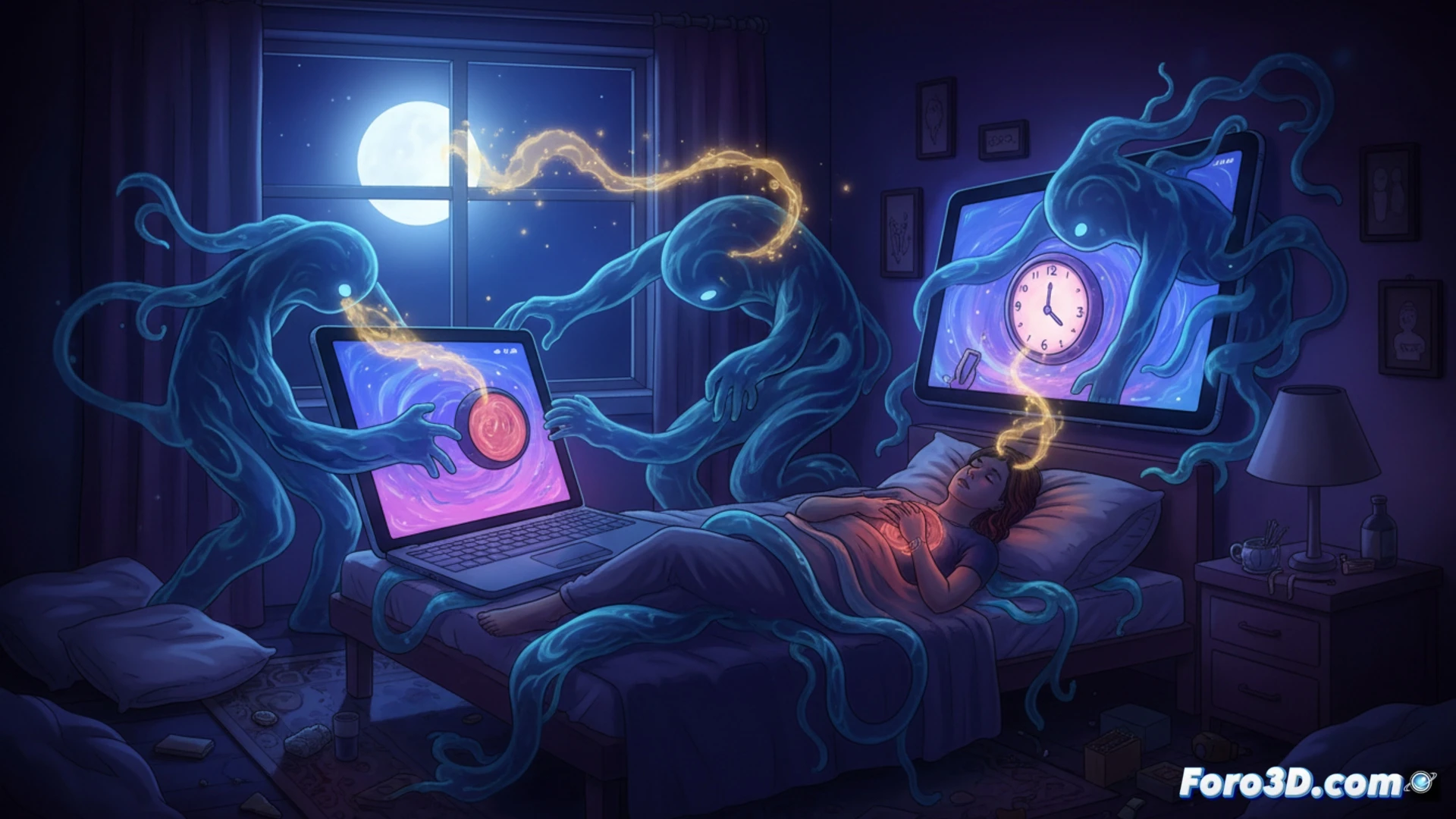
Prolonged exposure to LED screens inhibits melatonin secretion by tricking the brain with short-wavelength artificial light. This delays the sleep-wake cycle and reduces the quality of deep rest. At a cognitive level, digital multitasking fragments attention and weakens working memory. To mitigate these effects, it is recommended to activate warm light filters at sunset and maintain a digital break of at least 60 minutes before sleeping.
The smartphone: your new insomnia companion 📱
It is curious that we have created a device capable of replacing a therapist, an alarm clock, and an anxiolytic, all in one. We use it to calm ourselves before sleeping, but then we wonder why we wake up at three in the morning checking notifications. Perhaps the next great technological advancement will be an airplane mode that also turns off the brain.