A developer has managed to make the ASUS laptop secondary ZenVision display compatible with Linux. This small panel on the lid, which shows the time, battery, or messages, previously only worked with the official Windows software. Now, open-source code allows Linux users to customize visual effects and take advantage of this accessory that was limited to a single operating system.
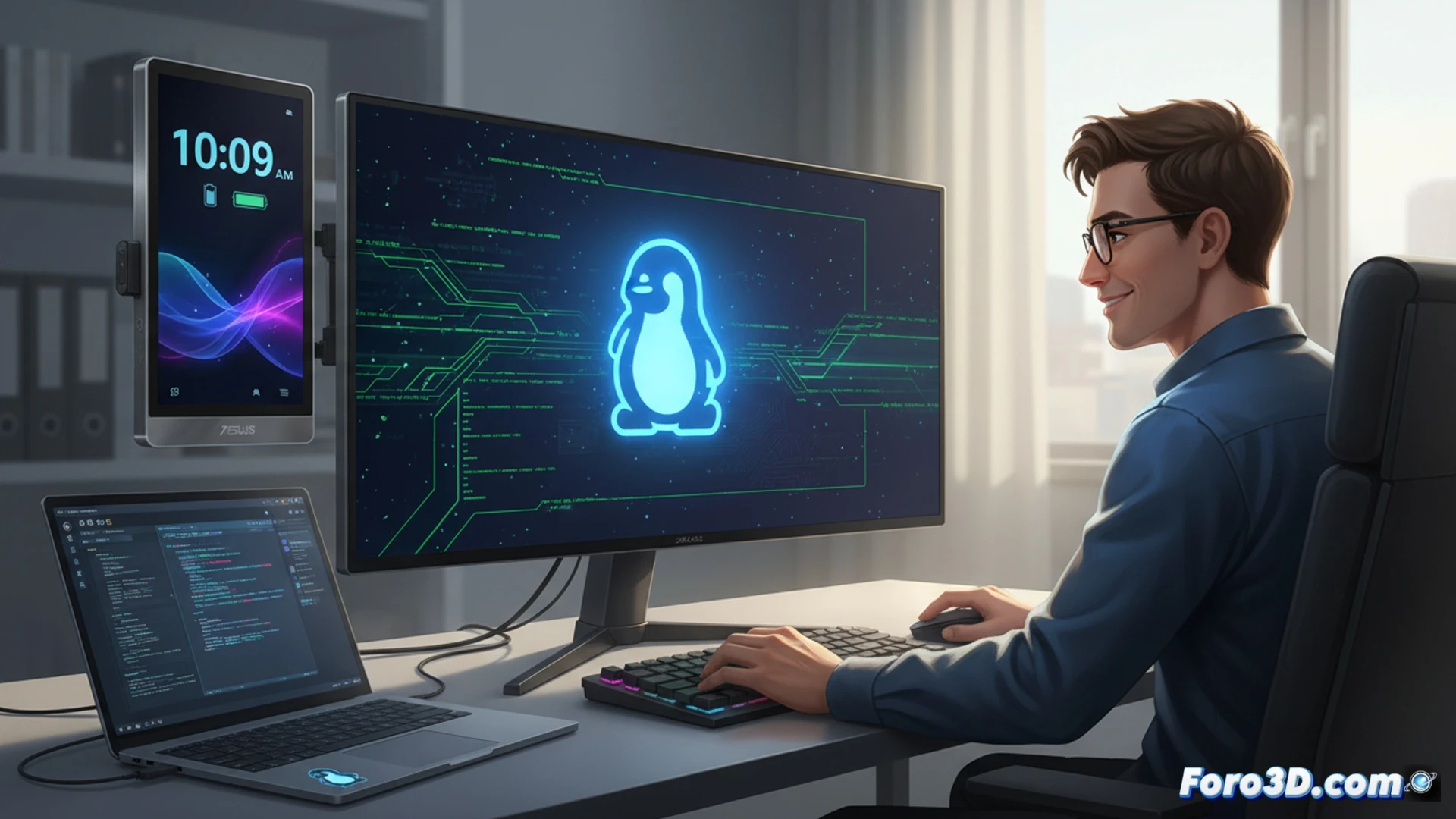
Open-source code unlocks the ASUS secondary display 🛠️
The project, available in public repositories, uses modified drivers to interact with the ZenVision hardware. Users can configure widgets, animations, and notifications without relying on proprietary software. The implementation requires kernel adjustments and access to the laptop's internal USB interface. Although it does not cover all models, this advancement represents a step towards full peripheral compatibility in Linux environments.
Windows loses its monopoly over a 3-inch screen 😅
Something that ASUS decided to keep only for Windows, as if showing the time were a state secret, now anyone with a compatible laptop and the willingness to type can have their ZenVision working on Linux. That said, get your coffee ready: you'll have to compile modules and pray the kernel doesn't complain. Because nothing says freedom like spending an entire afternoon configuring a screen that shows the same clock you have on your desktop.