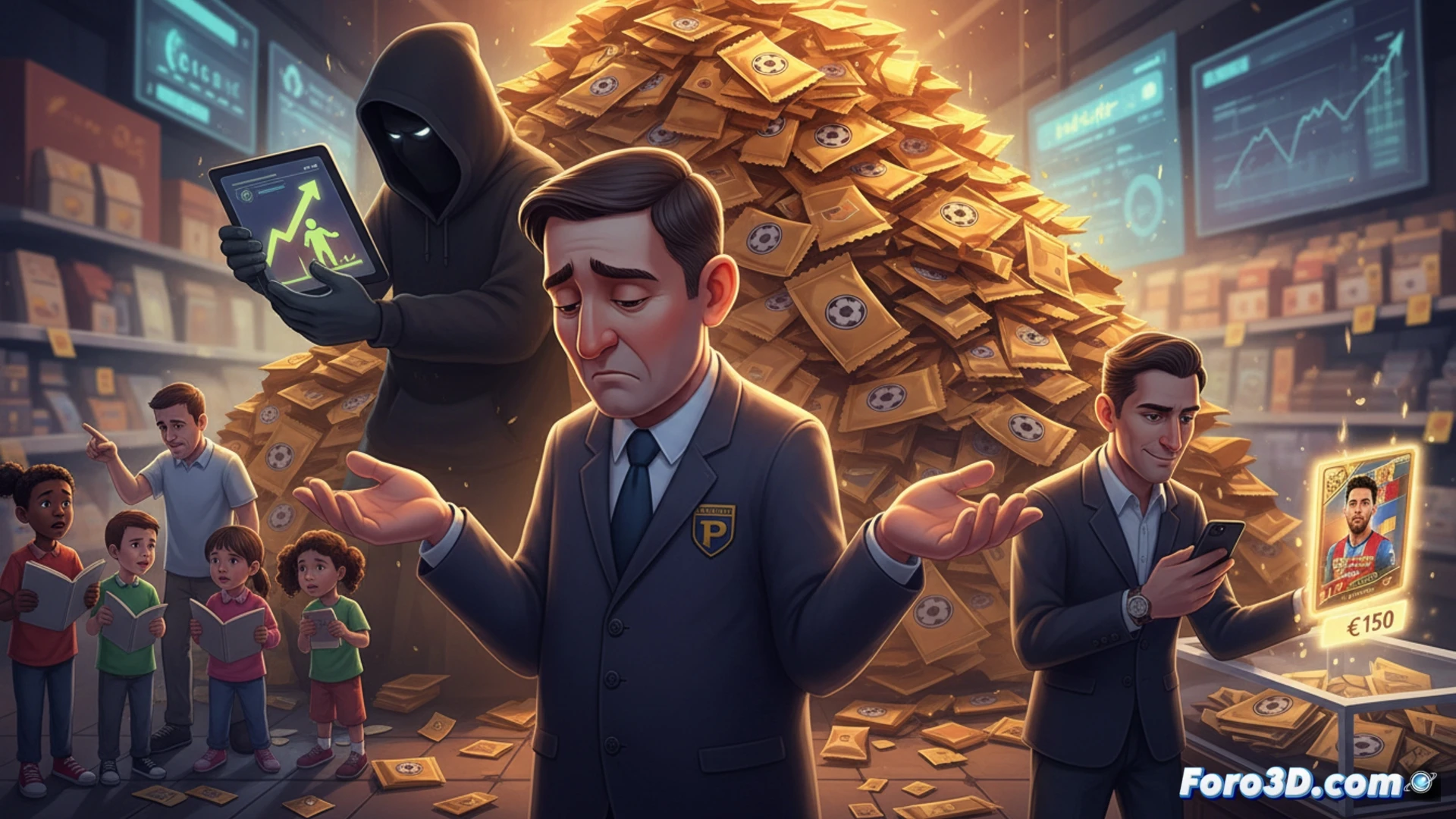
Panini has acknowledged that the World Cup fever is leaving newsstands without packets. The company admits that purchases of entire boxes by adult collectors deplete stock, while children and families are left unable to stick a single sticker in the album. However, on resale platforms, figures of Messi or Cristiano Ronaldo reach 150 euros, fueling a black market that the company says it does not control.
The technical strategy of programmed scarcity 📉
Behind the supposed lack of production lies an industrial calculation. Panini maintains exclusive agreements with FIFA as the sole manufacturer, eliminating any competition that would regulate prices. By launching limited editions and not increasing the print run despite demand, the company forces the purchase of complete boxes (more expensive than individual packets) and generates a resale market where the same newsagents remove packets from the counter to sell them online. Scarcity is not a logistical accident; it is a business model that maximizes hype for future collections without Panini assuming overproduction costs.
The Messi sticker is worth 150 euros, nostalgia has no VAT 💸
Parents jump through hoops to find a packet, while resellers rub their hands together. The curious thing is that the citizen pays 150 euros for a Messi sticker, a piece of cardboard that costs cents to manufacture. But of course, nostalgia is a luxury, and Panini knows it. While the child cries without his sticker, the newsagent laughs, selling online what he hid under the counter. In the end, the only sticker that is not missing is that of hypocrisy.