British firm Oxford PV has developed a tandem silicon-perovskite solar cell that achieves an efficiency of 28.6%. This technology stacks two materials to capture a broader portion of the solar spectrum, surpassing the theoretical limit of conventional silicon cells. A breakthrough that promises more energy in less space.
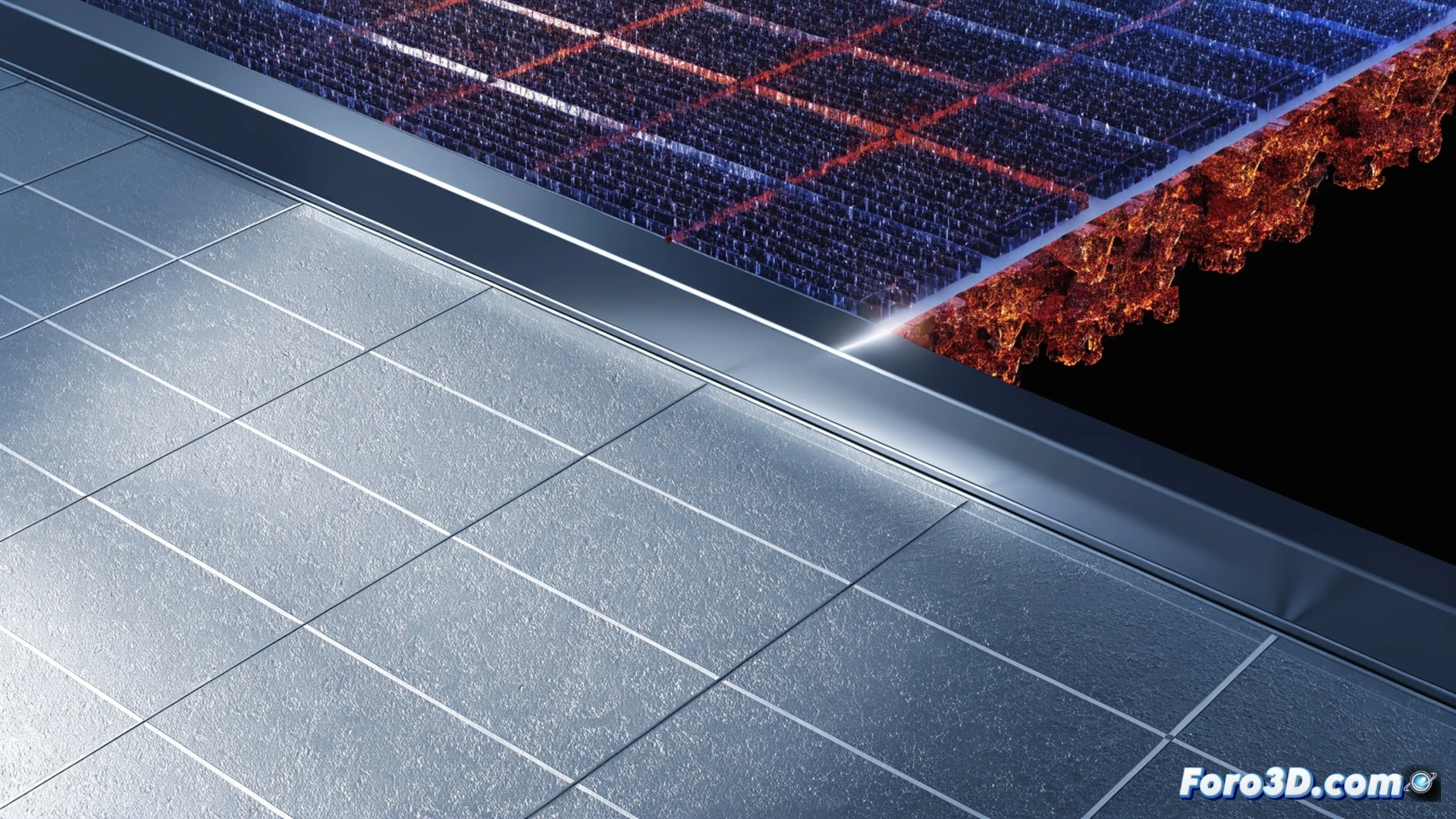
How the double layer of silicon and perovskite works 🔬
The cell combines a bottom layer of crystalline silicon, which absorbs red and infrared light, with a top layer of perovskite, efficient in the blue and green spectrum. By working in tandem, they reduce transmission and heat losses. The manufacturing process uses low-temperature deposition techniques, allowing perovskite to be integrated onto standard silicon cells without degrading their performance.
The panel that makes your old roof feel obsolete ☀️
While your current solar panel settles for 20% efficiency and takes up half your roof, this invention promises nearly 30%. Now we just need the perovskite not to degrade at the first change in weather, because it would be ironic for such an advanced panel to work less than a wet sock. Oxford PV says it's already fixing that. We'll have to see.