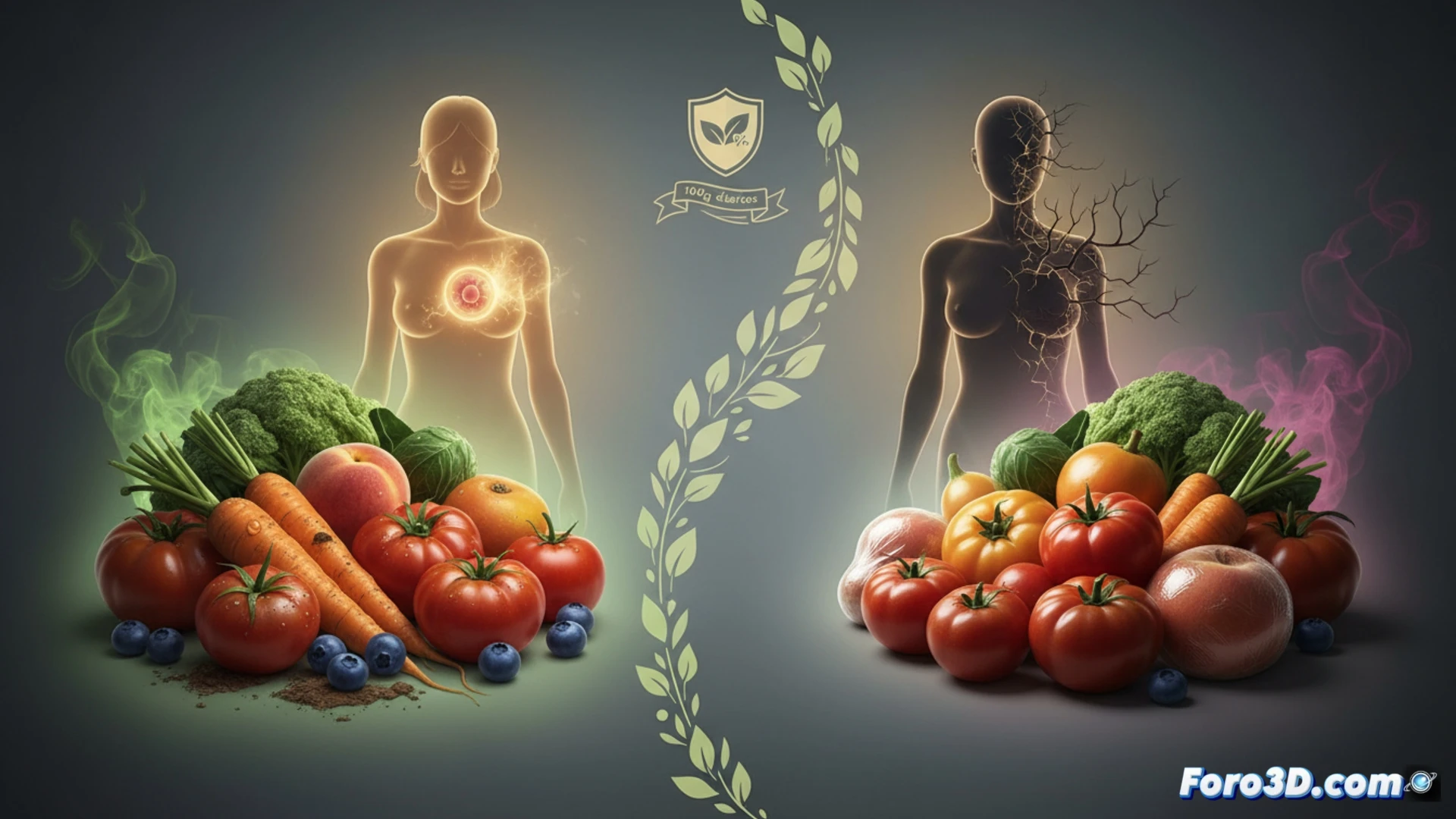
A French study published recently has brought to light data that invites a review of the shopping basket. According to the research, replacing 100 grams of conventional fruits and vegetables daily with their organic versions reduces the risk of postmenopausal breast cancer by 10%. A small change on the plate that, according to the authors, could have a significant impact on long-term health.
The science behind the pesticide: how the impact was measured 🧪
The study, conducted by the team at Université Paris-Saclay, analyzed data from over 68,000 women over a follow-up period of several decades. The researchers classified the frequency of consumption of 16 groups of organic foods and calculated exposure to pesticide residues. The 10% reduction in risk remained even after adjusting for factors such as body mass index, physical activity, and smoking. The proposed mechanism suggests that conventional pesticides act as endocrine disruptors, altering hormonal balance and favoring certain types of hormone-dependent cancers.
Organic fruit: now also a life insurance policy (and a wallet one) 💰
So, if you want to reduce your risk by 10%, you just have to pay double for the same apple. Something like a health insurance policy with a variable premium: if the budget allows, great; if not, you have to pray to the pesticide. Of course, before you rush off to the organic supermarket, remember that the study talks about 100 grams daily. You don't need to go all out on organics: with half a piece of fruit and a couple of carrots, you're already in the cautious club.