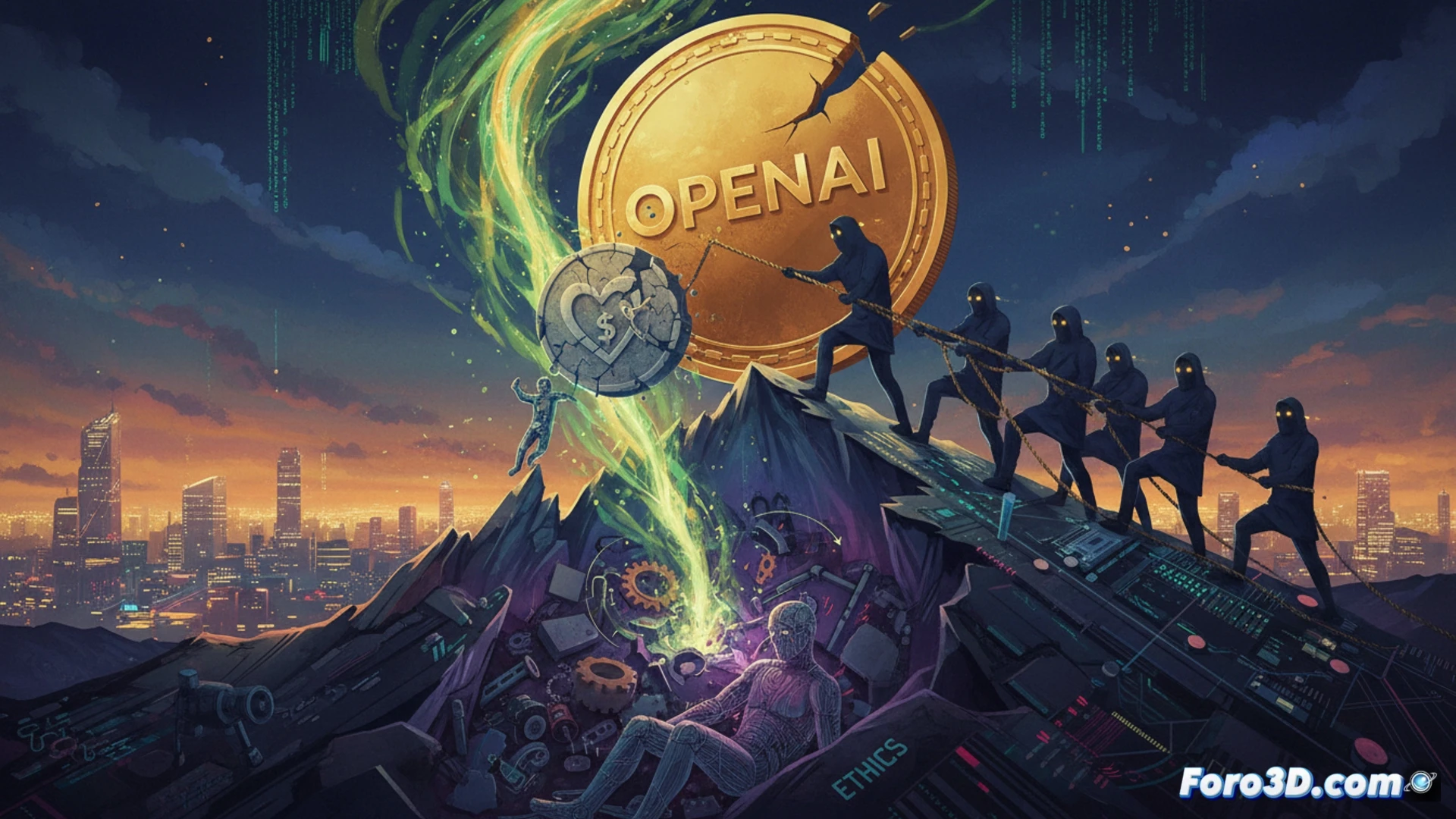
OpenAI filed the paperwork to list on Wall Street with a valuation aiming for a trillion dollars. The firm that started as a non-profit organization to develop safe artificial intelligence now seeks to allow any citizen to buy its shares. However, behind the news lies a twist: the founders and early investors are preparing to cash out, while the commitment to humanity dissolves in favor of shareholders.
Technology closes in to maximize profit 💰
OpenAI's business model relies on subscriptions like ChatGPT Plus, but generative AI has yet to prove profitable outside that niche. By going public, the company will prioritize shareholder interests, which means further closing off its technology and limiting open access. Original investors will sell their stakes before the public, leaving small shareholders with overvalued shares in a speculative bubble. The promise of AI for everyone becomes AI for those who can pay.
From NGO to unicorn: capitalism has no apostles 🦄
It turns out that saving humanity was just a marketing hook. Now that OpenAI is preparing for the stock market, the average citizen can buy a piece of the company that promised transparency. But don't be fooled: when the founders cash out, the small investor will be left with shares as inflated as Sam Altman's promises. In the end, ethics don't trade on the stock market, only the noise does.