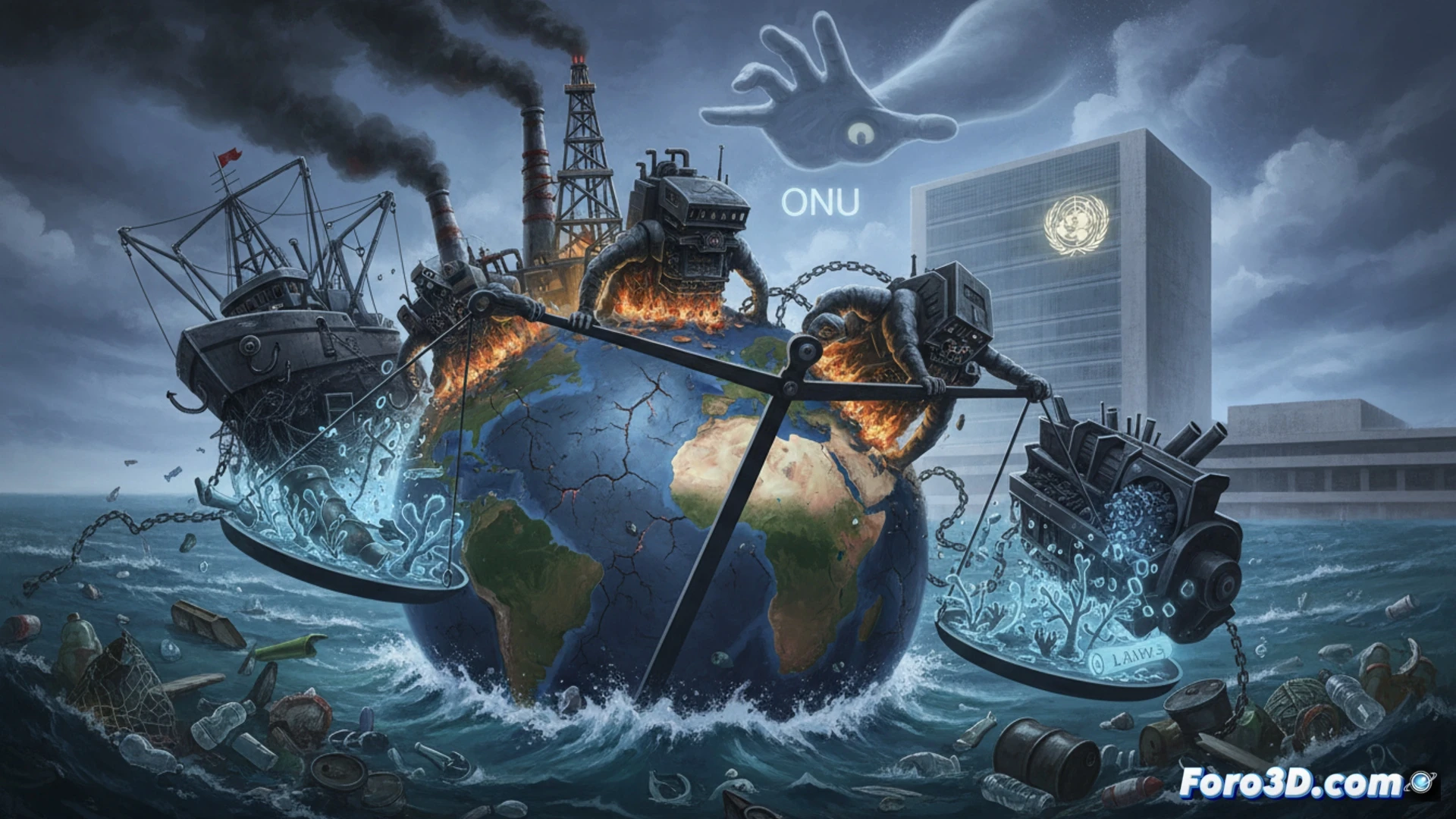
The UN is sounding the alarm once again: climate change, overfishing, and 52 million tons of plastic per year are pushing the oceans toward irreversible collapse. Sea levels are rising, marine ecosystems are degrading, and the average citizen reads the news with a sense of helplessness, knowing these figures are repeated every year in reports that governments ignore. The real problem is not a lack of data, but the power of the fishing, oil, and plastic industries, which block any binding regulation.
Recycling technology: a band-aid against 52 million tons 🌊
While the UN calls for more funding for its programs, the tech industry develops advanced recycling systems and sensors to track plastics in the sea. However, these solutions clash with an uncomfortable reality: 90% of the plastic in the oceans comes from ten rivers in Asia and Africa, and the UN avoids pointing fingers at those countries due to diplomatic pressures. Without a global treaty limiting the production of virgin plastics and industrial overfishing, any innovation is just a band-aid on a ship that is already taking on water.
The UN calls for action, but plastic keeps swimming free 🐟
The eco-conscious citizen sorts their waste at home, buys cardboard straws, and feels part of the change. Meanwhile, fishing fleets drag the seabed and oil companies dump microplastics without fines. The UN has been repeating the same report since 2015, and governments nod, promise, and then renew corporate licenses. The point of no return has already been crossed, but of course, announcing it doesn't win votes or fill the lobbies' coffers. At least recycling soothes the conscience.