Food obstruction represents a silent risk that can lead to a life-threatening emergency in a matter of seconds. From a nutritional education perspective, understanding how certain foods block the esophagus is the first step toward prevention. At Foro3D.com, we propose an innovative three-dimensional simulation that visualizes this process, combining digital anatomy with interactive pedagogy to save lives.
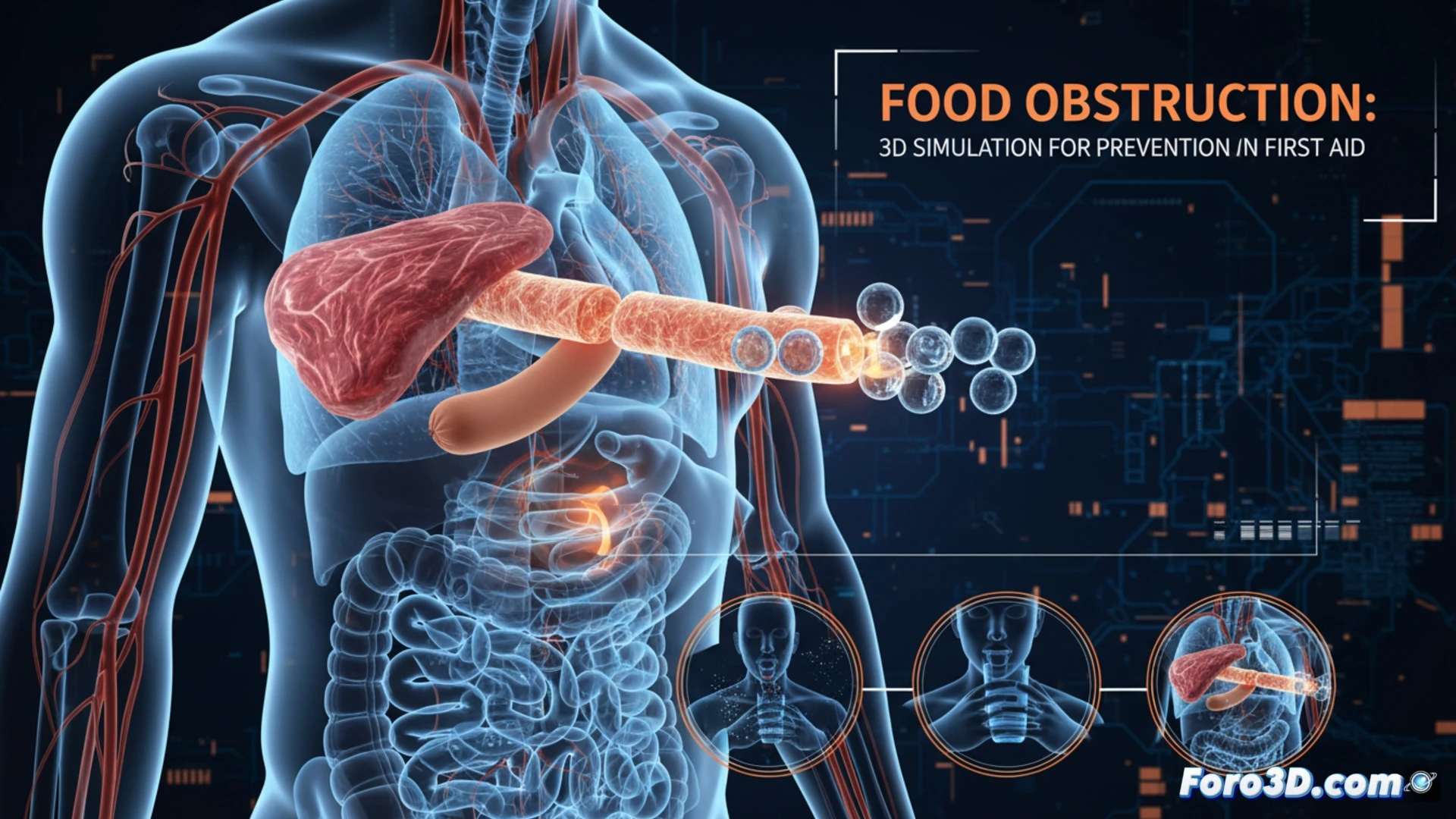
Three-Dimensional Modeling of Esophageal Dynamics and Obstruction 🫁
The 3D simulation focuses on two critical scenarios. The first recreates the human esophagus with realistic textures, showing the difference between a safe food bolus (appropriate size, rounded shape) and a dangerous one (large, irregular, or slippery like whole grapes). The second scenario activates an animation of the Heimlich maneuver, where a transparent anatomical model reveals the displacement of the diaphragm and the expulsion of the object. This tool allows educators and health professionals to demonstrate the correct force and angle without risk to the student, integrating food texture and consistency data directly into the graphics engine.
From Screen to Table: Food Education in 3D 🍎
Beyond the emergency protocol, the project includes an animated children's awareness campaign. Through stylized characters, the rule of chewing 20 times is taught, and high-risk foods, such as sausages and hard candies, are compared with safe alternatives. Three-dimensional visualization transforms an abstract concept into a tangible experience, helping children and adults internalize habits that prevent food obstruction before it occurs.
How can a detailed 3D simulation of food obstruction in the respiratory tract improve the effectiveness of first aid maneuvers compared to traditional teaching methods?
(PS: simulating a balanced diet in 3D is like promising that this year we will actually go to the gym)