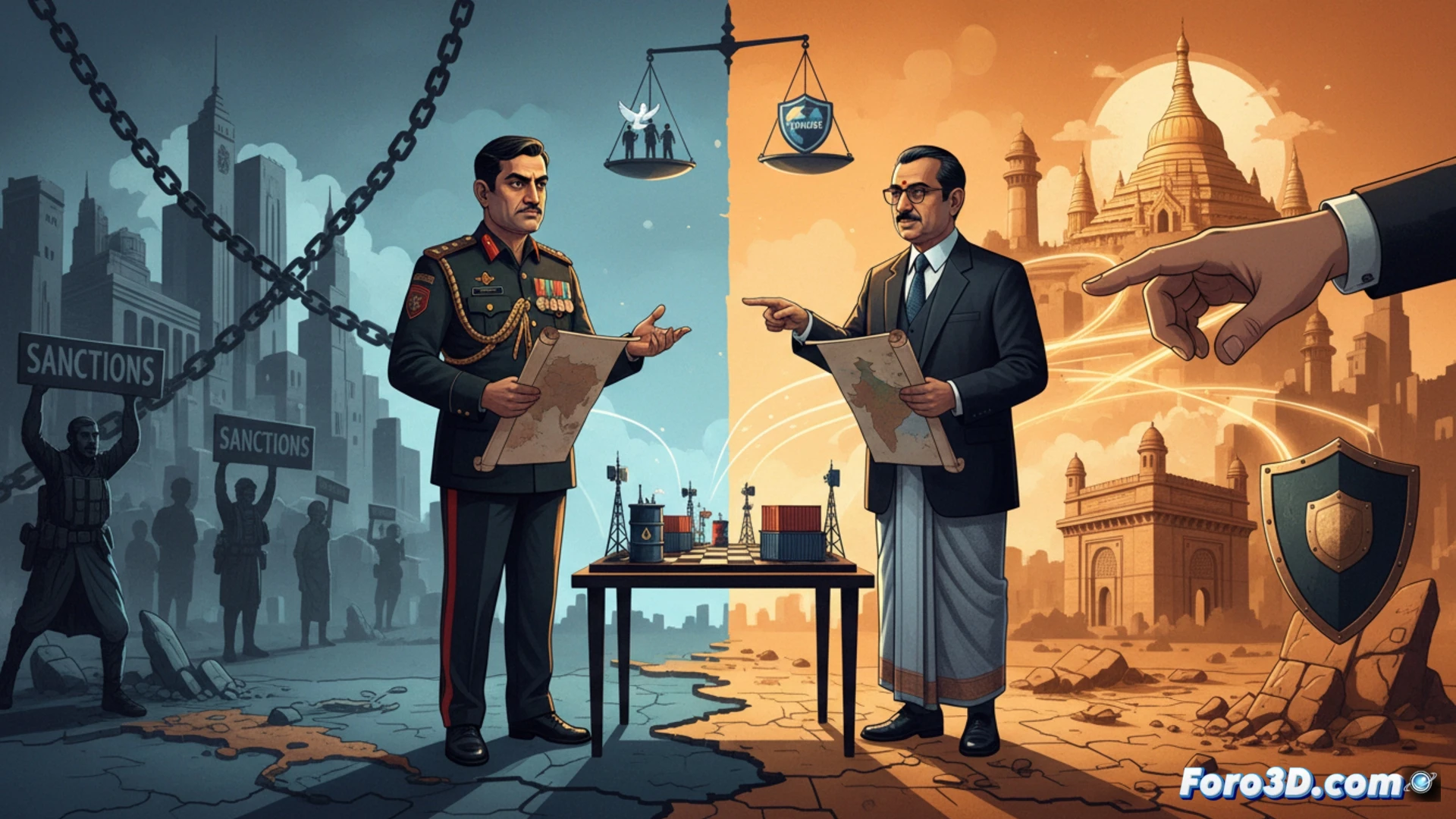
The visit of Myanmar's military junta to India reignites the debate over the coherence of Indian foreign policy. While the West imposes sanctions over the coup, New Delhi opts for a strategic rapprochement. For the average citizen, this means India prioritizes regional influence and border security over human rights criticism, a stance that may strain trade relations with democratic powers.
The technological factor on the shared border 🌐
Technical cooperation is a pillar of the meeting. Digital connectivity projects and infrastructure development in India's northeastern states were addressed, key to countering Chinese influence. Myanmar, with its limited data processing capacity, seeks Indian assistance in surveillance systems and communication networks. The initiative includes deploying IoT sensors to monitor smuggling routes, a practical solution that avoids uncomfortable political debates.
Tea and cookie diplomacy with generals 🍪
The official dinner was a success, as long as no one mentioned the word democracy. While Myanmar's generals smiled for photos, Indian advisors likely double-checked their menus to avoid any dish reminiscent of repression. In the end, the meeting showed that in geopolitics, a handshake is worth more than a thousand tweets of condemnation. That said, Indian citizens can sleep soundly: they won't have to foot the bill for this diplomatic dinner.