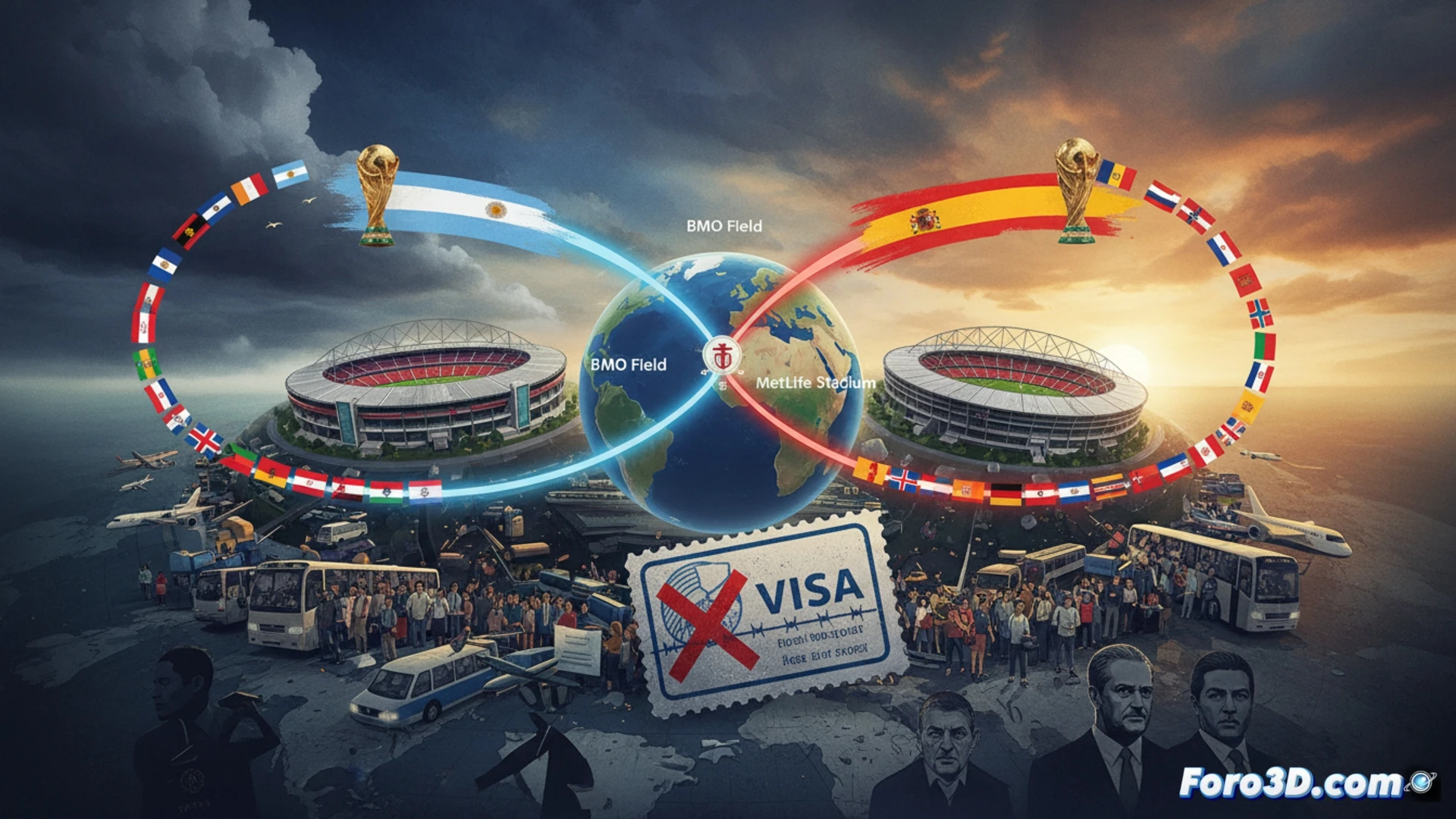
The 2026 World Cup kicks off in Mexico with 48 teams, a record number that promises more matches than ever. Argentina defends the title, Spain emerges as a contender, and the triple organization between Mexico, the United States, and Canada adds layers of complexity. For fans, the football offering will be massive, but the event already faces controversies over restrictive visas, such as the case of Iran, reflecting the political tensions behind the ball.
Digital infrastructure: the real game behind the pitch ⚙️
Managing 104 matches across three countries requires a robust technological system. The venues will share a unified data network to coordinate live broadcasts, ticket sales, and biometric access control. However, regulatory fragmentation among the three nations poses a challenge: cybersecurity protocols vary, and synchronizing visa and customs databases will require prior agreements. The VAR system, with AI-assisted referees, will also need to adapt to time zones and satellite transmission latency between stadiums.
Visas, queues, and a World Cup dream with a bureaucratic stamp 🛂
While players run for glory, fans run for a visa. The case of Iran is just the tip of the iceberg: imagine scheduling an appointment at the U.S. embassy to watch your team play in Mexico City. The dream of seeing Messi or Mbappé turns into an odyssey of forms, passport-sized photos, and interviews where they ask if you plan to stay. In the end, the biggest obstacle won't be the opposing defense, but the official on duty who decides whether your passport deserves a stamp.