A driver receives a historic penalty for exceeding 300 km/h in France, while manufacturers continue to market vehicles capable of reaching those speeds on roads open to traffic. The individual is punished, but the culture of excess is rewarded as a status symbol. The technical solution is clear: mandatory electronic limiters at 180 km/h in all new cars, a measure that would prioritize safety over marketing.
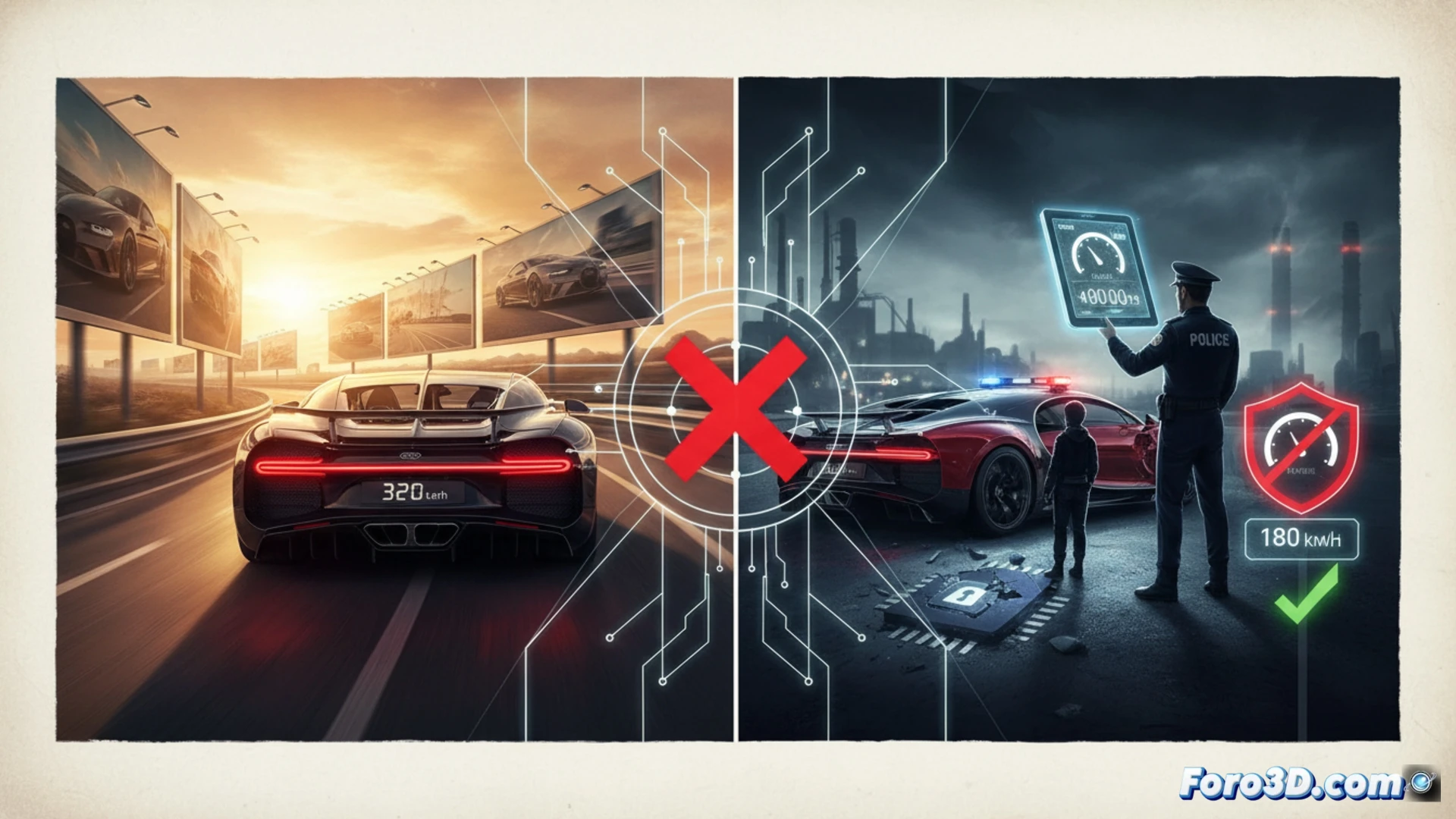
Electronic limiters: the technology the automotive industry avoids 🚦
Speed control systems are cheap and reliable. A simple chip can restrict engine power or intervene in electronic management so the car does not exceed 180 km/h. Technologies like ISA (Intelligent Speed Assistance) have been mandatory in the EU since 2024 for new models. Extending this logic to an absolute cap does not require inventing anything new, only applying a rule that prioritizes life over the horsepower used as a commercial lure.
What if manufacturers only sold cars limited to 120 km/h to save fuel? ⛽
Imagine a world where a sporty utility vehicle could not exceed 180 km/h. Advertisements would stop showing impossible curves and controlled drifts to instead sell the comfort of a heated seat. Dealerships would explain that their flagship model reaches 179 km/h on the highway, but the best part is you won't have to sell a kidney to pay the fine. It would be a drama: neighbors would no longer measure their success by engine displacement, but by how quickly they reach the eight o'clock traffic jam.