Google plans to release 64 million sterile male mosquitoes in California and Florida. These insects carry a bacterium that prevents females from having offspring, reducing the population of disease vectors such as dengue and malaria. For the public, this means fewer bites and less risk, without resorting to chemicals harmful to the environment.
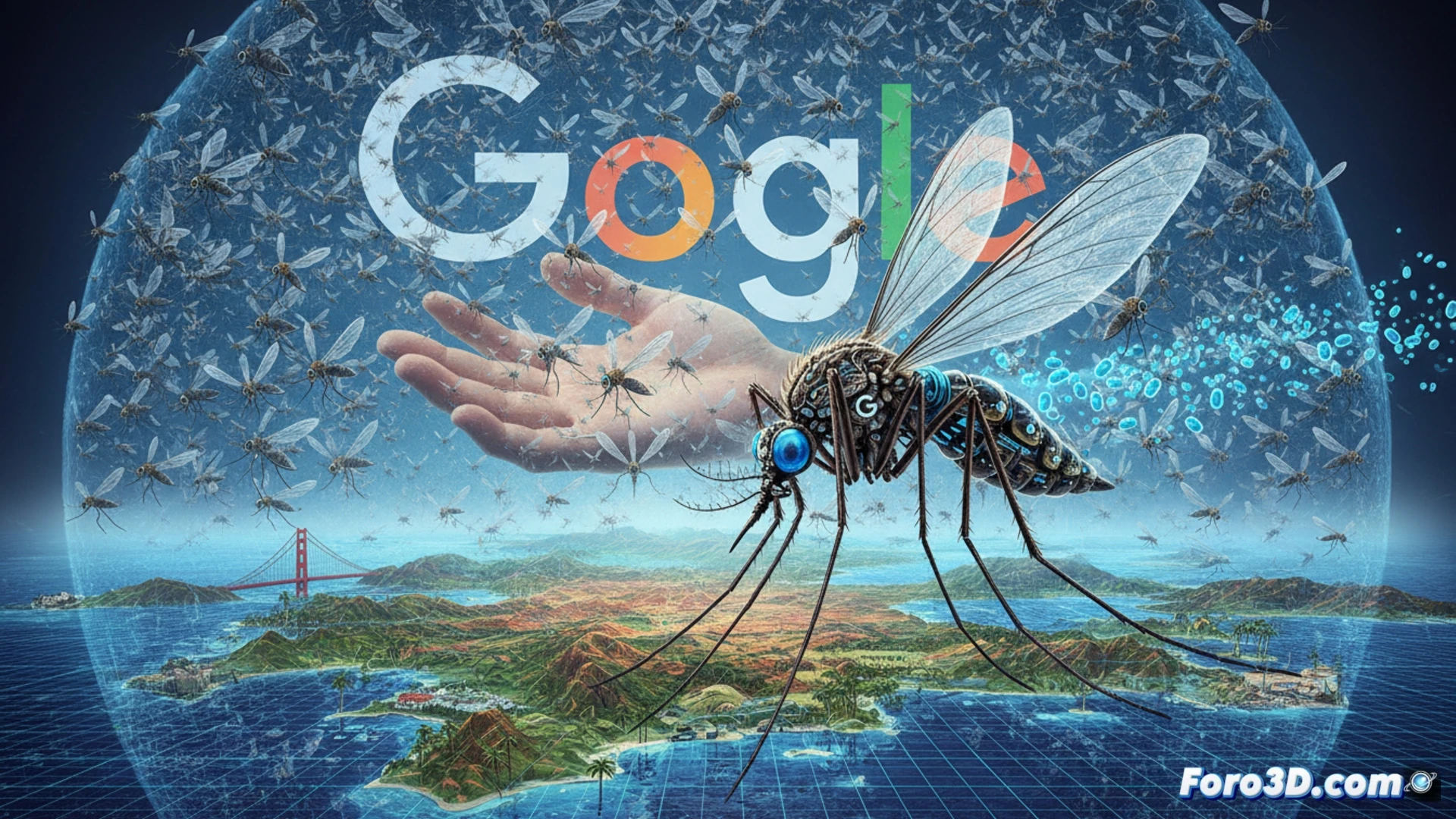
How the Wolbachia bacterium transforms pest control 🦟
The technique is based on the Wolbachia bacterium, which is introduced into male mosquitoes raised in the laboratory. When they mate with wild females, the eggs do not hatch. This method, developed by the subsidiary Verily, uses distribution algorithms to release the mosquitoes in specific areas. It does not alter the ecosystem or affect other species, and offers an alternative to traditional insecticides, which lose effectiveness over time.
Mosquitoes with GPS: Google's plan to stop you from getting bitten 🚁
Now it turns out that mosquitoes are going to have more coverage than a 5G network. Google breeds them, sterilizes them, and releases them with the precision of a pizza delivery driver. But watch out: if you see a mosquito with a tiny antenna, it's not a spy drone, it's just a poor insect condemned to eternal bachelorhood. At least this time, the bugs are working for us.