Historian Pascal Ory remembered sociologist Edgar Morin, who passed away at 104, as a pioneer with a singular sensitivity for capturing the spirit of each era. His legacy on complex thought and interdisciplinarity changed our way of understanding society and culture, inviting us to reflect on how to adapt to changes without losing curiosity.
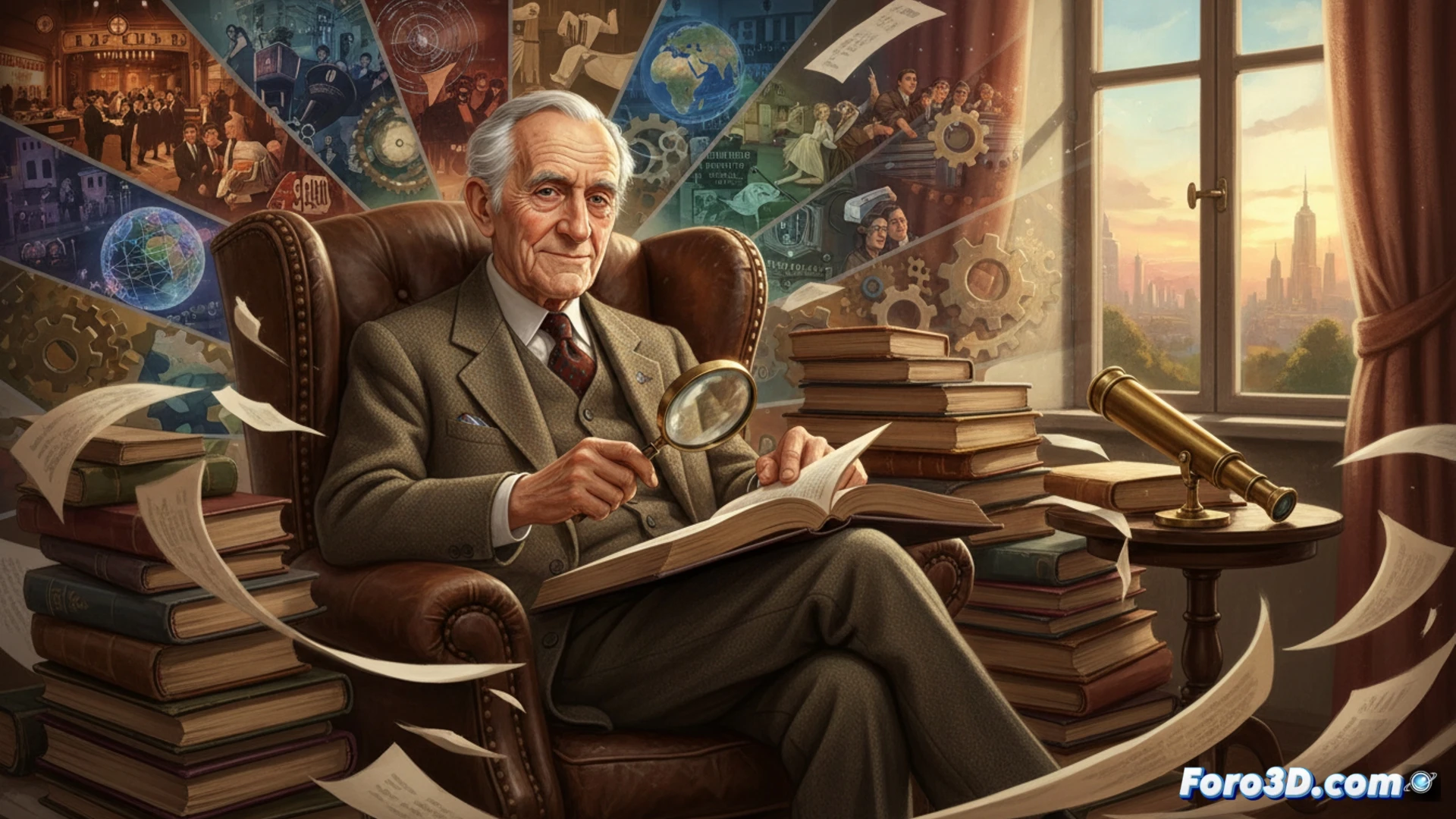
Complex thought as a development methodology 🧠
Morin proposed an approach that integrated disciplines such as biology, sociology, and philosophy to address global problems. In the technological field, this vision translates into methodologies like systemic design or contextual artificial intelligence, where data is not isolated but related to its environment. His influence is clear in teams that apply interdisciplinarity to solve complex challenges, avoiding linear solutions that ignore human and cultural variables.
The thinker who told us everything is connected (and WiFi too) 🌐
Morin taught us that chaos and order coexist, something any IT professional discovers when trying to fix a server on a Friday afternoon. His idea that the whole is greater than the sum of its parts explains why your router works better when you're not staring at it. In the end, complex thought is like open source code: everyone thinks they understand it until it's time to debug it.