Aesthetic dermatology has adopted intense pulsed light (IPL) as a standard tool for photorejuvenation and hair removal. However, incorrect dosing or an unsuitable phototype can lead to severe dermal burns. 3D biomedicine now offers a predictive solution: volumetric skin models that simulate light energy absorption to anticipate thermal damage before applying the actual pulse to the patient.
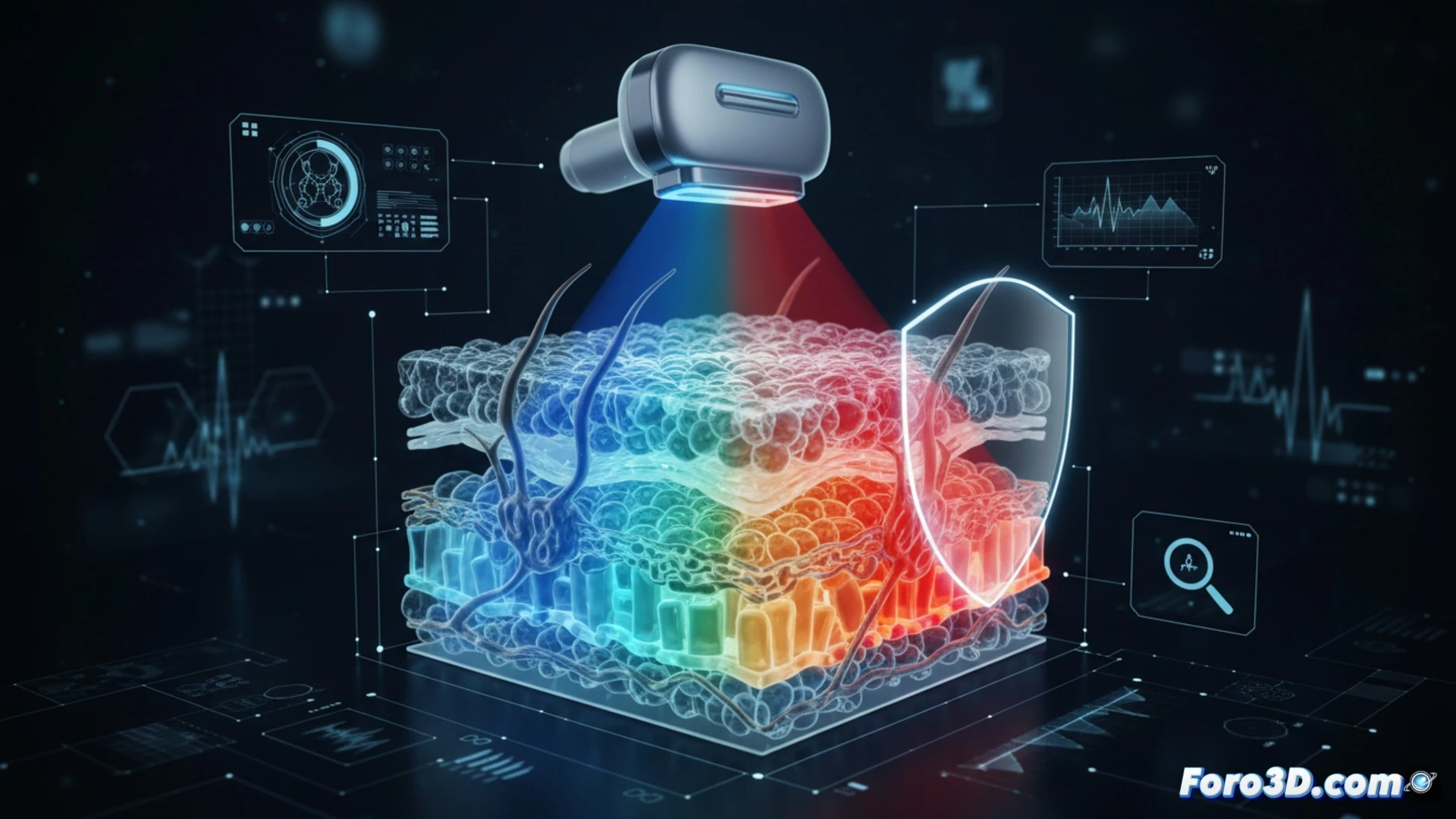
Three-Dimensional Thermal Simulation of Light Penetration 🔥
Through 3D reconstruction of histological sections and optical coherence tomography (OCT), it is possible to generate a digital twin of the epidermis and dermis. These models assign specific absorption and scattering coefficients for each skin layer. By inputting the IPL device parameters (wavelength, fluence, and pulse duration), computational fluid dynamics (CFD) software calculates the heat distribution. The result is a thermal risk map that identifies areas of potential coagulation necrosis, allowing the equipment power to be adjusted to prevent iatrogenic injuries.
3D Printing of Phantoms for Clinical Training 🖨️
Prevention also involves practical training. The 3D printing of skin phantoms, made from hydrogels and silicones that replicate the thermal conductivity of human skin, allows professionals to practice applying pulses without risk to the patient. These models include internal sensors that record the temperature reached, providing immediate feedback. Thus, the clinician learns to recognize the safe limits of pulsed light, significantly reducing the incidence of injuries in real practice.
How to model in 3D the thermal distribution of intense pulsed light in different skin types to predict and prevent burns or injuries during aesthetic treatments
(PS: If you 3D print a heart, make sure it beats... or at least doesn't cause copyright issues.)