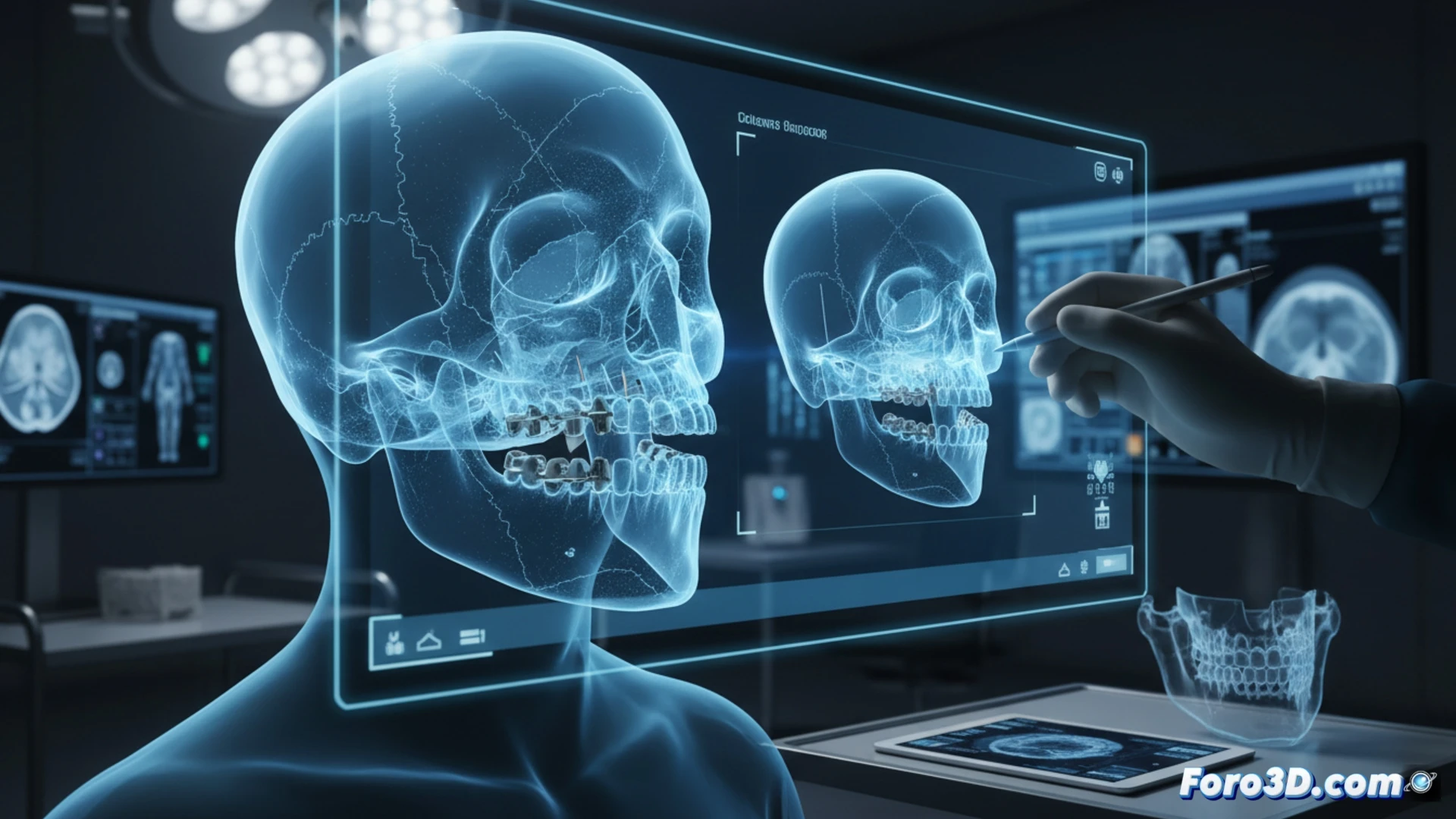
Mandibular fracture is one of the most common injuries in maxillofacial traumatology, often caused by traffic accidents or violence. Traditionally, surgery relied on 2D X-rays and the surgeon's experience to reduce the fracture. Today, 3D modeling allows for the digital reconstruction of the patient's anatomy from CT scans, offering a detailed visualization of each bone fragment, its displacement, and the fracture lines, radically transforming the preoperative approach.
From segmentation to virtual osteotomy 🦴
The process begins with the segmentation of the mandibular bone in specialized software such as Mimics or 3D Slicer. The surgeon can isolate each fragment, rotate it, and align it virtually to restore dental occlusion. This virtual osteotomy allows for the design of custom surgical cutting guides. Subsequently, personalized titanium plates are modeled that perfectly adapt to the bone surface, avoiding the need to bend generic implants during the operation. Biomechanical simulation also allows predicting the distribution of forces in the repaired area, reducing the risk of osteosynthesis material failure.
Precision that saves time and tissues ⏱️
The use of 3D models printed in biocompatible resin allows the surgical team to rehearse the fracture reduction before touching the patient. This reduces ischemia time during surgery and minimizes soft tissue dissection. In complex cases with bone loss, virtual reconstruction facilitates the design of custom grafts. The result is a more predictable intervention, with a shorter hospital stay and faster functional recovery for the patient.
How 3D modeling improves precision in the reduction of complex mandibular fractures compared to conventional surgical techniques
(PS: and if the printed organ doesn't beat, you can always add a little motor... just kidding!)