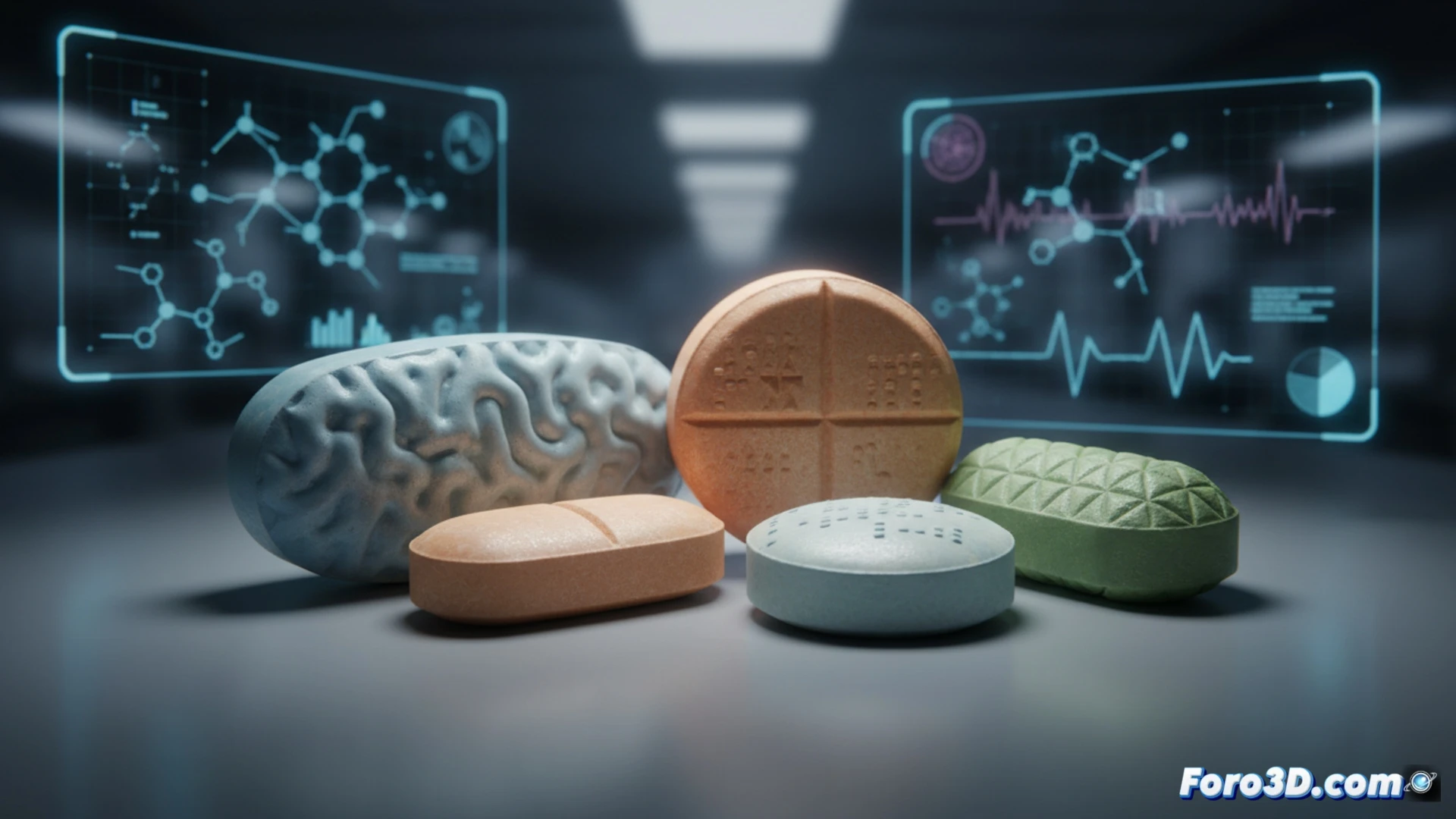
The surface texture of a pill is no longer a mere aesthetic detail. In the field of 3D biomedicine, the design of microgeometries on the coating of medications has become a critical functional variable. From facilitating swallowing in geriatric patients to incorporating tactile codes for visually impaired individuals, three-dimensional modeling allows controlling the physical interaction between the drug and the user with micrometric precision.
Scanning and rendering techniques for pharmaceutical surfaces 🧬
To digitally replicate a pharmaceutical texture, structured light scanners or confocal microscopy are used, capable of capturing roughness down to 10 microns. This data generates displacement maps that are integrated into rendering engines like Blender or Unity. The goal is to simulate how light strikes the grooves or pores of the pill, evaluating parameters such as tactile sensation or dissolution rate. In the lab, these models allow predicting adhesion to the palate or ease of removal from the blister before manufacturing a single physical prototype.
The tactile future of oral pharmacology 🤖
3D printing of medications already allows manufacturing pills with variable textures within a single dose. This opens the door to tactile identification systems where the patient recognizes their medication by the surface pattern, reducing dosing errors. Texture ceases to be an accident of the compression process and becomes a channel for information and comfort. 3D biomedicine is redefining how we feel a medication, literally, with our fingertips.
How to model in 3D a surface texture that not only controls the dissolution rate of a personalized drug but also functions as a unique identifier or traceability code on the pill
(PS: If you 3D print a heart, make sure it beats... or at least that it doesn't cause copyright issues.)