The acoustics of a city are not random noise; they are a unique sonic signature that defines the identity of a space. For 3D stage and show designers, understanding and modeling this signature is crucial. Current simulation tools allow visualizing sound propagation in complex urban environments, transforming acoustic data into three-dimensional heat maps. This not only optimizes the audience's listening experience but also anticipates reflection and absorption issues in squares or closed streets for events.
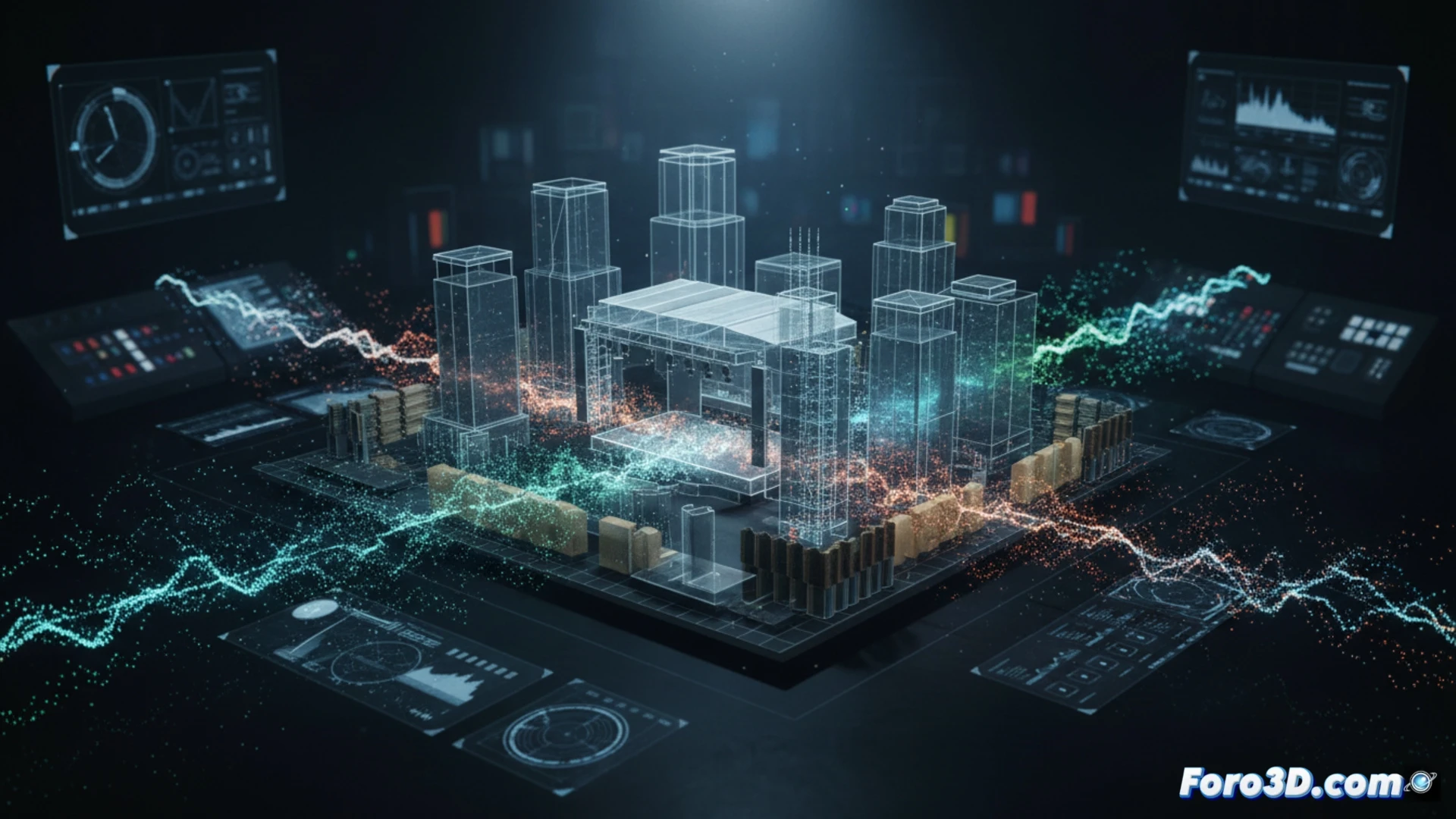
Sound Propagation Simulation and Acoustic Rendering 🎧
The technical process begins with capturing urban geometry through photogrammetry or LiDAR scanning. On this 3D model, acoustic simulation engines like Odeon or CATT-Acoustic are applied, which calculate the paths of sound rays. These algorithms consider facade materials, traffic density, and building heights to predict reverberation and sound pressure levels. The result is a digital twin where sound technicians can place virtual sources and adjust speaker arrays, minimizing impact on neighborhoods and maximizing clarity in the audience area. For massive festivals, this methodology allows designing virtual acoustic barriers and stages that channel sound efficiently.
The City as a Living Acoustic Stage 🏙️
Beyond technique, modeling the urban acoustic signature forces us to rethink the relationship between the show and its environment. Every street, every square has a sonic memory that 3D design can respect or transform. By visualizing sound as a digital sculpture, the set designer becomes an architect of the auditory experience. The challenge is no longer just to amplify, but to integrate the city's soundscape into the event's narrative, creating shows that dialogue with the heartbeat of the city without breaking its natural harmony.
How can 3D modeling of the urban acoustic signature transform the visual narrative of a stage by capturing the unique sonic identity of a city?
(PS: modeling a 3D audience is easier than the real one: they don't complain, they don't record with their phones, and they always applaud)