A leak in a biological freezer is not a simple technical failure; it is the starting point of a silent catastrophe. When primary containment fails, the pathogen is released into a closed environment. Our goal is to model in 3D that critical moment: from the seal rupture to the dispersion of particles in the airflow. We analyze impact radii, exposure times, and the effectiveness of secondary barriers to anticipate the disaster before it happens.
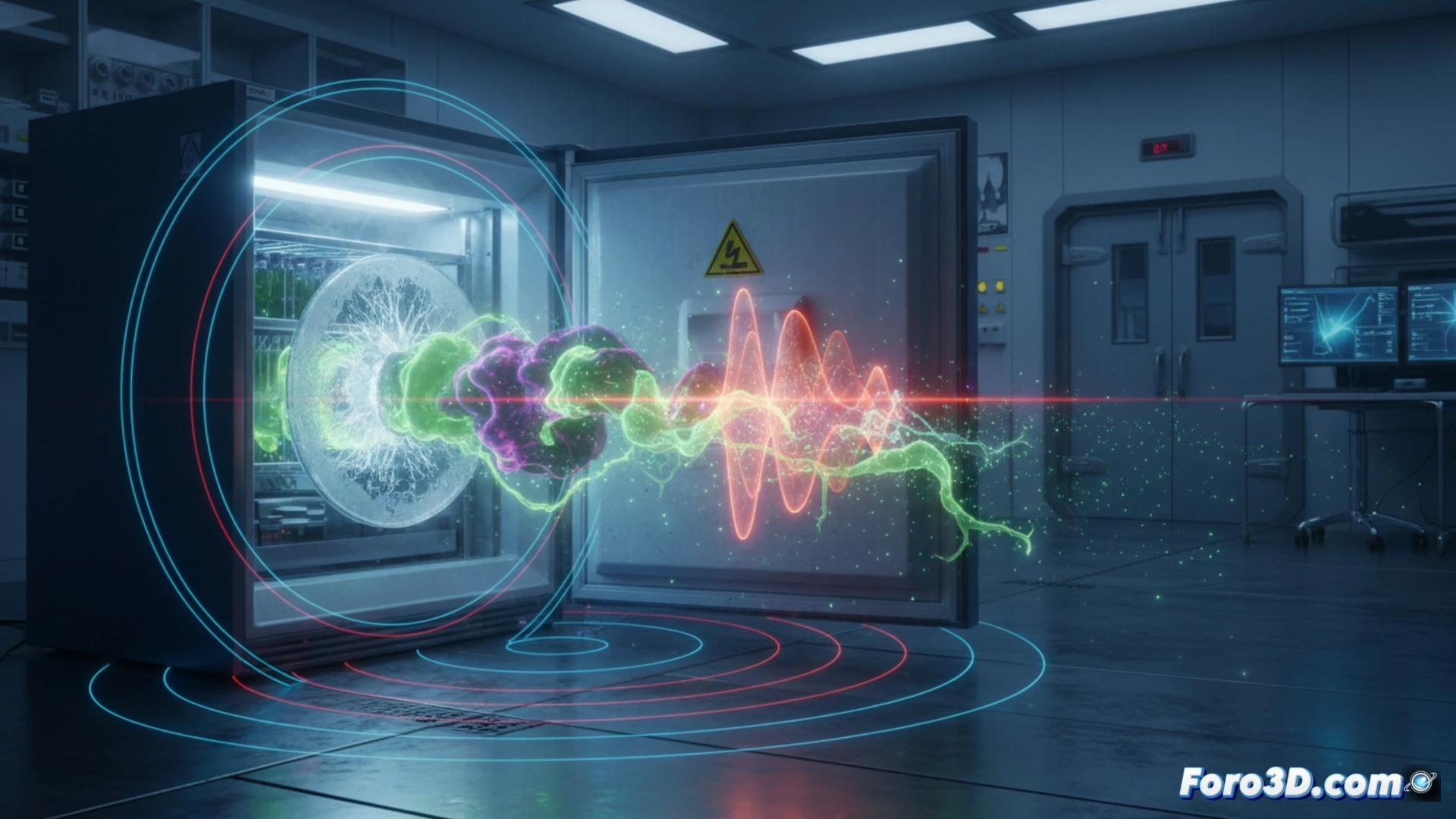
CFD Simulation of Dispersion and Containment Assessment 🧬
To recreate the leak, we built a digital twin of the freezer and the adjacent room. We applied computational fluid dynamics (CFD) to map the trajectory of aerosols from ground zero. The model includes variables such as temperature differential, convection currents, and door openings. Results show that in less than 90 seconds, the agent reaches a radius of 3 meters if there is no active extraction. We compare this data with the actual incident at the Novosibirsk laboratory (2009), where a leak of hemorrhagic fever virus was contained thanks to a negative pressure system. Our simulation validates that, without that system, contamination spreads to 80% of the room within 5 minutes.
3D Lessons for Real Emergency Protocols ⚠️
The simulation not only visualizes the danger; it redefines the response. By modeling different scenarios (HEPA filter failure, alarm delay, human errors), we identified that the safe evacuation window is reduced from 120 seconds to just 45 if the freezer door is opened incorrectly. This data, extracted from the 3D animation, allows us to redesign protocols: install real-time door sensors and double the pressure barriers. Catastrophe is avoided not by luck, but by precise spatial data that anticipates every variable.
As a modeler, what design criteria and physical parameters would you consider key to realistically simulate the dispersion of a biological agent in a confined space after a cryogenic leak?
(PS: Simulating catastrophes is fun until the computer crashes and you are the catastrophe.)