The concept of deep geological storage, whether for nuclear waste or carbon capture, faces a silent enemy: structural faults. An imperceptible fissure in the rock can trigger a lethal leak. Faced with this risk, 3D technology has become the primary tool for prevention, allowing engineers to visualize the subsurface as a dynamic digital twin and anticipate disaster. 🛡️
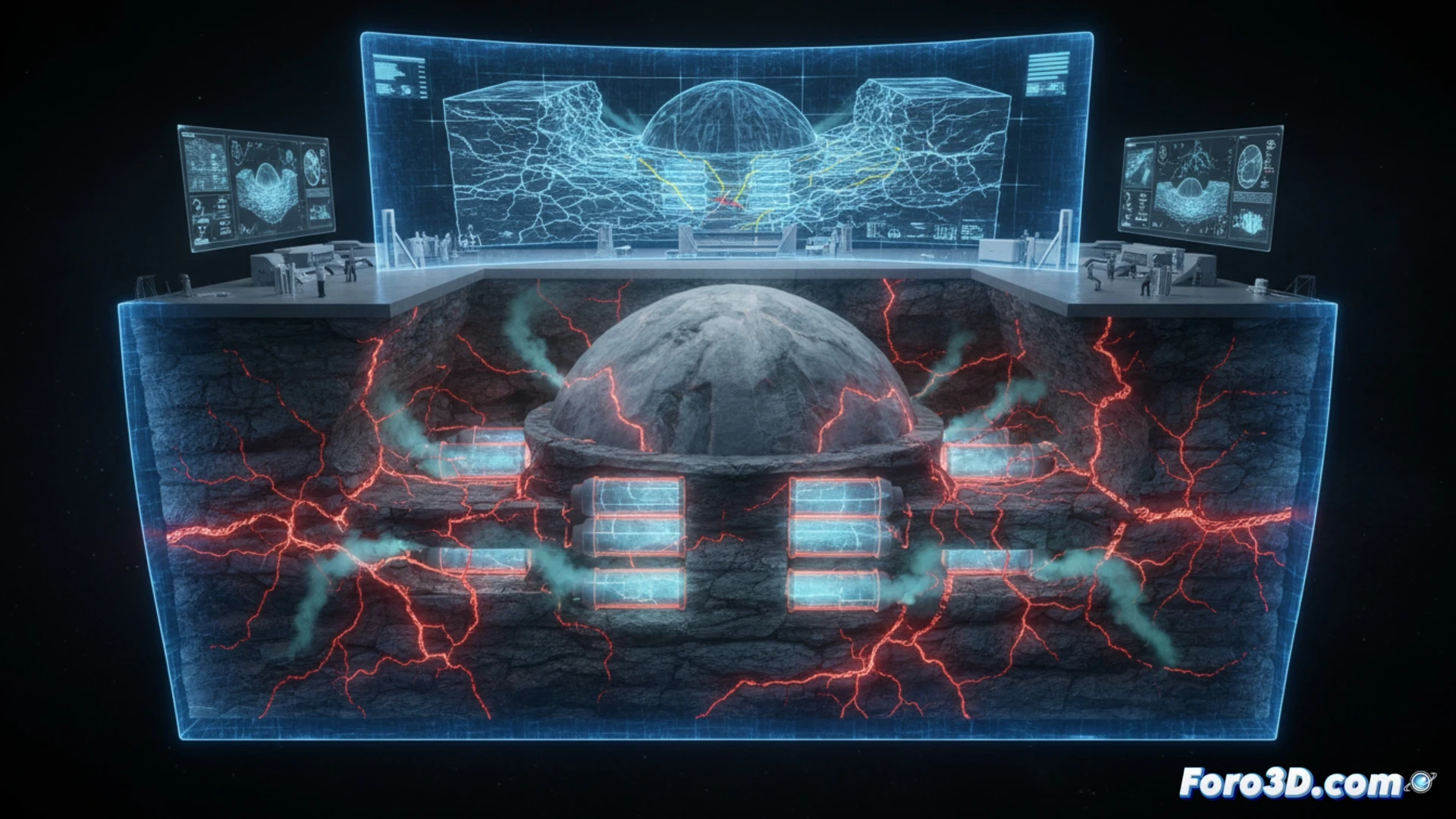
Digital twins and 3D leak simulation 🧊
The key to avoiding a catastrophe lies in creating three-dimensional geomechanical models. Using seismic tomography and drilling data, a digital twin of the repository is built. This model allows simulating rock behavior under thermal and chemical pressure. Through 3D fluid flow simulations, engineers can predict the path of a leak through invisible fractures. For example, at the Onkalo repository in Finland, 3D modeling has been crucial for designing bentonite barriers that expand upon contact with water, automatically sealing any microfissures in the host rock.
Lessons from the past and visual contingency plans 🧠
Incidents like the leak at the WIPP waste repository in New Mexico demonstrated that a container sealing failure can spread through the subsurface unpredictably. Today, 3D simulation allows recreating these failure scenarios to train response teams. By visualizing the contamination plume in a volumetric model, monitoring points are optimized and emergency hydraulic barriers are designed. 3D technology not only predicts failure but gives us the exact blueprint to know where and how to act before the disaster becomes irreversible.
How to model in 3D the geological faults that could compromise the integrity of an underground nuclear waste repository over thousands of years
(PS: Simulating catastrophes is fun until the computer crashes and you are the catastrophe.)