Submarine explosions represent one of the most complex threats to critical infrastructure and marine ecosystems. Whether accidental, such as a pipeline rupture, or caused by seismic activities, the physics involved is extreme. 3D technology now allows these events to be recreated with an unprecedented level of detail, offering engineers and emergency managers a vital tool to anticipate damage and plan effective responses.
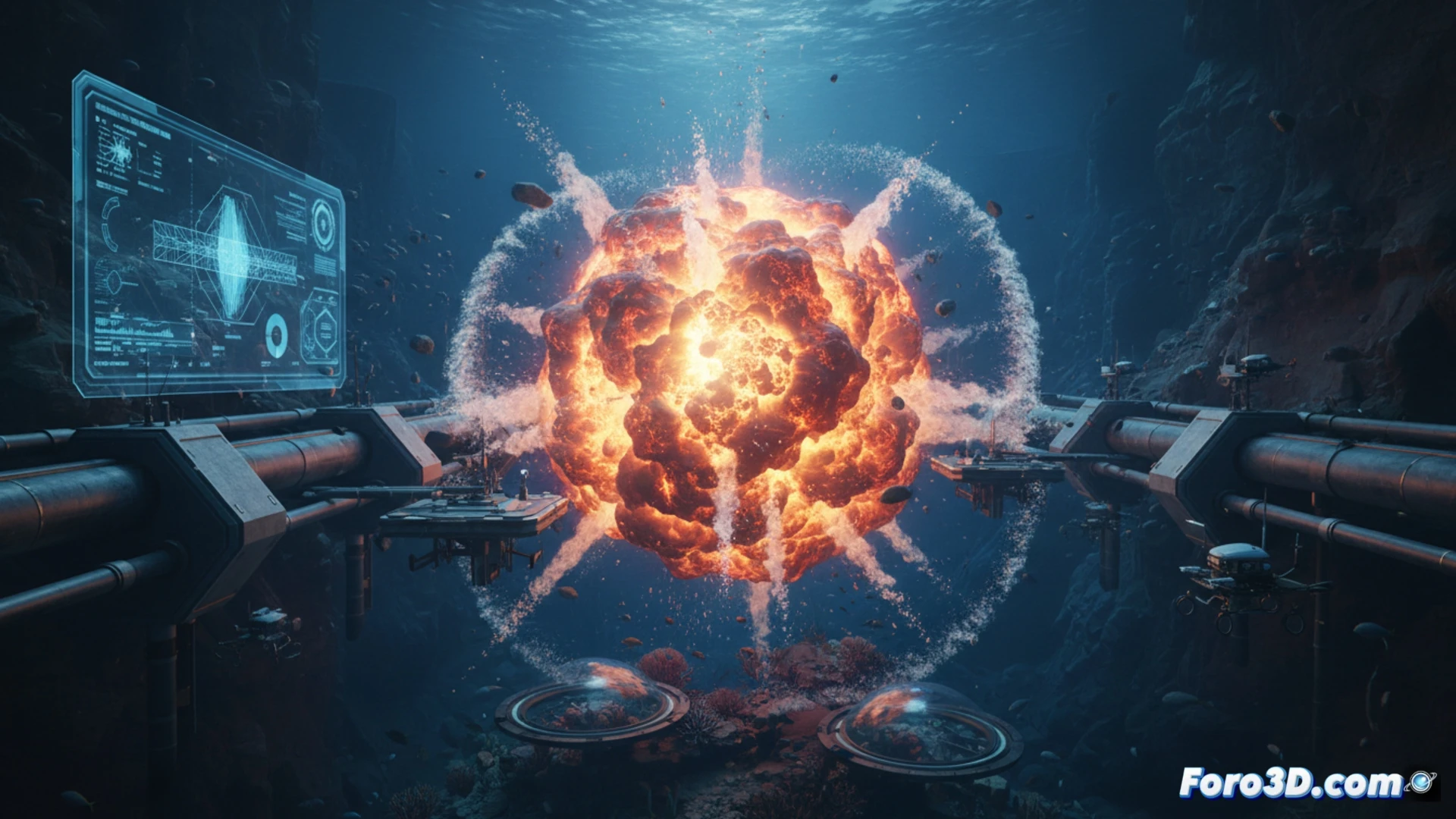
Fluid simulation and gas dynamics in marine environments 💧
The technical core of these recreations lies in computational fluid dynamics (CFD). Modern engines model the gas bubble resulting from the detonation, calculating its expansion and collapse in milliseconds. This allows visualizing the propagation of the shockwave through the water, a phenomenon that travels at supersonic speeds and can fracture pipelines or submarine cables. Additionally, the rise of the water column and the dispersion of sediments are simulated, key factors for assessing the impact on oil platforms or nearby ports.
Active prevention and ecosystem conservation 🌊
Beyond physical destruction, 3D analysis reveals the acoustic and thermal damage to marine fauna. Modeling these variables allows designing emergency protocols that minimize the collapse of sensitive habitats, such as coral reefs. By integrating real bathymetric data into the rendering engine, rescue teams can predict exclusion zones and safe routes for intervention submarines, transforming simulation into a shield against disaster.
How does the accuracy of 3D modeling of submarine explosions affect the prediction of damage to oil platforms and submarine cables during a real catastrophe?
(PS: Simulating catastrophes is fun until the computer melts down and you are the catastrophe.)