Hydrogen explosion represents one of the most complex catastrophic phenomena to model due to its high combustion speed and its ability to generate devastating shock waves. In the field of 3D simulation, recreating this event not only allows understanding the fluid mechanics and gas dynamics involved, but also offers crucial tools for forensic engineering and the design of safer infrastructures. This article explores how advanced visualization technologies can replicate flame propagation and structural collapse.
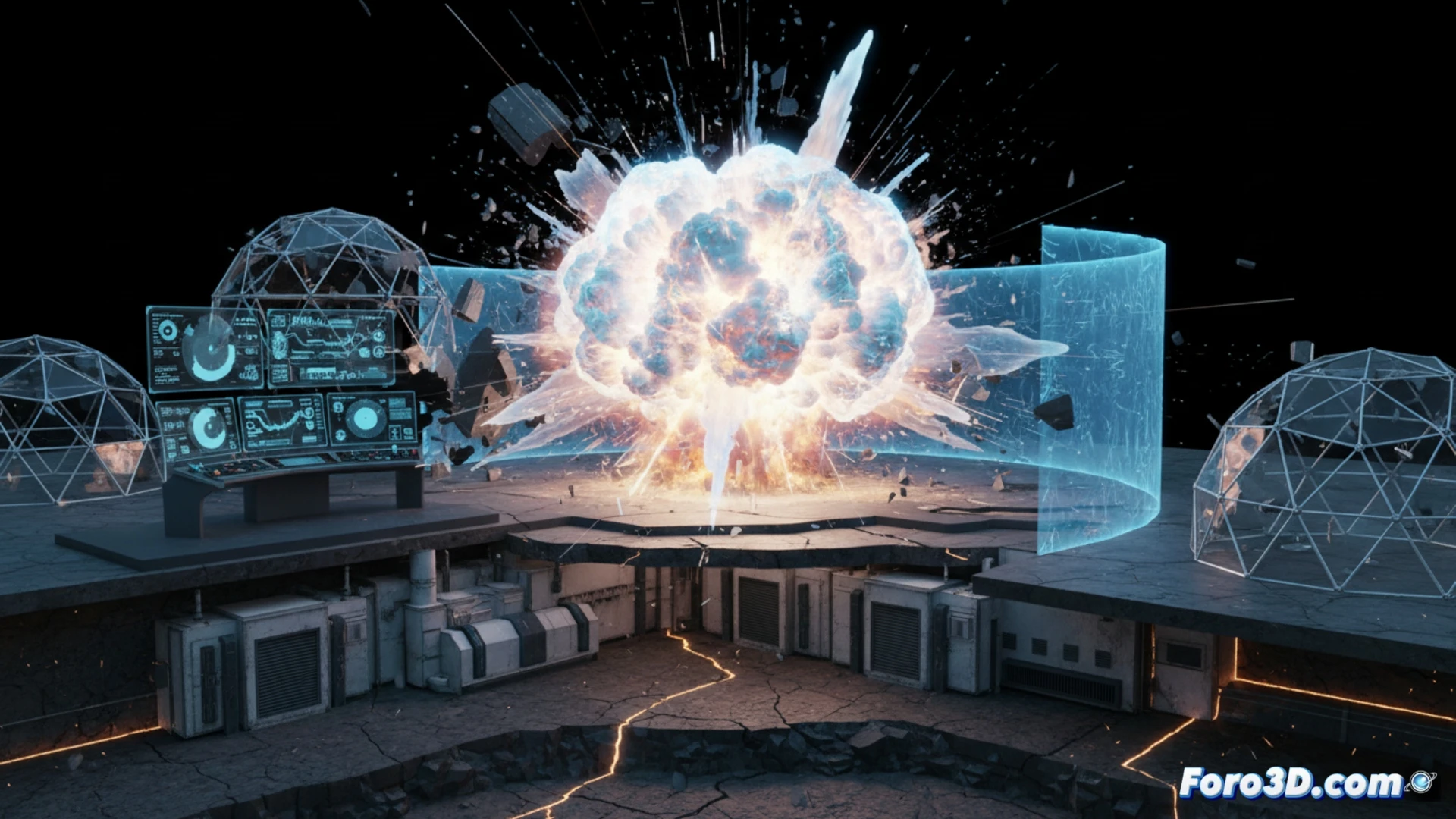
Gas dynamics and simulation of the blast wave in 3D environments 💥
To accurately simulate a hydrogen explosion, experts turn to computational fluid dynamics software integrated into platforms like Houdini and Blender. In Houdini, technical artists use gas solvers such as Pyro FX to emulate rapid thermal expansion and turbulent mixing of hydrogen with oxygen, generating a realistic fire cloud. Simultaneously, in Unreal Engine, particle systems and destructible materials are implemented that replicate the fragmentation of walls and steel beams. The main challenge lies in scaling the speed of the chemical reaction to a visible frame rate, adjusting density and pressure so that the 3D model faithfully reflects data from real explosions documented in industrial plants.
Virtual lessons for real industrial safety 🛡️
Beyond visual realism, the true value of these simulations lies in their preventive application. By recreating a hydrogen leak in a virtual refinery, engineers can identify blind spots in ventilation or areas of critical gas concentration before an accident occurs. Each 3D model becomes a testing laboratory where evacuation protocols and material resistance are evaluated. In a world where hydrogen is gaining prominence as a clean fuel, mastering its simulation is not just a technical exercise, but an ethical responsibility to avoid catastrophes.
How can 3D models of hydrogen explosions help predict the propagation of shock waves in complex industrial environments to improve disaster prevention strategies.
(PS: Simulating catastrophes is fun until the computer crashes and you are the catastrophe.)