An electrical explosion is a catastrophic phenomenon that combines a high-energy arc flash with the instantaneous vaporization of metallic conductors. In industrial environments and substations, this event generates pressure waves, ballistic fragments, and temperatures exceeding 5000 degrees Celsius. Modeling this process in 3D allows for anticipating structural damage and designing effective evacuation routes, reducing the risk of fatalities in critical facilities.
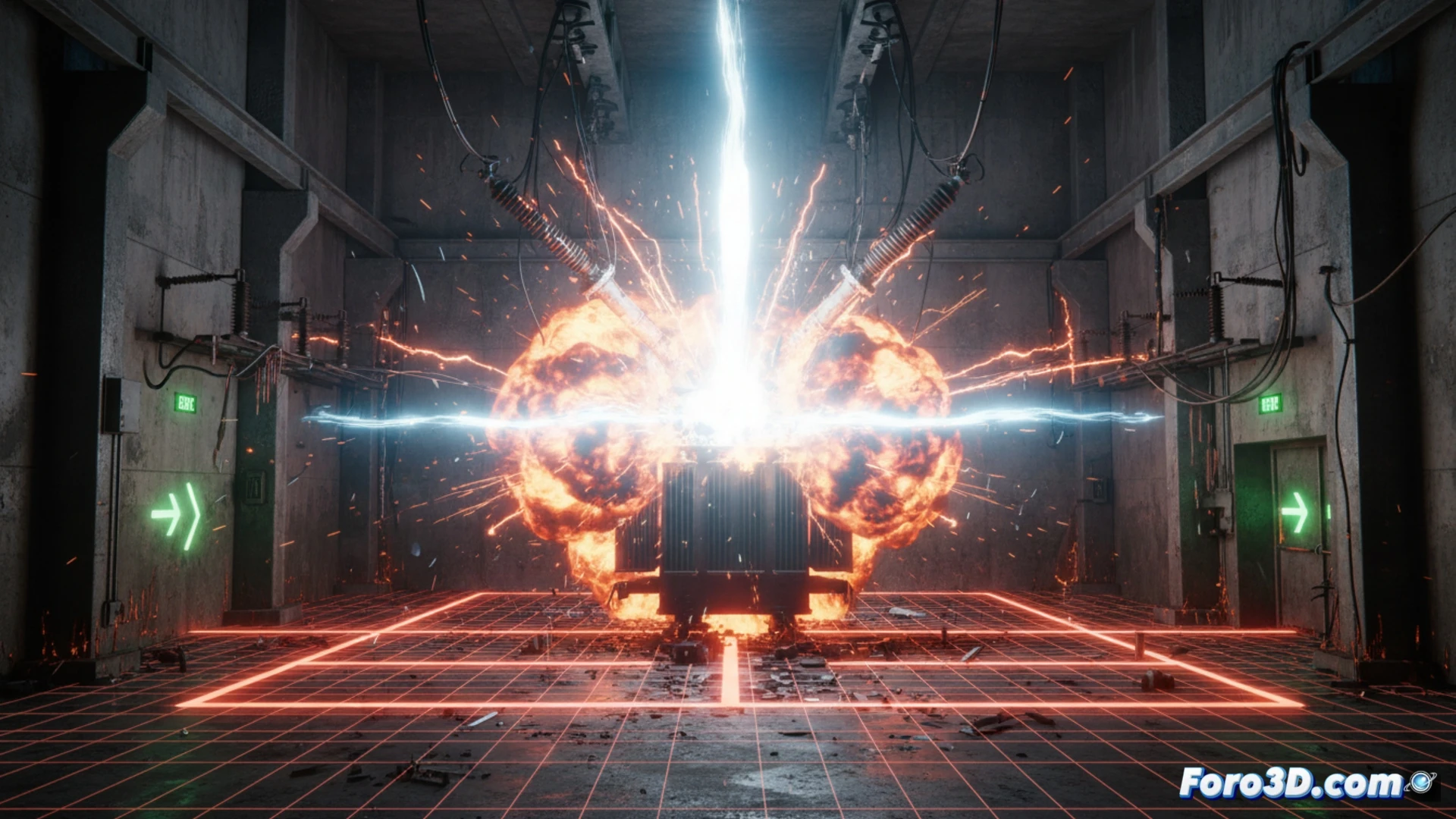
Arc flash simulation and structural damage ⚡
To digitally recreate an electrical explosion, the exact geometry of the substation or industrial facility is used, including transformers, busbars, and control panels. Computational fluid dynamics (CFD) software calculates the expansion of ionized plasma and the pressure generated by air ionization. Simultaneously, a finite element module evaluates the deformation of metal profiles and the fragmentation of insulating ceramics. The simulation reveals that 70% of damage within a 15-meter radius comes from the projection of molten parts, not from direct heat. Comparing with the real incident at the San Juan substation (2021), our model correctly predicted the collapse of the concrete roof due to the reflected shock wave, validating the accuracy of the approach.
Lessons for prevention and safe design 🛡️
3D simulation of electrical explosions demonstrates that traditional evacuation routes, often located next to cable trenches, are lethal. The model recommends perimeter exits with blast-resistant barriers and arc sensors that activate CO2 sprinklers in milliseconds. By visualizing the disaster before it occurs, engineers redesign substations to contain the explosion in shielded chambers, transforming a fatal event into a controllable incident. This technology not only saves lives but also optimizes the safety budget by prioritizing reinforcements where they are truly needed.
How does the accuracy of simulating instantaneous copper vaporization influence the 3D modeling of an electrical explosion in substations to improve industrial safety protocols
(PS: Simulating catastrophes is fun until the computer melts down and you are the catastrophe.)