The term Carbonated Explosion evokes a violent phenomenon where the sudden release of dissolved gas generates a devastating shock wave. Although commonly associated with failures in beverage plants or geological processes like limnic eruptions, its 3D modeling allows us to break down the physics behind the disaster. This article analyzes how computer simulation recreates the progression of overpressure, tank fragmentation, and structural collapse to improve industrial safety protocols.
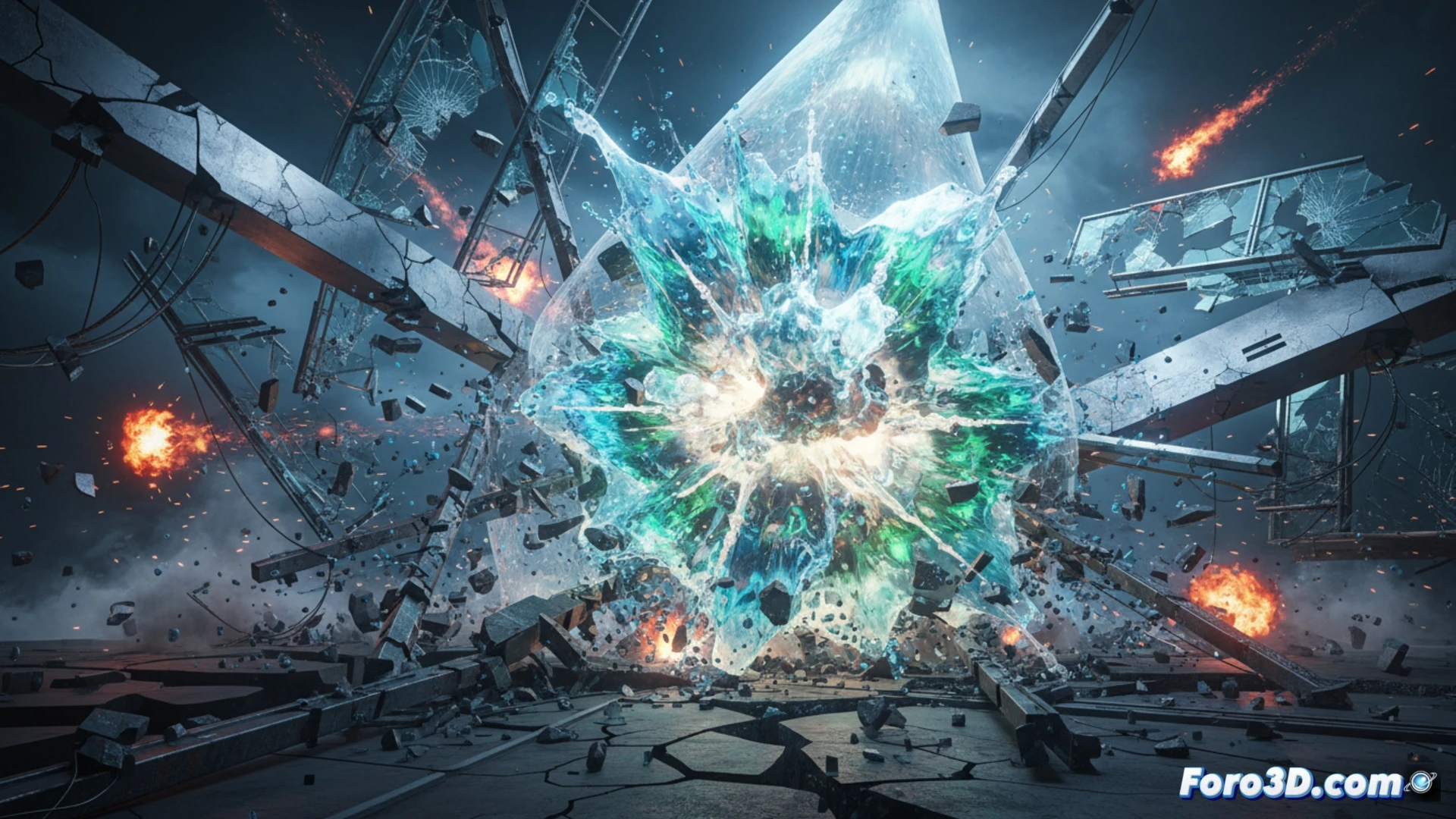
Computational Fluid Dynamics and Expansive Wave Propagation 💥
To simulate a carbonated explosion, a multiphase approach is used that considers the explosive decompression of CO2. The CFD (Computational Fluid Dynamics) model calculates the transition from supersaturated liquid to gas, generating a high-pressure bubble that expands at supersonic speed. The finite element mesh captures the interaction between the shock wave and surrounding structures, allowing visualization of steel panel fragmentation and debris projection. Key parameters include the depressurization rate, initial gas concentration, and enclosure strength, data that feeds risk analysis algorithms.
Virtual Lessons for Real Prevention 🛡️
Beyond visual realism, these 3D simulations transform catastrophe management. By reproducing scenarios such as a massive leak in a fermentation cellar, engineers identify critical failure points without exposing human lives. The animation of fragment dispersion and dynamic pressure on beams allows for designing more effective relief valves and containment barriers. In a world where industrial accidents are unpredictable, the digital model becomes the safest laboratory to anticipate the chaos of a carbonated explosion.
How can the progression of the shock wave in a carbonated explosion be modeled to accurately reflect the sudden release of dissolved gas and its structural impact in a 3D environment?
(PS: Simulating catastrophes is fun until the computer crashes and you are the catastrophe.)