Deflagration, a rapid combustion that generates subsonic pressure waves, is a central phenomenon in industrial fires and urban explosions. Unlike a detonation, its modeling requires precision in gas and particle dynamics. Current 3D tools allow recreating these events to analyze their propagation, improving prevention and response to catastrophes.
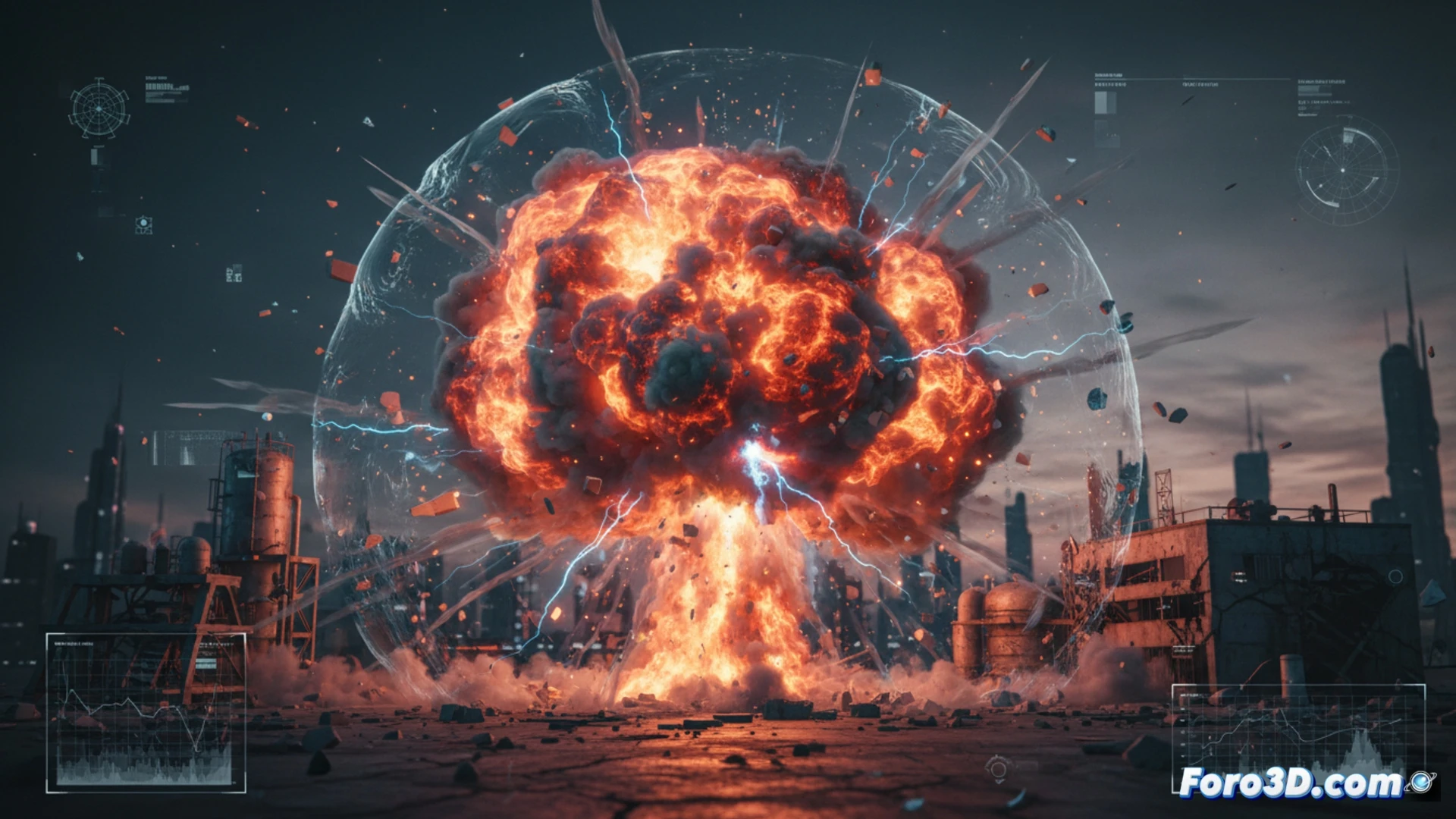
Technical Simulation of Fluids and Particles in Critical Environments 🔥
The 3D modeling of a deflagration is based on computational fluid dynamics (CFD) simulations and particle systems. Variables such as the energy release rate, fuel composition, and environment geometry are defined. For example, in a refinery, the flammable gas cloud and its ignition are recreated, calculating thermal expansion and overpressure. These virtual data allow validating sensors and designing safer evacuation routes, reducing the risk of structural failures.
Virtual Lessons for Real Catastrophes 💡
Recreating past deflagrations, such as a chemical plant explosion, in a digital twin exposes flaws in safety protocols. The 3D simulation reveals how ventilation design or tank placement aggravates the disaster. This reflective analysis drives stricter regulations and resilient urban environments, where technology not only predicts chaos but offers a tangible path toward prevention.
How the propagation of a deflagration's pressure wave is modeled in 3D to predict structural damage in industrial environments.
(PS: Simulating catastrophes is fun until the computer crashes and you are the catastrophe.)