The latest frontier of smart fashion arrives with a t-shirt that integrates 3D-printed micro-fans on its sides. Powered by a thin battery sewn into the hem, these devices are activated by gestures or changes in body temperature. This advancement combines additive manufacturing with textile electronics, opening a new chapter in the design of functional garments that adapt to the user in real time.
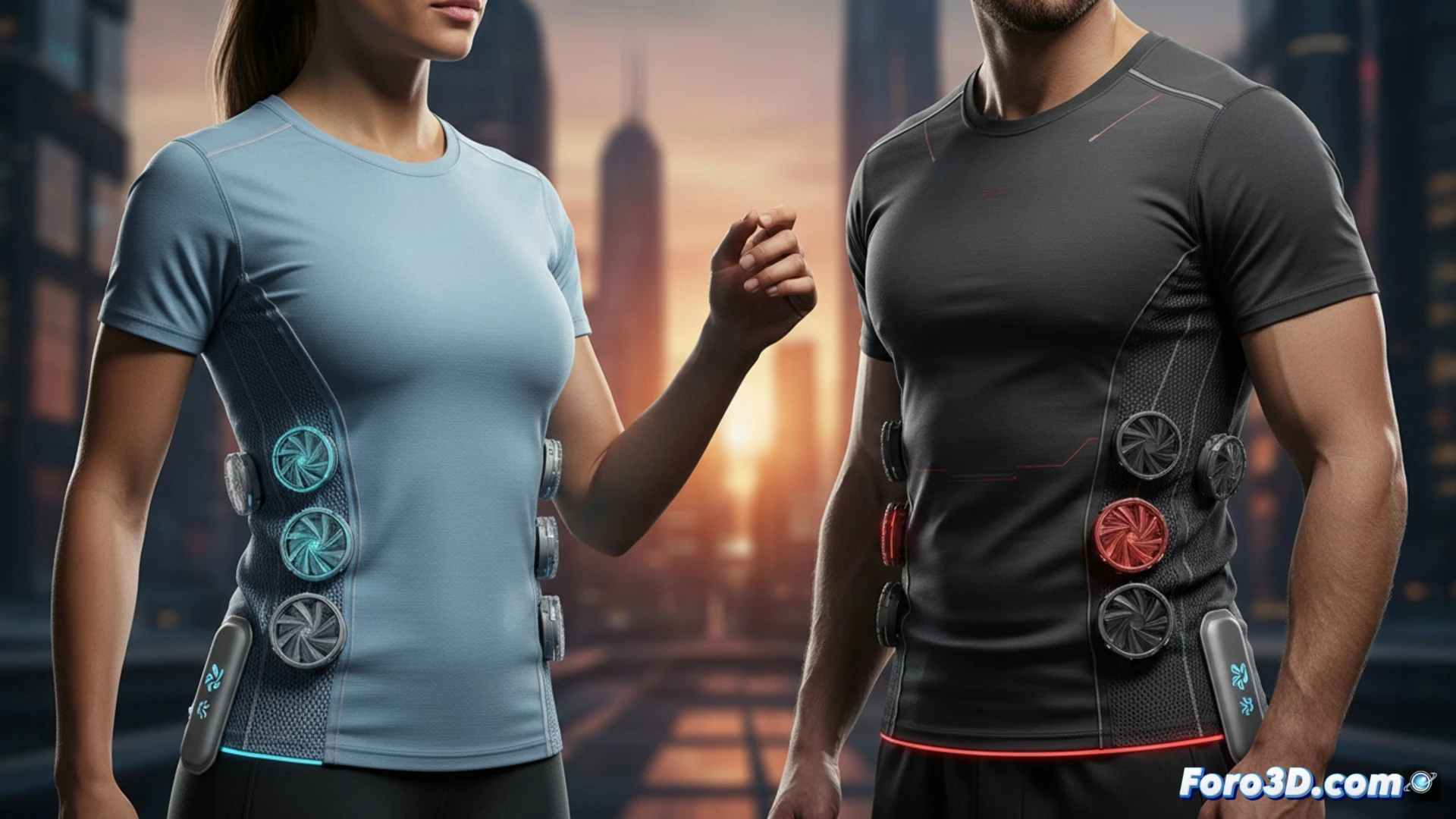
Technical design and additive manufacturing of the fans 🌀
The micro-fans are manufactured using 3D printing in flexible materials such as TPU or conductive filaments, allowing the blades and structure to be integrated without rigid seams. The battery, a thin lithium polymer cell, is sewn directly into the bottom hem, maintaining the fabric's flexibility. The activation system uses motion sensors (accelerometers) and thermistors embedded in the fiber, which send signals to a microcontroller also printed in 3D. This eliminates the need for physical buttons and allows the ventilation to respond to sweat or a gesture like raising an arm. The main challenge is waterproofing: the electronic components must be sealed with silicone coatings to withstand washing, although hand washing or a gentle cycle is recommended for now.
Scalability and future of printed textile wearables 🚀
Compared to other 3D wearables, such as pulse sensors or shoes with variable cushioning, this t-shirt stands out for its lateral integration, which does not compromise the garment's silhouette. However, industrial scalability faces two barriers: the cost of 3D printing for mass production and the durability of the connections between electronics and fabric after multiple washes. The future points to flexible textile batteries and fully washable fans, where 3D printing allows customizing the location and power of the airflow according to the user's morphology. Smart fashion is moving towards garments that not only dress but actively respond to the environment.
What technical and durability challenges do integrated 3D micro-fans in fabrics present to ensure the t-shirt remains breathable and washable without losing functionality?
(PS: Designing fashion in 3D has the advantage that you never have to sew a button.)