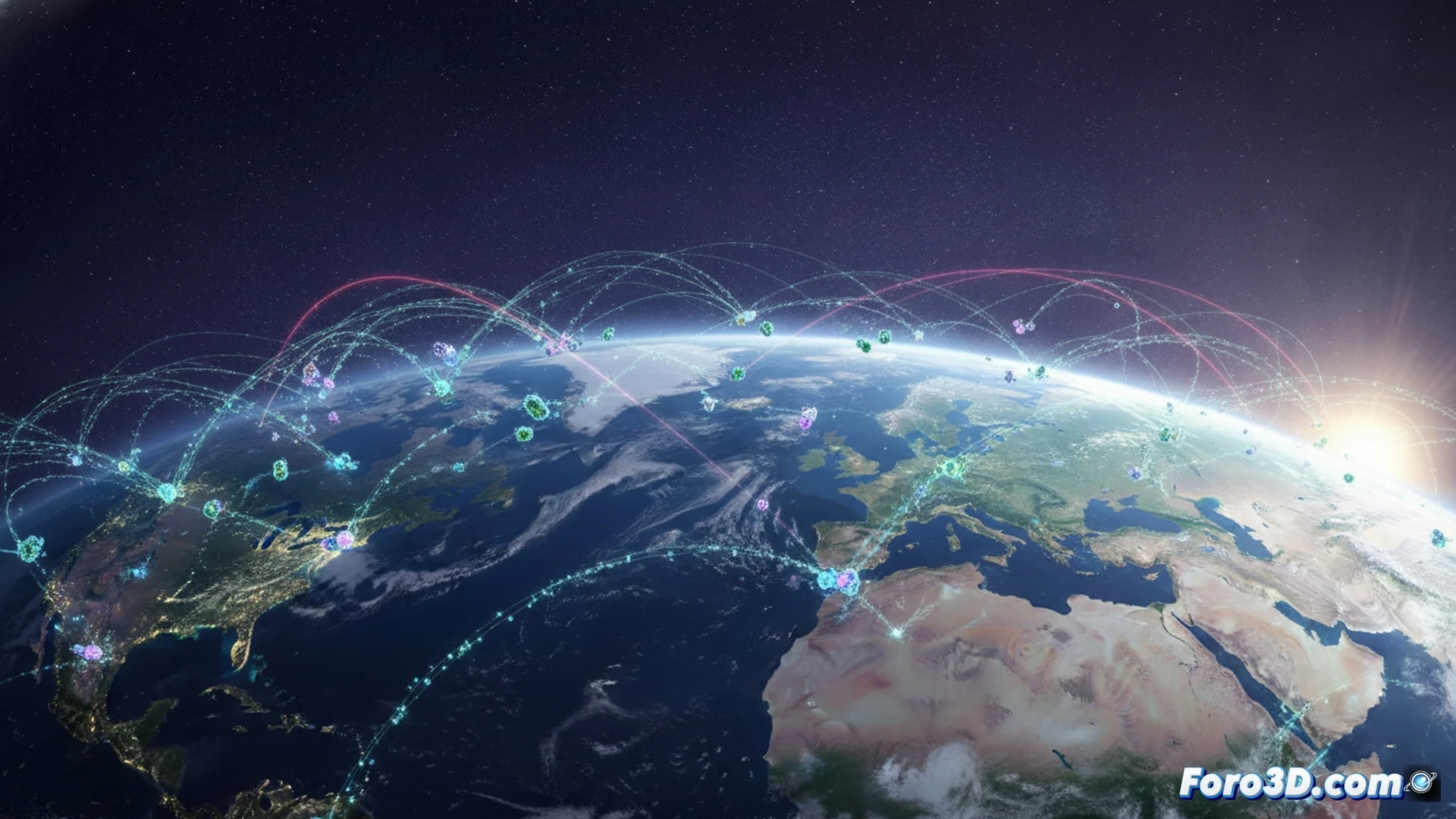
Scientists have detected common microbes, like those found in crops or on our skin, at an altitude of 38 kilometers in the stratosphere. There, radiation and cold are extreme, but these microorganisms manage to survive and travel. The finding suggests that air functions as a global transport network, crossing oceans in just weeks.
How Technology Tracks the Stratospheric Journey 🛰️
To confirm these journeys, teams use high-altitude balloons and state-of-the-art sensors that collect particles above 30 km. Then, genetic analysis identifies the origin of each microbe. Data indicates that specific wind currents act as fast lanes, allowing human skin bacteria to travel from Asia to the Americas in less than a month.
The Uber of Bacteria: Express Service with a Layover on Your Face 🦠
It turns out that humans aren't the only ones using airplanes to travel. Bacteria have set up their own aerial highway service, without paying fees or queuing at security. While you sneeze at home, a microbe from your arm is already on vacation in the Caribbean. That said: if you ever feel lonely, remember that at 38 km high, there are plenty of passengers that came from your skin.