A recent webinar has brought to the table a technology that could change the way we prepare materials for 3D printing. It is resonant mixing, a method that promises to streamline the production of filaments and resins, making the process more consistent and reducing costs. For those who manufacture parts at home or in small workshops, this translates into more durable and accessible objects, bringing custom manufacturing closer to a wider audience.
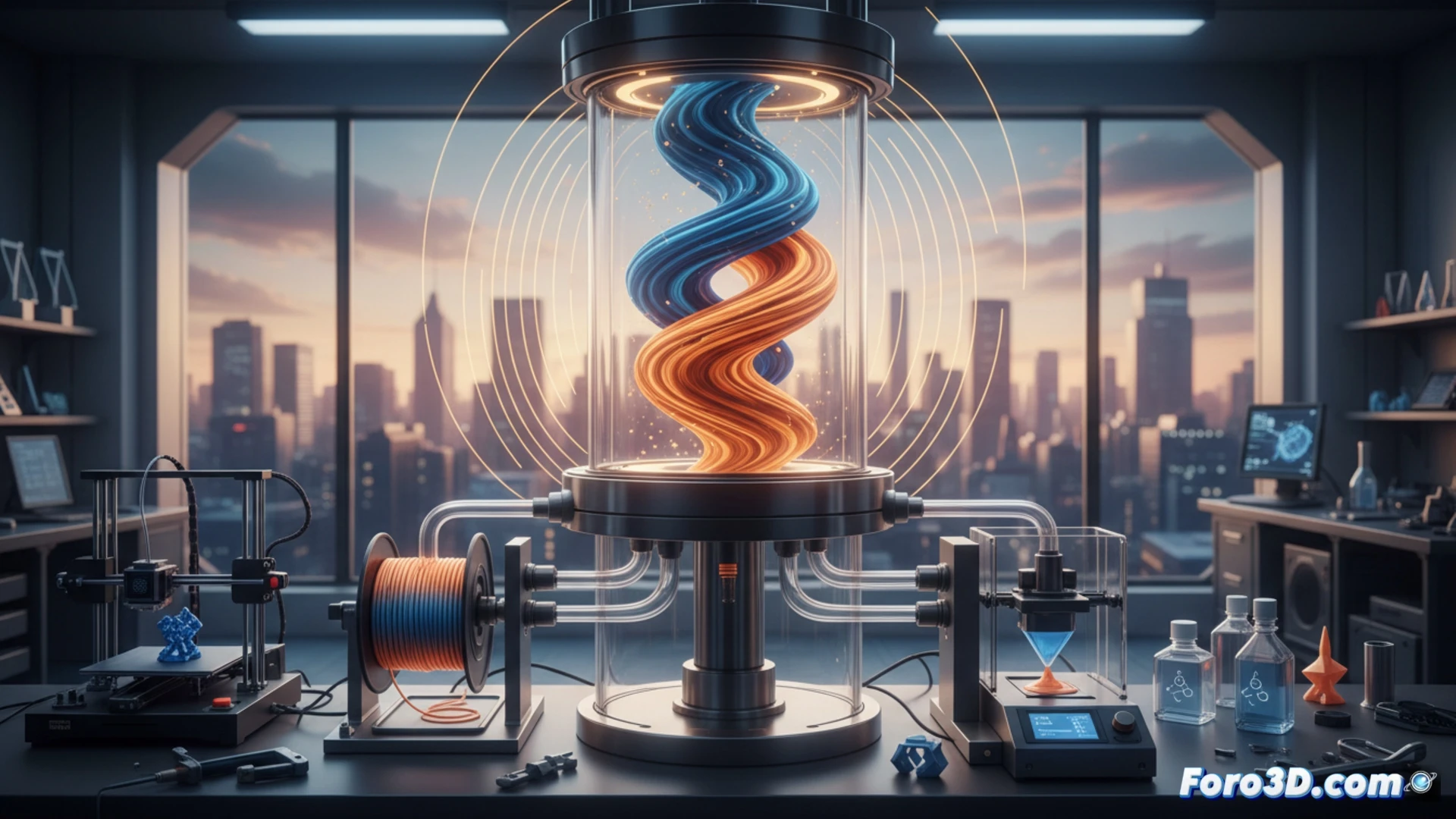
How resonance stirs materials without abrupt movements 🌀
Unlike conventional mixers, which use propellers or mechanical vibrations, resonance applies specific frequencies to agitate the material's particles. This prevents the formation of bubbles or lumps, a common problem in resins and polymers. By achieving a homogeneous dispersion in less time, waste is reduced and uniform batches are obtained. The result is a more predictable material that, when printed, offers fewer failures and greater mechanical strength in the final parts.
Goodbye to stirring plastic like it's mayonnaise 🎛️
Let's be honest: mixing resin by hand seems more like a medieval alchemy ritual than a modern manufacturing process. With resonance, you forget about those jars that look like poorly emulsified protein shakes. Now the material stirs itself, without you having to stop every two minutes to scrape the edges. I hope this technology arrives soon, because between calibrating the printer and you moving your arm, you already looked like a sci-fi DJ.