A rocky fragment found in the Sahara Desert in 2019 has baffled scientists. Its analysis confirmed that it is not a simple asteroid, but a remnant of an ancient protoplanet the size of the Moon, which disappeared 4.5 billion years ago. Its composition, formed under extreme pressure, does not match common objects in the solar system.
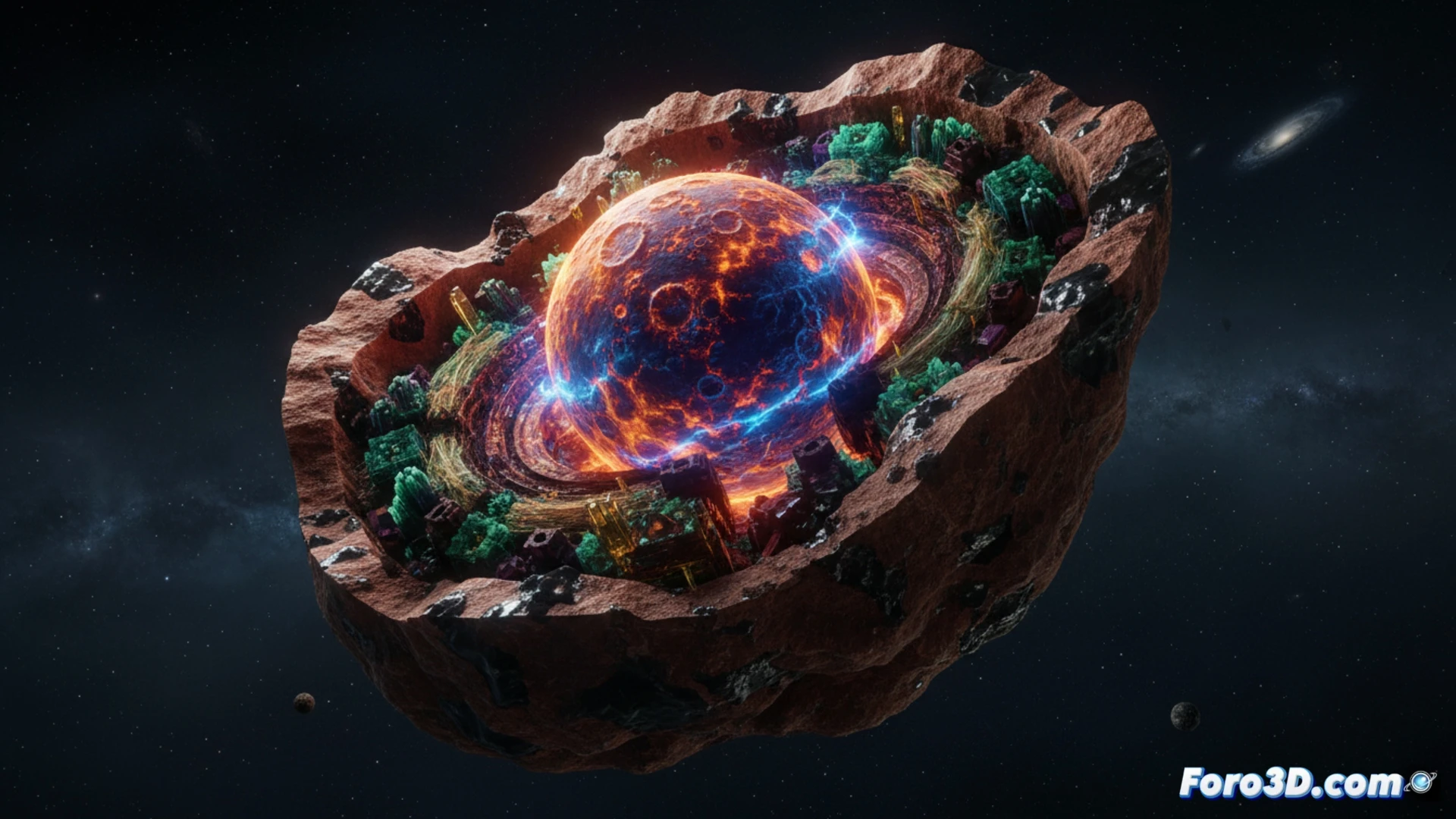
The technological signature of a cosmic collision 🌌
The meteorite, classified as a chondrite, contains minerals that only crystallize under pressure and temperature conditions typical of the interior of a planet-sized body. Researchers used mass spectrometry and X-ray diffraction to date the sample. The results indicate that the rock solidified 4.563 billion years ago, right after the impact that shattered the protoplanet. This chemical signature is a direct fingerprint of an early catastrophic event.
The Sahara: a dumping ground for planetary remains 🏜️
So, while we look for our lost keys, the Sahara Desert is busy storing the remains of entire planets. This meteorite is not just a rock; it is the silent witness to a cosmic fight that ended 4.5 billion years ago. The irony is that this piece of a lost world ended up in the hottest and driest place on Earth. A rather dry end to the party for a planet that exploded.