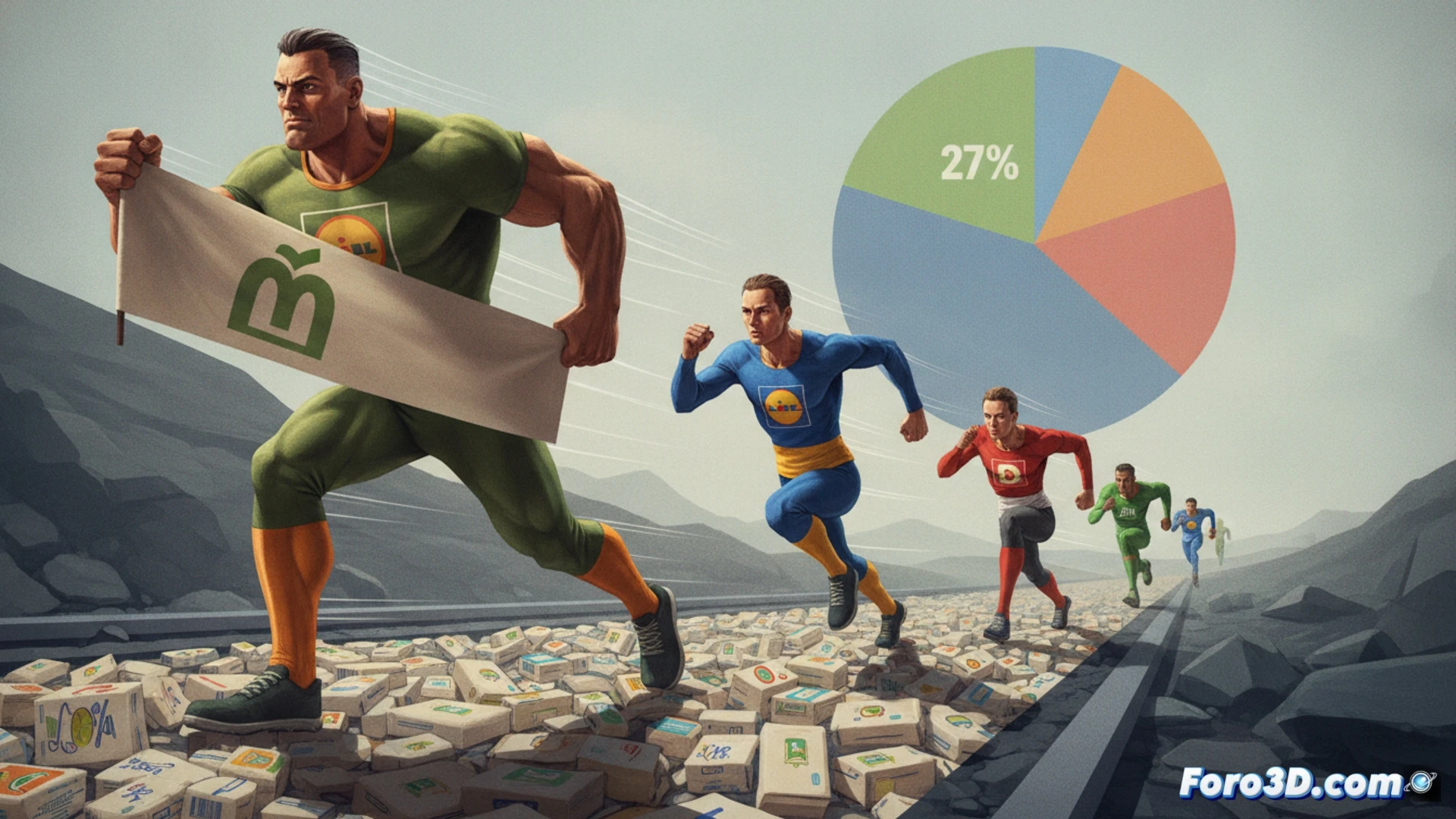
Juan Roig's supermarket maintains its reign with a 27% market share in Spain, although the competition is not sleeping. Chains like Lidl, DIA, Consum, and Aldi are growing at a faster rate, while private label continues its unstoppable rise. At Mercadona, its own brand products already account for 78.6% of total sales.
The basket algorithm: how technology drives private label 🛒
Mercadona applies artificial intelligence systems to predict demand and optimize its supply chain, prioritizing private label products. Its logistics model, based on automated distribution centers, allows it to reduce costs by 15% compared to the competition. Lidl replicates this strategy with its network of local suppliers, while DIA tests sensors on shelves to adjust prices in real time. The data war defines who wins the shopping cart.
Private label is already almost the only option at Mercadona 🏷️
With 78.6% of sales in own-brand products, going to Mercadona is like ordering a set menu and always being served the same thing: good, nice, and cheap, but without surprises. If you're looking for a well-known brand, you might need to make an appointment. Meanwhile, Lidl sells you a circular saw next to the yogurts, and DIA tries to remind you it still exists. Variety is a luxury that few can afford.