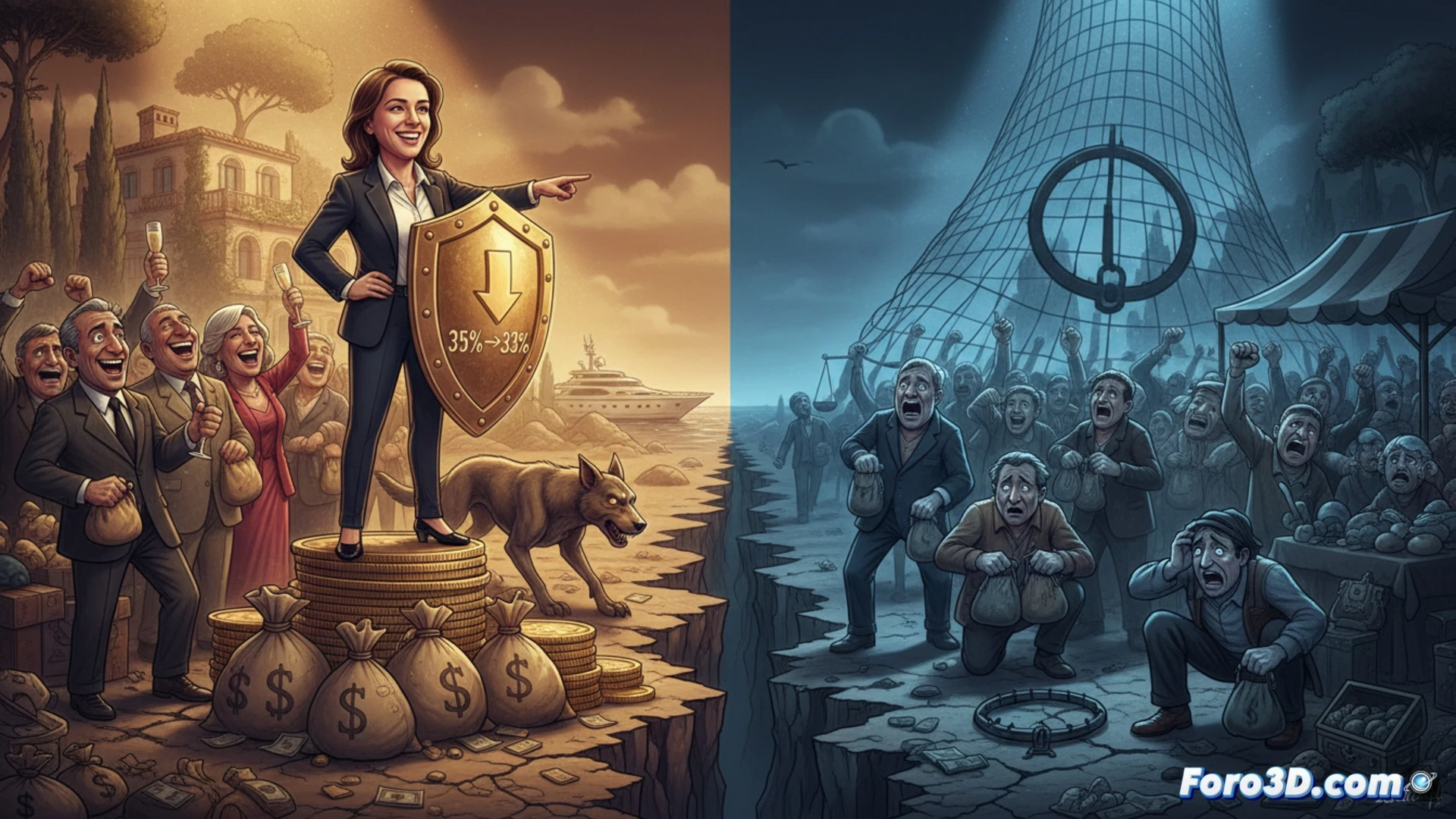
Italian Prime Minister Giorgia Meloni has presented a fiscal plan that mixes promises of relief for high incomes with a tough stance on small businesses. She announces a reduction in personal income tax (IRPF) from 35% to 33% for incomes up to 60,000 euros, a figure that doubles the national average, and assures that she will pursue businesses that open and close to evade taxes. The question is whether both measures are coherent or if they simply protect some while punishing others.
How technology detects ghost businesses in the digital era 🤖
The Italian Revenue Agency already uses machine learning algorithms to cross-reference billing data, Social Security registrations, and bank movements. These systems identify suspicious patterns, such as companies that invoice large amounts for three months and then disappear without settling VAT. Meloni's proposal includes reinforcing these systems with predictive artificial intelligence, but the real challenge is not technical, but political: deciding whether to pursue the small workshop or the professional who invoices 60,000 euros and pays less taxes.
The ghost business of political coherence 🎩
It turns out that Meloni wants to hunt fiscal ghosts while she herself makes the wealth tax disappear. It's like a magician who promises to catch other illusionists while hiding the rabbit in his own top hat. The message is clear: if you earn 60,000 euros, pay less; but if you set up a clothing store that closes in three months, get ready for the raid. In the end, the only business that seems to have continuity is the one of promising the impossible without breaking a sweat.