Foro3D analyzes the technical characteristics of South African bowler Lungi Ngidi. His bowling action combines a wide stride with a hip rotation that generates speed. The 3D study reveals how his firm wrist and arm position create an awkward bounce for batsmen, especially on fast surfaces. It is a biomechanical profile that blends power and control.
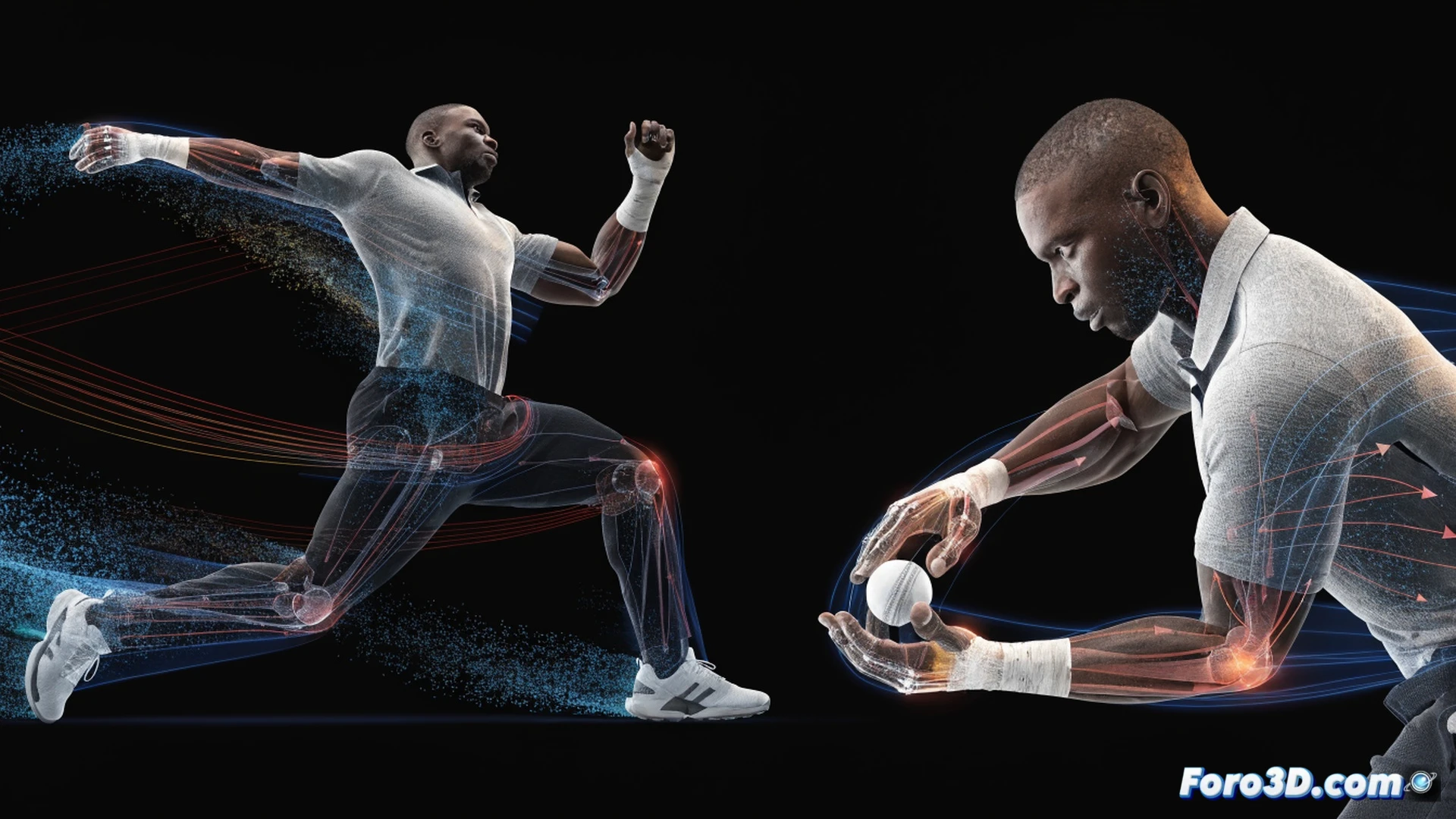
3D modeling of Ngidi's bowling mechanics 🏏
The volumetric analysis shows that Ngidi maintains an elbow angle close to 25 degrees at the release point, which optimizes energy transfer. His center of gravity shifts 15 cm forward at the moment of the jump, generating linear momentum. Sensors capture a pelvic rotation of 90 degrees that synchronizes with the arm brace. Torque data indicates that his landing foot supports 3.5 times his body weight, key to accuracy.
The mystery of his bouncer: magic or coffee? ☕
The 3D models suggest that Ngidi's bouncer comes from a wrist position that looks like it's ordering an espresso. But no, it's just a 45-degree dorsiflexion that deceives the batsman. Some analysts believe his secret lies in a hidden spring in the shoulder, but scans only show a normal tendon. Perhaps the only supernatural thing is his ability not to spill tea between overs.