New Zealand bowler Lockie Ferguson impresses not only with his speed, but with the biomechanics that generate it. This 3D analysis breaks down his technical characteristics: the angle of his arm, hip rotation, and release point. These factors turn his delivery into a challenge for any batsman, generating unpredictable bounce and a trajectory that breaks traditional patterns in modern cricket.
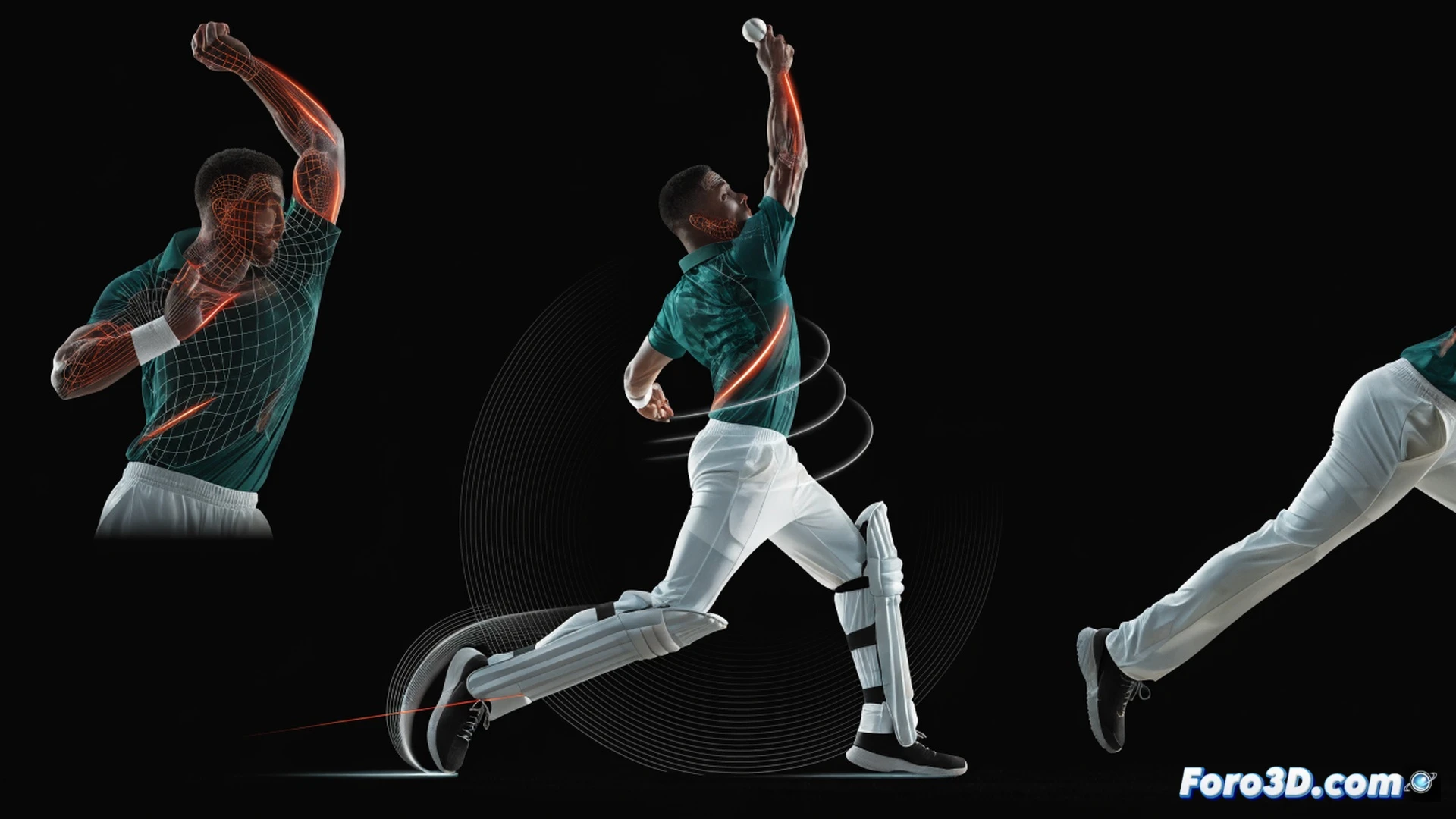
3D Biomechanics: The engine of a 150 km/h machine 🏃♂️
A three-dimensional model reveals that Ferguson generates power from the ground. His supporting leg flexes 45 degrees, transferring energy through the hip and torso. The bowling arm extends 10 degrees beyond the shoulder, maximizing leverage. The wrist, rigid until the last moment, releases the ball with a spin of 720 rpm. This sequence, analyzed in 3D, shows an almost mechanical efficiency, where each joint acts like a precise gear.
What if Ferguson bowled with a robotic arm? 🤖
If we added a robotic arm, it would probably break from excitement. 3D engineers already dream of a cybernetic Ferguson that never gets injured. But for now, his flesh-and-blood body is enough to scare batsmen. Of course, if they ever upgrade him, they should warn the umpires: they'll need a faster radar and insurance against lost balls.