The European Union has approved its most restrictive migration legislation to date, authorizing the creation of deportation centers outside its borders. A Member of the European Parliament noted that an era of mass expulsions has begun, involving home searches, prolonged detention periods, and entry bans. For citizens, the goal is to curb irregular immigration and strengthen security, using commercial pressure to ensure countries of origin accept their deported citizens.
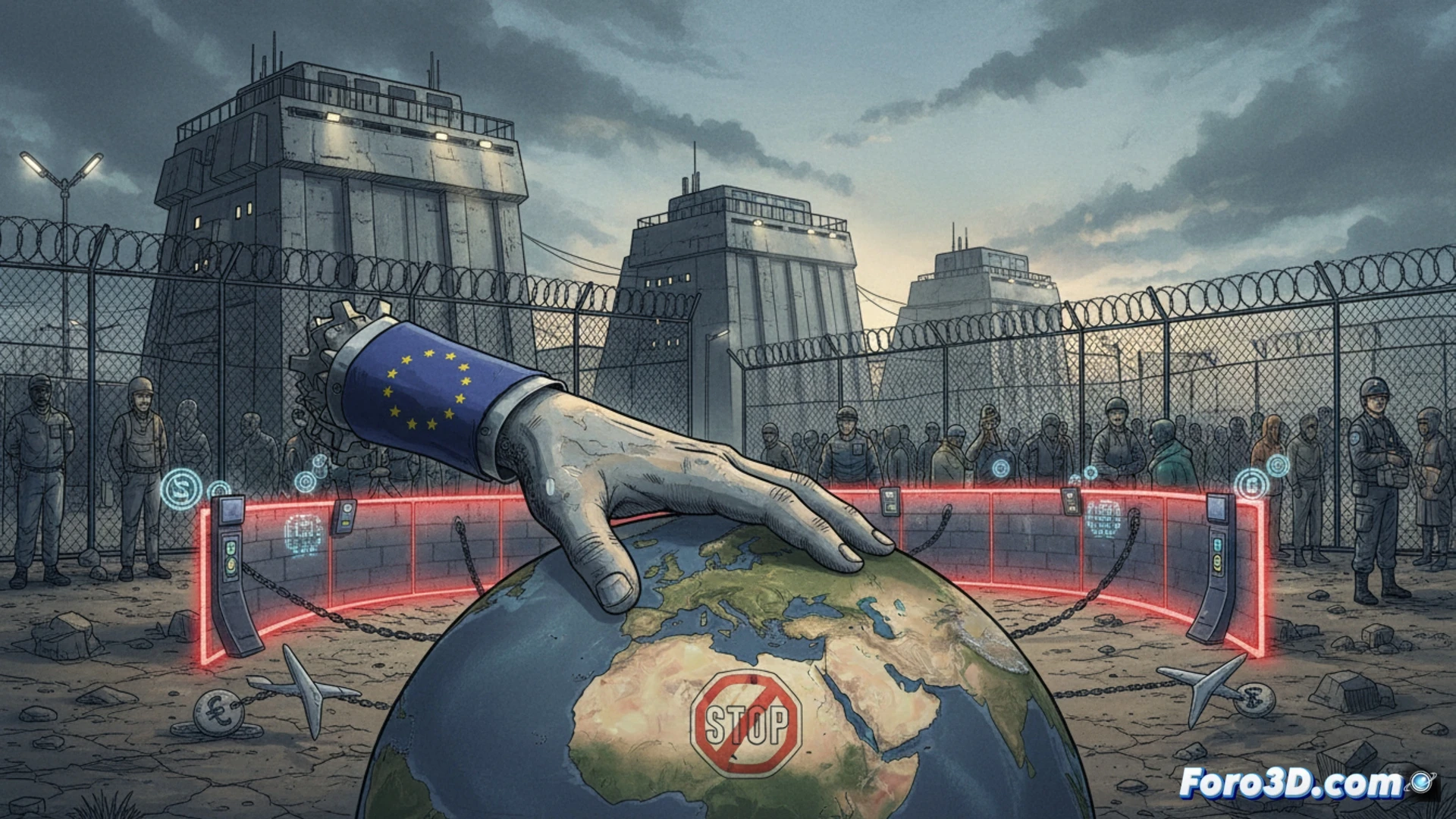
Surveillance technology: the new digital arm of European migration policy 🛰️
The implementation of this law relies on advanced biometric identification systems and centralized databases such as Eurodac. The use of drones and facial recognition cameras at border points is planned, along with artificial intelligence algorithms to analyze mobility patterns. These systems will allow cross-referencing asylum seeker data with watchlists, streamlining deportations. The technical infrastructure, however, raises concerns about privacy and potential algorithmic bias in decision-making.
The back-to-school of deportations: mark, search, and expel 📝
Everything suggests that the EU has decided to apply the school agenda method: first, you mark those who don't follow the rules, then you search their backpack (or their home), and if they don't have their homework in order, you send them back home with an expulsion note. The difference is that here the note is signed by a judge and the school bus is a chartered plane. All for security, of course. And because, as the saying goes, borders are like homework: if you don't do it, you lose recess.