The Spanish Athletics Federation announces a European project to train coaches. It sounds modern, it sounds like innovation. But while a few technicians travel across Europe with scholarships, neighborhood tracks remain full of potholes, schools close gyms due to lack of budget, and children with athletic talent cannot afford a private academy. The contrast hurts.
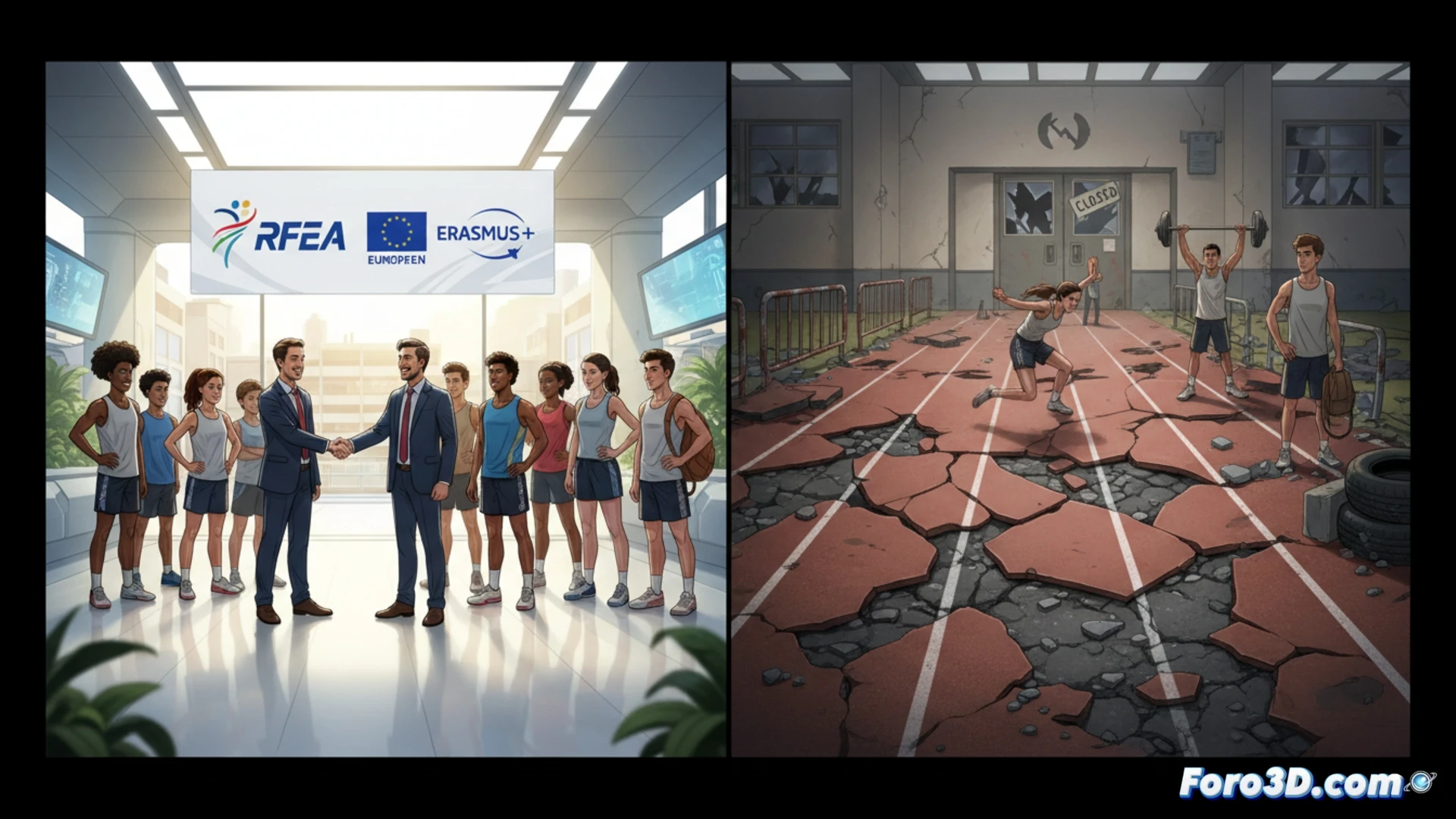
The abyss between elite and grassroots: technology that doesn't reach the asphalt 🏚️
The Erasmus+ project promises exchanges of good practices, biomechanical analysis, and advanced methodologies. All very nice on paper. But the reality of grassroots athletics is different: tracks without maintenance, outdated equipment, and volunteer coaches without training or resources. While some study how to optimize technical gestures in European laboratories, others teach how to jump hurdles with traffic cones in a park. The technological gap is not closed with study trips.
For neighborhood kids, the only Erasmus is running between cars 🏃
Sure, we can always look on the bright side: at least the coaches traveling to Finland will learn how to deal with the cold. Here, kids already master that technique when they train at eight in the morning in December. Of course, then the project reports will come out telling how they have improved dropout rates. And meanwhile, in the neighborhood, the only abandonment is that of the municipal athletics track.