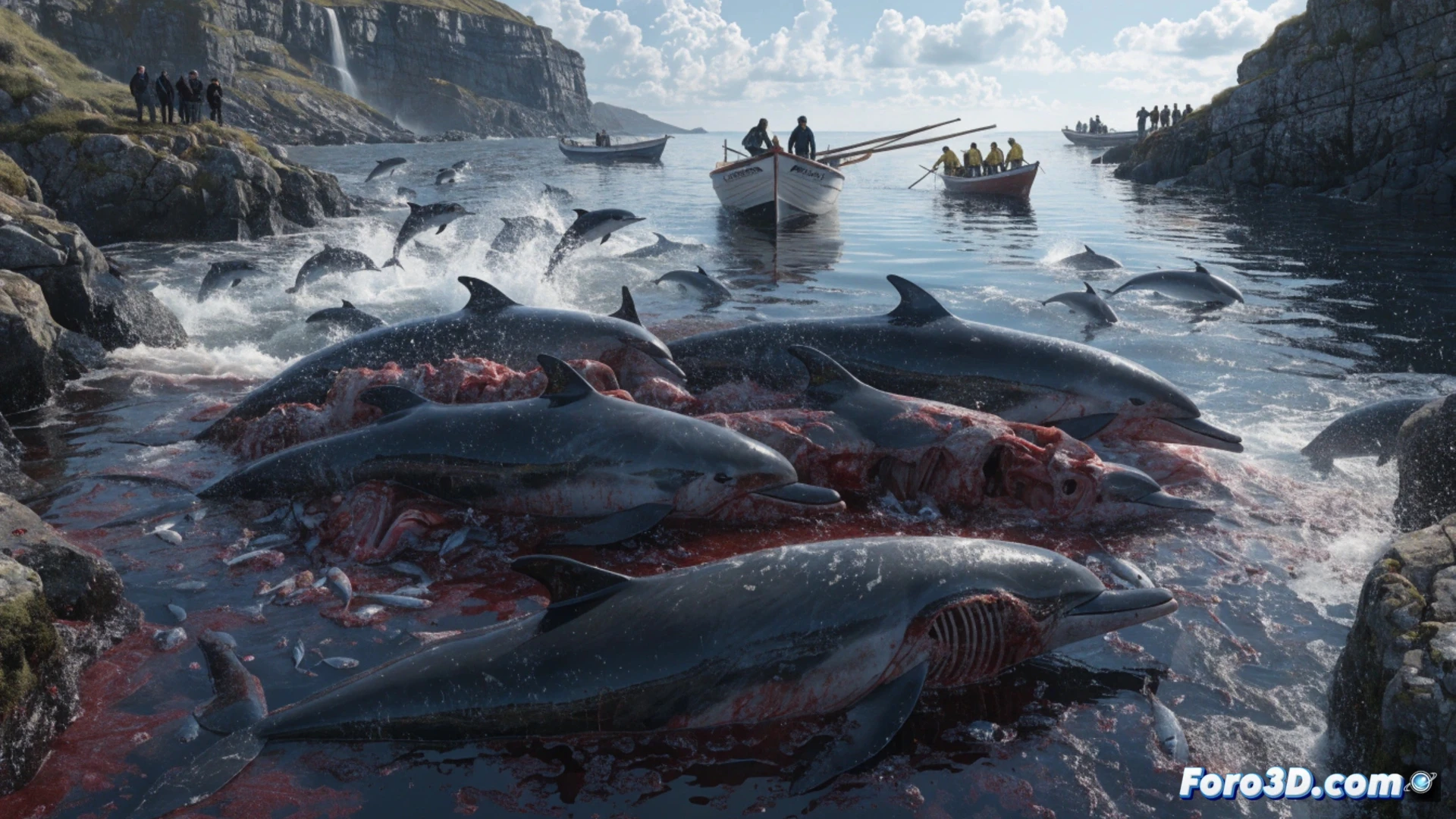
In the Faroe Islands, 706 dolphins were captured and butchered in just three days, a practice known as Grindadráp that dates back to the Viking era. Despite promises to reduce the slaughter, the number remains high. Environmental groups denounce that much of the meat is wasted and that the animals suffer cruelly, which affects marine conservation and generates a global ethical debate.
Technology and sustainability: viable alternatives to Grindadráp 🌿
From a technical point of view, the mass hunting of dolphins lacks modern justification. There are satellite monitoring systems to manage marine populations and sustainable fishing methods that avoid unnecessary death of species. Furthermore, dolphin meat accumulates high levels of mercury, making it dangerous for human consumption. Applying food traceability technology and promoting alternative proteins would reduce the ecological impact without relying on outdated traditions.
Viking tradition or excuse for a massive barbecue 🔪
Defenders of the slaughter argue that it is a cultural tradition, but 706 dolphins in three days sounds more like a record sushi order than an ancestral ritual. If the Vikings had had refrigerators, they might have planned the rations better. Now, there is leftover meat, leftover mercury, and the tradition excuse falls short. Perhaps the only thing missing is a survival manual for dolphins with GPS.