A study by the Italian Institute of Technology reveals that traumas experienced in childhood or adolescence leave a lasting mark on the brain, distinct according to age. Early traumas affect socialization, while later ones generate aggressiveness. Anxiety appears in both cases, but the timing of the trauma is key to understanding its effects and developing more personalized treatments.
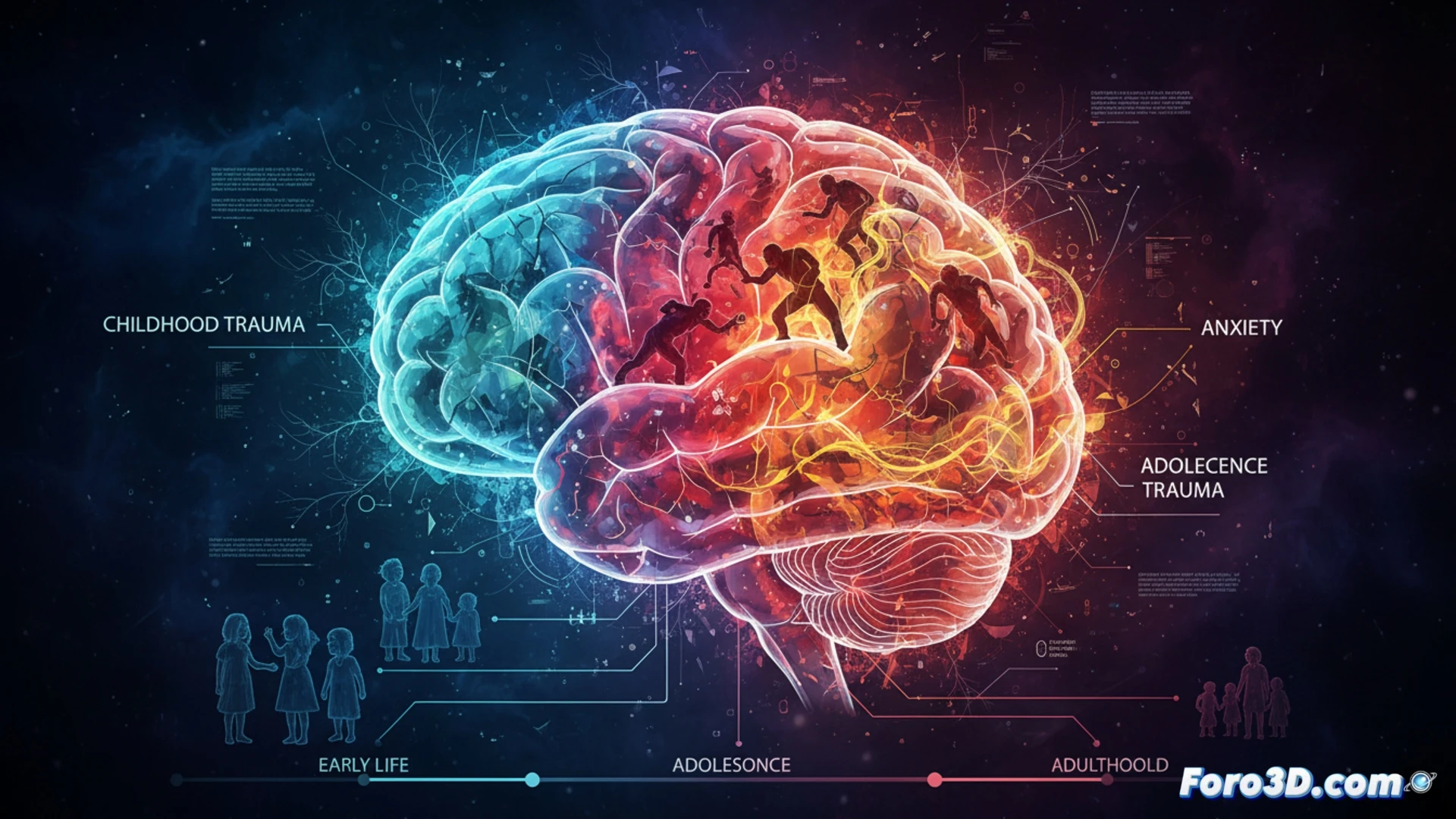
Neuroplasticity and developmental windows: technology to the rescue 🧠
The research used neuroimaging techniques and computational models to map how the brain responds to stress at different stages. The results show that neural networks related to empathy are more altered in childhood, while those linked to impulse control undergo changes in adolescence. This precision allows for designing therapies targeting specific circuits, optimizing clinical resources.
Trauma at age 7: you become a hermit; at 15, a series villain 😈
According to the study, if trauma catches you at age 7, you'll end up hiding in your digital cave. If it arrives at 15, you'll become that colleague who argues about everything, even the air conditioning. Of course, anxiety is so democratic that it pursues you equally whether your trauma was a bad grade or having your sandwich stolen. At least now we know who to blame for our quirks.