The line that separated a blue-collar worker from an office worker has become blurred. Today, an electrician can earn more than a social media manager, and a programmer can live with the same precariousness as a waiter. The problem is that the working-class label no longer says anything about your income, job security, or social status, leaving many unsure whether they are exploited or privileged.
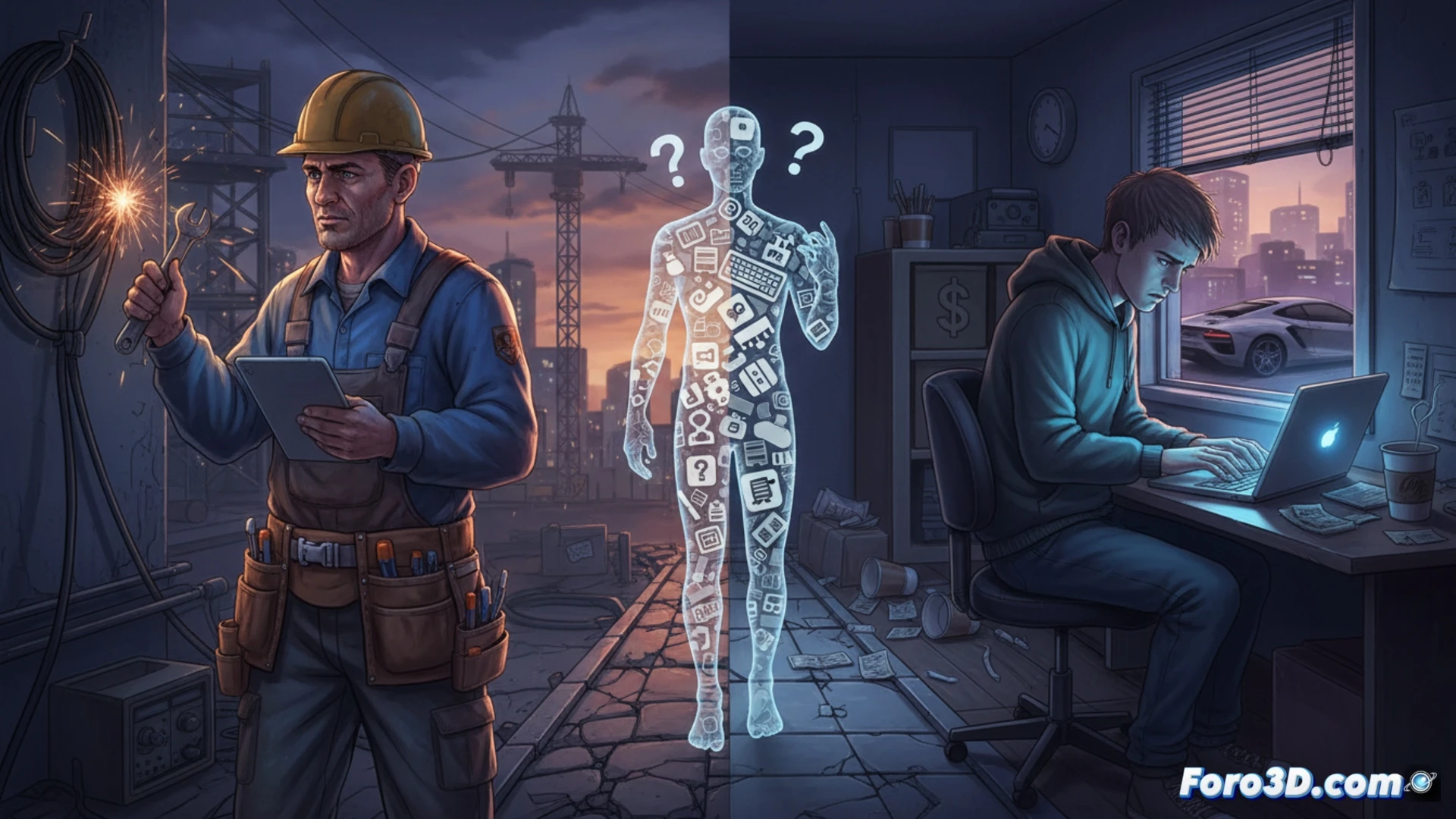
The algorithm that doesn't know what you are 🤖
Technology has accelerated this confusion. Platforms like Uber or Amazon Mechanical Turk classify their workers as self-employed, even though they control every hour of their workday. Meanwhile, an industrial maintenance technician with a permanent contract can have more stability than a freelance graphic designer. Business management software labels some as collaborators and others as resources, but it doesn't solve the key question: who has the right to unionize and who only has the right to complain on Twitter.
Sir, are you a proletarian or just having a bad day? 😅
Now it turns out that anyone can be working class if their boss sends them an email at 10:00 PM. The plumber who charges 60 euros an hour looks tenderly at the community manager crying over an internship contract. And the Glovo delivery person, getting soaked in the rain, listens to the YouTuber complain that their algorithm doesn't pay them well. Everyone wants the label, but no one wants the salary.